Published: May 21, 2026
When we cast our eyes toward the night sky, we are doing far more than observing distant, glimmering spheres of gas and plasma. We are peering into an ancient, unfolding clockwork—a cosmic architecture that has served as the backdrop for human history, mythology, and navigation for millennia. Since the dawn of civilization, humanity has looked to the stars not merely to map the physical world, but to decipher the blueprint of the human experience. Central to this pursuit is the birth chart: a sophisticated, individualized map that serves as a bridge between the celestial expanse and the intricacies of the human psyche.
The Foundations of Natal Astrology: A Cosmic Snapshot
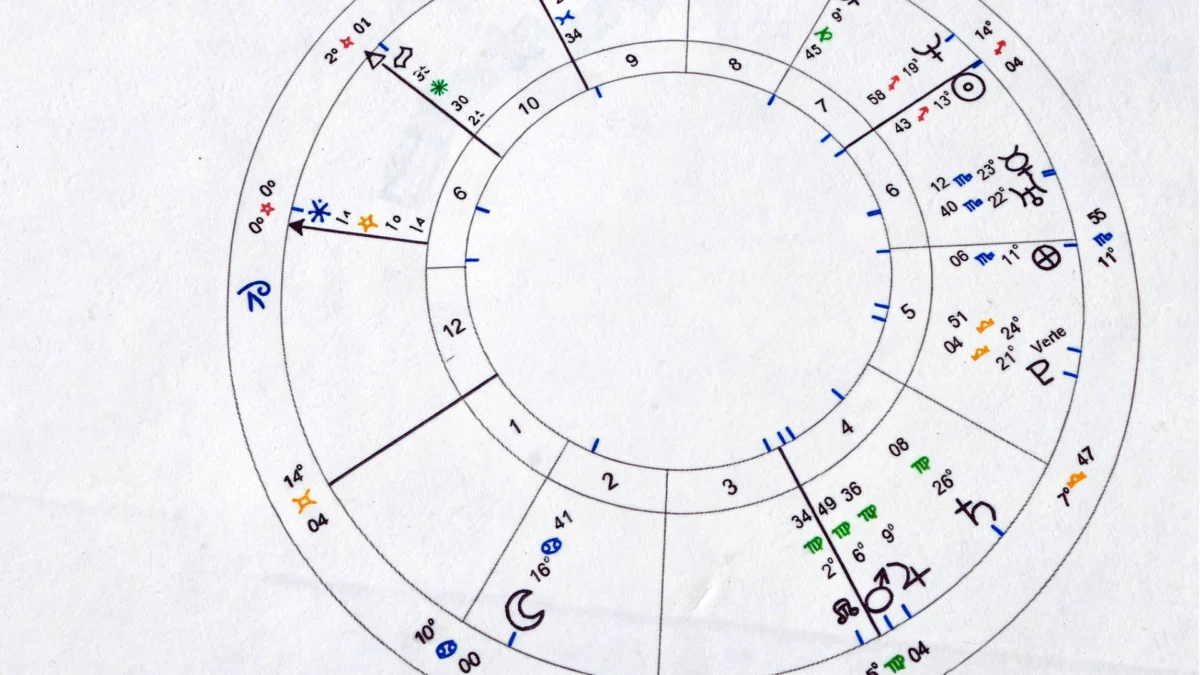
At its core, a birth chart—often referred to as a natal chart—is a technical, highly precise snapshot of the heavens at the exact moment of an individual’s birth. By recording the precise coordinates of the Sun, the Moon, and the planets relative to the twelve signs of the zodiac, this document serves as a "mirror of the cosmos."
The fundamental premise of astrology, as observed by the renowned psychological astrologer Howard Sasportas, is that "whatever is born at a moment of time reflects the qualities of that moment." This philosophy suggests that the universe is not a chaotic void, but a system resonating with intelligence and rhythm. By aligning the macrocosm of the heavens with the microcosm of human life, practitioners suggest that we can better understand our inherent motivations, our challenges, and our ultimate potential.
A Chronology of the Celestial Wheel
While the circular birth chart is the standard tool in contemporary Western astrology, its history is a multi-millennial journey of evolution and synthesis.
The Mesopotamian Origins
The roots of astrology can be traced back to the ancient cradles of civilization in Mesopotamia and Babylon. Unlike the modern circular wheels, these early systems relied heavily on observational lists and mathematical tables. Ancient priests and scholars tracked planetary movements to interpret omens for the state, marking the first instances of formalized celestial record-keeping.
The Hellenistic Transformation
The transition toward the circular representation—the "wheel"—occurred primarily during the Hellenistic period, spanning from the second century BCE to the seventh century CE. As Greek, Egyptian, and Babylonian traditions merged around the Mediterranean, scholars began to visualize the sky as a 360-degree sphere. This era solidified the house systems and the geometric aspects that remain the gold standard for astrologers today.
The Renaissance and Modern Synthesis
Throughout the Middle Ages and the Renaissance, astrology underwent periods of both intense academic study and skepticism. However, in the 20th century, a significant shift occurred with the advent of "psychological astrology." Pioneers like Sasportas and Carl Jung integrated astrological archetypes with modern depth psychology, moving the field away from predictive "fortune-telling" and toward a tool for self-actualization and personality analysis.
Deciphering the Map: The Anatomy of a Birth Chart
A birth chart is not a singular, flat image, but a multi-layered mandala of symbols. To read one is to learn a language of cosmic proportions.
The Outer Band: The Zodiac Signs
The outermost layer of the chart represents the ecliptic, divided into the twelve signs of the zodiac: Aries, Taurus, Gemini, Cancer, Leo, Virgo, Libra, Scorpio, Sagittarius, Capricorn, Aquarius, and Pisces. In the astrological lexicon, these signs are the "how"—the energetic atmosphere or the quality of consciousness through which planetary energy must pass.
The Inner Wheels: The Houses
Moving toward the center, the chart is divided into twelve houses. These represent the "where"—the concrete, lived-in arenas of human experience. From the third house, which governs the intellect, communication, and immediate environment, to the tenth house, which dictates one’s public legacy and career path, the houses ground the ethereal energies of the planets into the reality of daily life.
The Planets: Archetypes of Consciousness
The planets are the "what"—the active agents of the chart.
- The Sun: Represents the core identity, vitality, and the conscious "ego."
- The Moon: Dictates the emotional landscape, instinctual reactions, and the inner world.
- Mercury, Venus, and Mars: Represent the personal mechanisms of communication, values/beauty, and drive/assertion, respectively.
- The Outer Planets (Jupiter, Saturn, Uranus, Neptune, Pluto): These represent broader, transpersonal forces, including societal shifts, generational themes, and transformative life crises.
Technical Components: Aspects and Geometry
Perhaps the most complex aspect of reading a birth chart lies in the "aspects"—the geometric lines drawn between the planets. These lines represent the angles formed by the planets at the time of birth. A "trine" (120 degrees) might suggest a harmonious flow of energy between two parts of the psyche, while a "square" (90 degrees) might indicate a point of friction, a necessary tension that forces an individual to grow, adapt, and innovate.
This geometry ensures that no two birth charts are identical. Even those born on the same day often possess different "rising signs" (the zodiac sign ascending on the eastern horizon at the precise time of birth), which shifts the entire house structure and alters the focus of the chart entirely.
Professional Perspectives: Astrology as a Psychological Tool
Modern practitioners often distance themselves from deterministic interpretations. In contemporary professional settings, astrology is increasingly viewed as a diagnostic tool for psychological inquiry.
"The birth chart does not dictate destiny," explains an anonymous contributor to modern astrological study. "It provides a map of the landscape, but the individual remains the navigator. The chart describes our tendencies, our recurring patterns, and our inherent gifts. How we utilize that information—the choices we make—remains entirely within our agency."
From this perspective, the chart is a living document. As an individual matures, they often move through different levels of expression for the same planetary placements. What might manifest as a volatile temper in childhood (Mars in a fire sign) could evolve into a powerful drive for advocacy or physical excellence in adulthood.
The Implications of Cosmic Belonging
The study of the birth chart carries profound implications for the human psyche. In an increasingly digital and disconnected world, the practice of astrology serves as a reminder of our "intrinsic belonging." By situating the individual within the context of the solar system, it provides a sense of perspective that is often missing from modern life.
Psychological Implications
The birth chart allows individuals to externalize their inner contradictions. When a person feels "at war" with themselves—for instance, between their logical mind and their emotional needs—the chart provides a visual framework for those energies. Seeing the tension between a Mercury-Moon aspect can be a cathartic experience, shifting a person’s self-perception from one of "being broken" to one of "having complex, dynamic layers."
Societal Implications
On a broader scale, the resurgence of interest in astrology suggests a societal desire to move beyond purely materialist or reductionist views of the world. It speaks to a collective hunger for a language that acknowledges the poetic, the mythic, and the cyclical nature of time.
Conclusion: An Evolving Tapestry
The birth chart is ultimately a tool for inquiry. It does not provide the answers to the question "Who am I?" but rather invites the individual to ask it with greater depth. It is a system of profound complexity, refined over thousands of years, that continues to offer insights into the patterns, cycles, and potentials that define our existence.
As we navigate the complexities of the 21st century, the ancient practice of consulting the stars remains a vital, if unconventional, resource. Whether viewed as a purely psychological framework or a sacred alignment with the cosmos, the birth chart serves as a testament to the human desire to understand our place in the universe. It reminds us that we are not merely inhabitants of a planet, but participants in a vast, intelligent, and interconnected cosmic story. By understanding the symbols written in the sky at the moment of our first breath, we begin the lifelong work of unfolding the vast, untapped potential that resides within.