










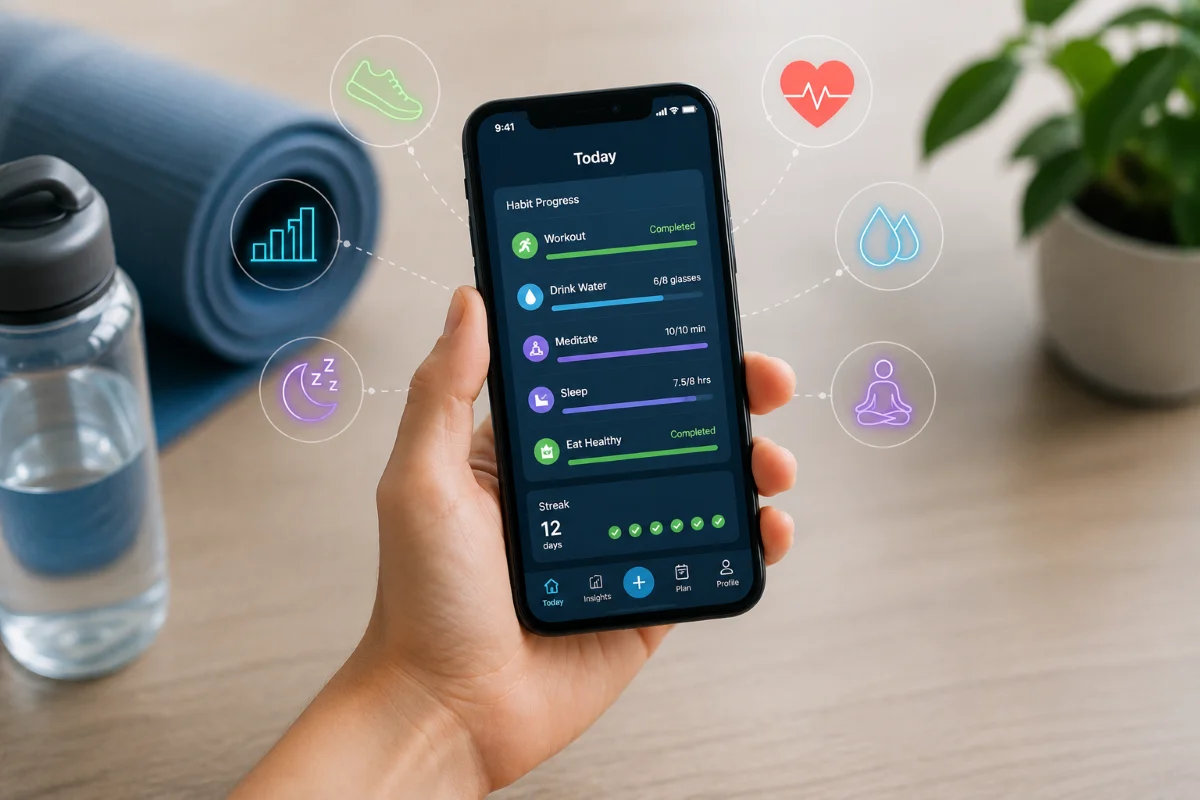
In the landscape of modern wellness, a quiet transformation is underway. Health and fitness applications, once relegated to the role of simple pedometers or calorie calculators, are undergoing a fundamental metamorphosis. Today’s digital health ecosystem is increasingly defined by behavioral science, shifting its focus from raw output metrics—like weight lost or miles run—to the granular, day-to-day habits that form the bedrock of long-term health.
As users navigate an increasingly crowded marketplace of apps designed to track hydration, sleep quality, mindfulness, and meal preparation, fitness professionals find themselves at a crossroads. They must decide how to integrate these high-tech tools into their coaching practices without allowing them to override the nuanced, human-centric approach required for sustainable behavior change.
The Shift Toward Behavioral Systems
For years, the fitness industry was obsessed with "the outcome." Clients were pushed to focus on the scale or the stopwatch. However, health behavior research has long suggested that information alone—knowing what to do—is rarely enough to drive lasting change. Success requires a system of support that bridges the gap between intention and action.
Recent digital interventions are bridging this gap by utilizing the core tenets of habit formation: self-monitoring, goal setting, and timely prompts. According to a 2024 review published in the Journal of Medical Internet Research, the most effective digital tools are those that leverage behavioral "nudges." By breaking large health goals into repeatable, daily actions, these apps help users transform abstract intentions into concrete routines. The value is no longer in the data itself, but in the visibility it provides. When a user logs a movement break or a consistent sleep window, they are building a data set that reveals their own behavioral patterns—highlighting not just what they are doing, but why they might be struggling.
A Chronology of the Quantified Self
To understand where we are, we must look at the evolution of the "Quantified Self" movement:
- 2010–2015: The Era of Manual Tracking. Early fitness apps were primarily passive logs. Users manually entered caloric intake or manually started and stopped exercise timers. The burden of data entry was high, leading to significant user attrition.
- 2016–2020: The Wearable Boom. The integration of smartwatches and fitness trackers automated data collection. Heart rate, steps, and sleep cycles were captured passively, providing users with a flood of physiological data but little context on how to act upon it.
- 2021–2024: The Habit-First Paradigm. Developers realized that data without behavioral context creates anxiety. The current wave of apps emphasizes "streaks," small wins, and micro-habits. The focus has moved from "how many calories did I burn?" to "did I complete my scheduled walk today?"
- 2025 and Beyond: The AI-Personalization Phase. We are currently entering an era where mobile health tools utilize artificial intelligence to adapt recommendations in real-time based on a user’s unique recovery profile, stress levels, and historical behavior patterns.
Supporting Data: The Science of Digital Interventions
The efficacy of these tools is backed by a growing body of academic literature. A meta-analysis published in Health Psychology Review (2023) demonstrated that digital interventions featuring self-monitoring and social feedback mechanisms showed a higher correlation with long-term physical activity than those lacking these features.
Furthermore, a study in Nature Medicine (2024) explored the potential for "Digital Phenotyping"—the use of smartphone sensors to predict health behaviors. By analyzing the way a user interacts with their device, these systems can identify "at-risk" periods where a user is likely to abandon a healthy habit, offering a preemptive, personalized intervention.
However, the data is not universally positive. While these tools encourage consistency, they also present risks. The gamification of health—using badges, leaderboards, and streaks—can inadvertently create a culture of perfectionism. For some, a broken streak is perceived as a moral failing rather than a minor disruption in a busy week, which can lead to increased anxiety and, in extreme cases, disordered eating behaviors.
Professional Perspectives and Industry Standards
Fitness professionals are now tasked with acting as "data interpreters." The industry consensus, supported by bodies such as the World Health Organization in their Global Strategy on Digital Health, suggests that technology should act as an extension of the coaching relationship, not a replacement for it.
"We see a trend where clients arrive at their first session with more data than they know how to interpret," says one industry expert. "They are overwhelmed by ‘sleep scores’ and ‘recovery metrics’ that don’t account for the fact that they just moved house or started a new job. Our job as coaches is to strip away the noise and focus on the signals that actually matter to their life."
The professional community is moving toward a standard where apps are treated as a diagnostic tool. Instead of asking, "Did you hit your numbers?", a coach might ask, "Looking at your app data, what pattern do you notice about your energy levels on the days you don’t prep your meals?" This reframing shifts the app from an arbiter of judgment to a mirror for self-reflection.
Implications for the Future of Coaching
The implications for the fitness industry are profound. First, the role of the coach is evolving from "instructor" to "behavioral strategist." As apps handle the scheduling, reminders, and basic tracking, coaches are free to focus on the higher-level cognitive work: helping clients build the resilience to handle setbacks.
Second, the issue of data privacy and ethical design is coming to the forefront. As apps become more "personalized," they require more intimate data. Fitness professionals have a responsibility to guide their clients toward tools that prioritize privacy and transparency. The PLOS Digital Health article (2023) highlights that the future of digital health depends on building trust—ensuring that the data collected is used to empower the user, not to monetize their health insecurities.
Finally, the industry must embrace "Systems-Based Coaching." If a client uses an app to track hydration, the goal isn’t just to drink water; it’s to build a system where the cue (e.g., finishing a meeting) is automatically paired with the behavior (drinking a glass of water). Coaches who master this systems-thinking approach will be the ones who remain indispensable, even as AI-driven apps become more sophisticated.
The Path Forward: Avoiding the Perfectionism Trap
The most significant challenge for the coming years is balancing technological precision with human flexibility. The "perfectionism trap" is the greatest threat to long-term health. When an app rewards a 30-day streak, it implies that day 31—or a day missed due to illness—is a failure.
To mitigate this, the next generation of habit-tracking software needs to move toward "resilient design." This includes features that account for life’s inevitable disruptions, allowing for "rest days" without penalizing the user, and framing progress through trends rather than absolute, unbroken chains.
For the fitness professional, the guidance remains simple:
- Contextualize the Data: Use the app to spot trends, not to measure daily worth.
- Focus on the Cue: Help clients identify the triggers that make a habit stick.
- Encourage Agency: Remind clients that they are the ones in control, not the algorithm.
As we look toward the future, it is clear that digital tools are here to stay. They offer structure, reminders, and valuable insights that were previously inaccessible to the average person. Yet, the heart of health remains firmly in the human domain. Technology can tell a client that their heart rate was elevated or their sleep was interrupted, but only a human coach can help them navigate the stress, the schedule demands, and the emotional landscape that caused those numbers to fluctuate in the first place.
By leveraging these digital advancements while maintaining a focus on the client’s real-world needs, fitness professionals can ensure that the "Quantified Self" doesn’t become a "Judgmental Self," but rather a more aware, intentional, and healthy one.
References
- Asbjørnsen, R. A., Smedsrød, M. L., Solberg Nes, L. & Wentzel, J. (2024). Mobile health applications for supporting behavior change: A systematic review of behavior change techniques and user engagement. Journal of Medical Internet Research, 26, e54375.
- Berry, S. E., Ordovas, J. M. & Livingstone, K. M. (2024). Digital health technologies and personalized behavior change: Opportunities for preventive health. Nature Medicine, 30(4), 879-887.
- Laranjo, L., Ding, D., Heleno, B., Kocaballi, A. B., Quiroz, J. C. & Tong, H. L. (2023). Conversational agents and mobile applications for health behavior change: Current evidence and future directions. npj Digital Medicine, 6(1), 173.
- McEwan, D., Rhodes, R. E., Beauchamp, M. R. & Latimer-Cheung, A. E. (2023). Behavior change techniques in digital physical activity interventions: A systematic review and meta-analysis. Health Psychology Review, 17(2), 235-260.
- World Health Organization. (2023). Global strategy on digital health 2020–2025: Progress update. World Health Organization.