




By Jackie Keating, LCSW
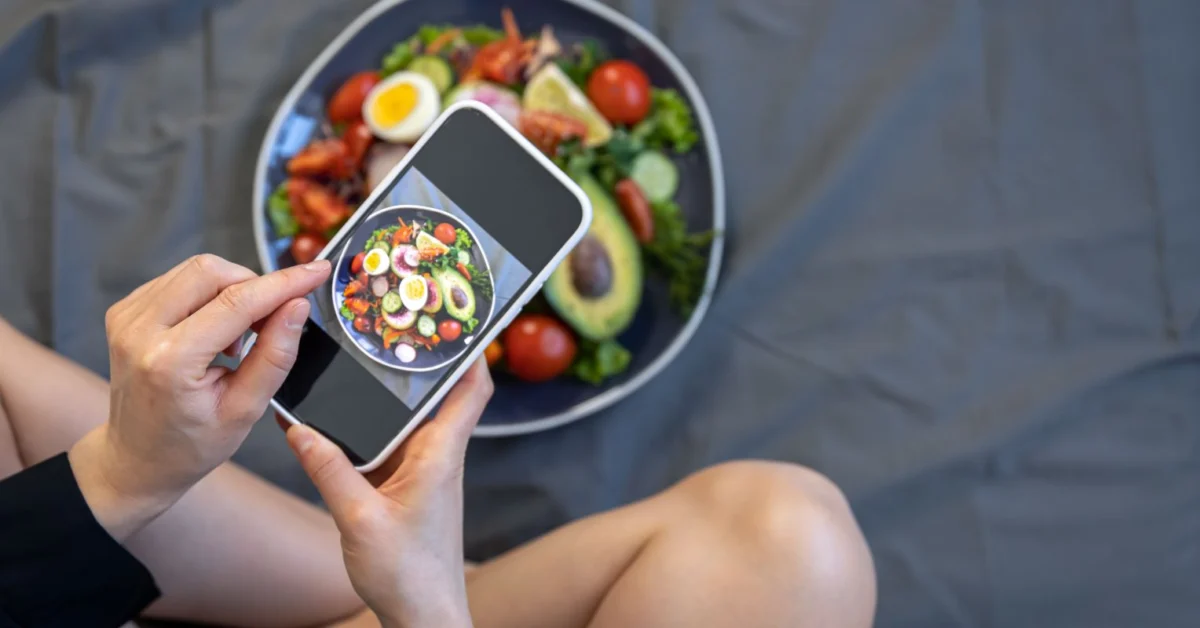
It is a typical Sunday night. You are lying in bed, the blue light of your smartphone illuminating the dark room as you scroll through social media, seeking a momentary escape from the week’s stresses. Suddenly, your feed is hijacked by an influencer’s “what I eat in a day” video. The meals are surgically precise: zero carbs, minimal calories, and a level of aesthetic perfection that feels unattainable.
Before you can process that, a different creator pops up, framing their weekend of heavy drinking as a relatable, humorous “survival” tactic. A few scrolls later, an algorithm-fed advertisement promises that you can “fix your life” in three simple, high-intensity steps. By the time you wake up on Monday, the messaging has moved from your screen into your real life: a coworker is discussing a restrictive new diet, a friend is obsessing over “summer body” preparation, and high-profile celebrities are once again evangelizing the latest exclusionary food trends.
The messages are pervasive, relentless, and deeply corrosive. We are living in an era where the digital landscape serves as an accelerant for diet culture, creating a toxic feedback loop that prioritizes profit over human well-being.
The Architecture of Influence: How Diet Culture Operates
Social media is frequently touted as a tool for connection, but it is simultaneously a laboratory for social comparison. Diet culture—a belief system that equates thinness with moral virtue and health—has found its perfect ecosystem in digital spaces. It promises health and happiness but consistently delivers a byproduct of shame, guilt, and debilitating anxiety.
The wellness market, now a staggering $160 billion industry as of 2024, is projected to swell to $360 billion by 2034. This is not an accident. Digital creators, supplement brands, and fitness apps have mastered the art of exploiting consumer insecurities, transforming low self-esteem into a lucrative revenue stream. By demonizing specific food groups and engaging in performative “fat-shaming,” these platforms sell the false promise that if a user simply adopts the influencer’s restrictive habits, they too can attain the same aesthetic—and by extension, the same level of happiness.
However, the reality behind these curated feeds is often grim. Behind the flawless lighting and filtered images often lie extreme restriction, chronic fasting, and hidden psychological struggles. Research indicates that 46% of teens aged 13–17 report feeling worse about themselves after using social media. Perhaps more alarmingly, individuals who spend more than three hours a day on social media are twice as likely to develop eating disorders compared to their peers with less screen time (REACH Institute, 2025).
A Chronology of Normalization
To understand how we reached this crisis, we must look at the evolution of digital content.
- The Early 2010s: The rise of “fitspiration” on platforms like Pinterest and Instagram introduced the concept of the “perfect body” as a project to be worked on. It shifted the conversation from general health to body aesthetic.
- The Mid-2010s: The emergence of “clean eating” influencers began to pathologize natural foods, labeling items like gluten, dairy, or sugar as “toxic.” This created a culture of fear surrounding the dinner table.
- The Late 2010s to Early 2020s: With the explosion of TikTok, the pace of these trends accelerated. Short-form, high-velocity content made extreme dieting seem like a casual, daily occurrence. Simultaneously, the “wine mom” culture and the glamorization of substance use as a coping mechanism for stress became normalized.
- Present Day: We have entered a state of “integrated toxicity,” where the promotion of disordered eating behaviors often happens alongside the normalization of substance misuse, both framed as necessary tools to manage the pressures of modern life.
The Intersection of Eating Disorders and Substance Use
Eating disorders (EDs) and substance use disorders (SUDs) may appear to be distinct categories, but in clinical practice, they are often two sides of the same coin. Both are essentially maladaptive coping mechanisms—attempts to manage, suppress, or escape from overwhelming emotional distress, trauma, or the pervasive pressures of perfectionism.
According to the National Eating Disorders Association (NEDA), 50% of individuals struggling with an eating disorder also misuse alcohol or drugs. This is not merely a coincidence; there is an interdependent relationship between the two. The physiological stress of starvation or purging can trigger a craving for substances to numb the resulting anxiety, while the disinhibiting effects of alcohol can lead to binge-eating episodes or further restriction.
Social media acts as a catalyst here, blurring the lines between these behaviors. When a platform simultaneously promotes a calorie-restricted diet and a “party hard” lifestyle, it creates a dangerous permission structure for the user. It becomes easy to slide from one harmful behavior to the other—or to engage in both simultaneously—without the user realizing they have crossed the threshold into a diagnosable medical condition.
Supporting Data: The Cost of Silence
The statistical reality of these co-occurring disorders is harrowing. Eating disorders already hold the highest mortality rate of any mental illness. When we add substance use to the equation, the risk profile changes drastically.
Co-occurring alcohol and illicit drug use nearly quadruples the mortality risk for those suffering from eating disorders (Mellentin et al., 2022). Furthermore, these individuals experience higher rates of suicide attempts, co-occurring mood disorders, and generalized anxiety. The data confirms that we are not dealing with a simple case of “unhealthy habits”; we are dealing with a public health emergency that requires immediate clinical and systemic attention.
Official Responses and the Need for Integrated Care
Despite the overwhelming evidence that EDs and SUDs often occur together, our current medical infrastructure remains frustratingly fragmented. Treatment systems often operate in silos: a patient might be referred to an eating disorder clinic for one part of their struggle, and a substance use facility for another.
For the patient, this “whack-a-mole” approach to recovery is not only inefficient—it is often ineffective. Navigating two different care systems, often with different philosophies and treatment protocols, creates gaps in care where patients are most likely to fall through.
Clinical experts are now calling for a paradigm shift toward an integrated, holistic model of care. This approach must address the underlying psychological drivers—such as trauma, systemic stress, and the internalization of cultural ideals—rather than just the symptoms. It requires medical professionals to be cross-trained in both ED and SUD interventions, ensuring that patients receive comprehensive care under one roof.
Implications for the Future: Reclaiming Health
The road to recovery is obstructed by a digital culture that thrives on keeping us dissatisfied with our bodies and our lives. To combat this, we need a multi-pronged strategy:
- Media Literacy: We must teach the next generation to decode the algorithms and recognize the profit motives behind “wellness” content. Recognizing that an influencer’s post is a paid advertisement, not a health recommendation, is the first step in de-escalating the shame response.
- Platform Responsibility: There is an urgent need for stricter oversight of social media platforms. Algorithmic transparency and content moderation—specifically regarding the promotion of disordered eating and substance misuse—must be prioritized over user engagement metrics.
- Systemic Healthcare Reform: Insurance providers and healthcare systems must incentivize integrated care models that treat co-occurring disorders simultaneously, rather than forcing patients to navigate separate systems of care.
- Cultural Shift: We must collectively reject the notion that health is a moral obligation or a aesthetic standard. By fostering environments that value human dignity over body metrics, we can begin to dismantle the diet culture that has become so deeply embedded in our daily lives.
The battle against diet culture is not just a personal struggle; it is a battle for our collective mental health. In a world that profits from our insecurities, the most radical act of self-care is to reclaim our autonomy, prioritize our genuine well-being over social trends, and demand a digital landscape that reflects the complexity and value of human life.
References
- Dane, A., & Bhatia, K. (2023). The social media diet: A scoping review to investigate the association between social media, body image and eating disorders amongst young people. PLOS Global Public Health.
- Finklea, K. (2025). The wrong influence: The link between diet culture and eating disorder. HopeHealth.
- Mellentin, A. I., et al. (2022). The impact of alcohol and other substance use disorders on mortality in patients with eating disorders. The American Journal of Psychiatry.
- National Eating Disorders Association. (2023). Substance use and eating disorders.
- Pierce, S., Joy, J. M., & Wiss, D. A. (2025). Abstinence-based treatment of comorbid eating disorders and ultra-processed food addiction. Frontiers in Psychiatry.
- The REACH Institute. (2025). How social media is impacting teens.
- Xi, Z.-X., & Galaj, E. (2025). Novel potential pharmacological approaches in treating eating disorders comorbid with substance use disorders. Biomedicine & Pharmacotherapy.