




By Jackie Keating, LCSW
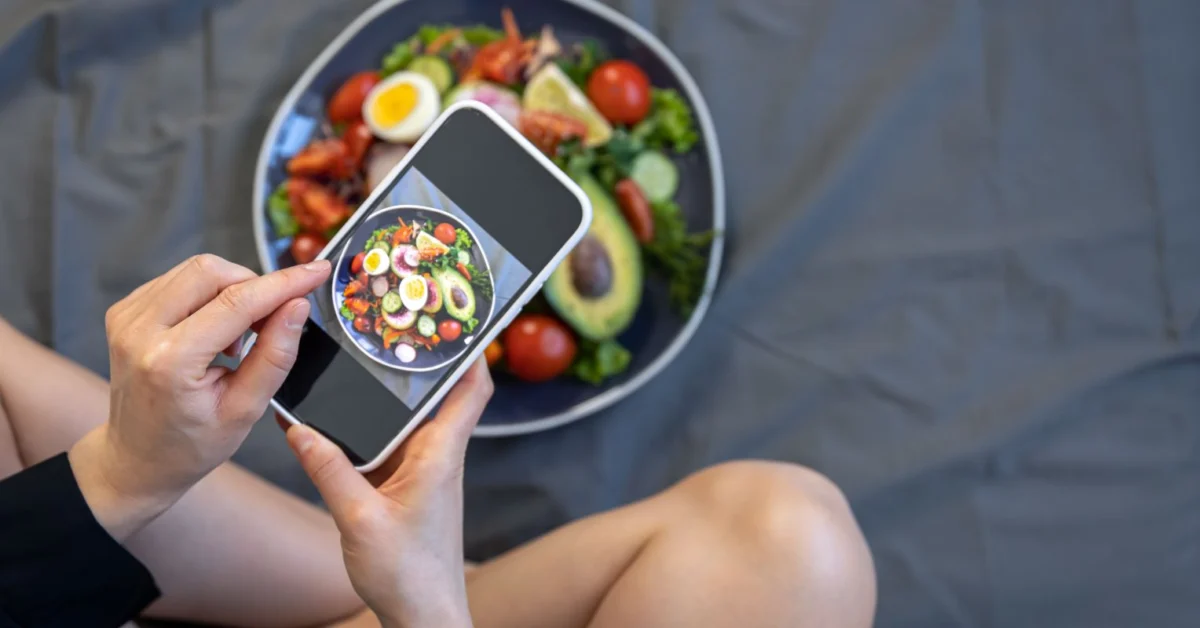
It is a familiar Sunday night ritual: you are lying in bed, the glow of your smartphone illuminating your face as you scroll through social media in search of a brief distraction. Suddenly, an algorithm-curated video appears—an influencer showcasing "what I eat in a day." The meals are impeccably plated, devoid of carbohydrates, and strictly calorie-counted. Seconds later, your feed shifts to a different narrative: a creator humorously documenting a wild night of binge drinking, followed by a "relatable" post from a parent joking that they need wine to survive the day. Interspersed between these snapshots are aggressive advertisements for fitness programs promising to "fix your life" in three simple, transformative steps.
The next morning, the digital echo chamber follows you into the physical world. A coworker discusses a new restrictive diet; a friend texts about shedding weight to "get ready for summer." High-profile celebrities, from A-list actors to professional athletes like Tom Brady, endorse specific plant-based or hyper-regimented diet plans. The message is relentless, pervasive, and often contradictory: achieve the perfect body to earn happiness, but use these specific—and often expensive—crutches to get there.
The Architecture of Diet Culture in the Digital Age
Social media was designed to foster connection, yet it has evolved into a primary delivery system for diet culture—a societal system that equates thinness and "wellness" with moral virtue and health. While it promises vitality, diet culture frequently delivers a cocktail of shame, guilt, and chronic anxiety regarding food and weight.
The wellness industry, which reached a valuation of $160 billion in 2024, is projected to swell to $360 billion by 2034 (Finklea, 2025). This massive economic machine thrives on insecurity. Digital creators and fitness influencers often capitalize on the human desire for self-improvement by promoting restrictive eating, demonizing specific food groups, and engaging in subtle—or overt—fat-shaming.
The underlying, dangerous implication of this content is that if the consumer simply mimics the influencer’s habits, they will attain the same "perfect" body and the associated happiness. However, this is a carefully curated illusion. Beneath the filtered images often lie cycles of extreme restriction, compulsive exercise, and profound psychological distress. The data is sobering: nearly 46% of teens aged 13–17 report feeling significantly worse about themselves after using social media, and those spending more than three hours a day on these platforms are twice as likely to develop eating disorders (REACH Institute, 2025).
The Overlap: Eating Disorders and Substance Use
While eating disorders (EDs) and substance use disorders (SUDs) may manifest differently on the surface—one centered on control over food, the other on chemical dependency—they are often two sides of the same coin. Both serve as maladaptive coping mechanisms used to regulate intense emotions, manage stress, and numb psychological pain.
According to the National Eating Disorders Association (NEDA), 50% of individuals with an eating disorder also struggle with the misuse of alcohol or drugs (NEDA, 2023). This is not merely a coincidence; researchers have identified an "interdependent relationship" between the two, where the presence of one disorder significantly increases the risk of developing the other (Xi & Galaj, 2025).
Social media acts as a catalyst for this intersection. Platforms like TikTok and Instagram have normalized both extreme dieting and the use of substances as "coping" tools. By glamorizing the "party girl" lifestyle while simultaneously pushing "clean eating" or "detox" culture, these platforms blur the lines between healthy habits and dangerous, addictive behaviors. For a vulnerable user, it becomes increasingly easy to slide from a restrictive diet into substance abuse—or to juggle both—without recognizing the onset of a life-threatening illness.
The Deadly Consequences of Co-Occurring Disorders
The medical community has long recognized that eating disorders carry the highest mortality rate of any mental illness. When an eating disorder co-occurs with a substance use disorder, the physical and psychological toll is exponential.
Research indicates that individuals suffering from co-occurring alcohol or drug use with an ED face nearly quadruple the mortality risk compared to those with an eating disorder alone (Mellentin et al., 2022). The cumulative effect of malnutrition, electrolyte imbalances from purging, and the toxic strain of substances on the heart and liver creates a lethal synergy. Furthermore, individuals with these conditions exhibit higher rates of suicidal ideation and attempts, as well as a greater likelihood of having multiple other psychiatric comorbidities, such as major depressive disorder or generalized anxiety (SAMHSA, 2025).
Chronology of a Crisis: From "Health" to "Harm"
The trajectory of this public health crisis can be traced through the evolution of digital trends:
- Pre-2010s: Diet culture was primarily broadcast via legacy media (magazines, television), focusing on "thinspiration."
- 2010–2018: The rise of Instagram introduced the "fitspo" (fit inspiration) movement, moving the goalpost from "thin" to "toned" and "clean eating."
- 2019–2022: The COVID-19 pandemic accelerated digital reliance. Isolation and uncertainty led to a surge in both screen time and the adoption of extreme wellness influencers, with TikTok emerging as a major vector for diet-related content.
- 2023–Present: The formal recognition of "orthorexia" (an obsession with healthy eating) and the emergence of "pro-ana" (pro-anorexia) content masking itself as "biohacking" or "wellness advice" have created a complex landscape where it is increasingly difficult for users to distinguish between medical advice and dangerous misinformation.
Fragmented Systems: The Challenge of Treatment
Despite the clear biological and psychological links between EDs and SUDs, modern healthcare systems remain frustratingly fragmented. Patients often find themselves caught in a bureaucratic game of "whack-a-mole," where they are referred to an eating disorder clinic that lacks the expertise to handle substance use, or a rehab center that ignores the patient’s underlying nutritional pathology (Pierce, Joy, & David, 2025).
This separation is not just inefficient; it is dangerous. Recovery requires an integrative, holistic approach that addresses the individual as a whole person, rather than a collection of symptoms. Clinicians must be trained to recognize the "cross-addiction" potential—where a patient might recover from alcohol use only to dive headfirst into exercise addiction or orthorexia.
Implications for the Future: A Call to Action
The rise of the digital wellness market and the subsequent increase in eating disorders is a systemic failure. As we look toward the next decade, the focus must shift from individual "willpower" to systemic accountability:
- Algorithmic Responsibility: Social media companies must be held accountable for the content their algorithms amplify. Promoting diet pills, "detox" teas, and weight-loss surgery to teenagers is a public health hazard that requires legislative oversight.
- Integrated Clinical Care: Healthcare providers must move toward a unified model of treatment where ED and SUD experts collaborate within the same multidisciplinary teams.
- Media Literacy: Educational institutions and public health initiatives must prioritize media literacy. Teaching young people how to deconstruct the "flawless" images they see online—understanding that these images are often products of filters, lighting, and extreme, unhealthy practices—is essential.
- Redefining Health: We must decouple the concepts of "worth" and "health" from body size. A shift toward intuitive movement, nutritional adequacy, and mental well-being is the only sustainable antidote to the toxicity of current diet culture.
In conclusion, the struggle against diet culture is not just a personal journey; it is a fight against a global industry that profits from human suffering. By recognizing the intersection of these disorders and demanding better, more integrated care, we can begin to reclaim our health from a digital world that has prioritized profit over human life.
References
- Dane, A., & Bhatia, K. (2023). The social media diet: A scoping review to investigate the association between social media, body image and eating disorders amongst young people. PLOS Global Public Health.
- Finklea, K. (2025). The wrong influence: The link between diet culture and eating disorder. HopeHealth.
- Gordon, K. H., et al. (2023). Co-occurring substance use and eating disorders. Psychiatric Times.
- Hambleton, A., et al. (2022). Psychiatric and medical comorbidities of eating disorders. Journal of Eating Disorders.
- Mellentin, A. I., et al. (2022). The impact of alcohol and other substance use disorders on mortality in patients with eating disorders. The American Journal of Psychiatry.
- National Eating Disorders Association (2023). Statistics & research on eating disorders.
- Pierce, S., Joy, J. M., & David, A. W. (2025). Abstinence-based treatment of comorbid eating disorders and ultra-processed food addiction. Frontiers in Psychiatry.
- Substance Abuse and Mental Health Services Administration (2025). Breaking the silence: What everyone should know about eating disorders.
- The REACH Institute (2025). How social media is impacting teens.
- Xi, Z.-X., & Galaj, E. (2025). Novel potential pharmacological approaches in treating eating disorders comorbid with substance use disorders. Biomedicine & Pharmacotherapy.