


Introduction: The Fragile Architecture of Modern Care
The malware attack had technically ended, but for the staff at a midsize hospital in western North Carolina, the "recovery" was merely a different kind of crisis. For three grueling weeks, physicians and nurses had operated in a pre-digital dark age, relying on paper charts, handwritten orders, and the collective memory of a staff accustomed to the instantaneous precision of the electronic medical record (EMR).
When the systems finally flickered back to life, the relief was palpable, yet tempered by a grim reality: the digital infrastructure was a shell of its former self. Only one in four computers functioned. Access to historical patient data was intermittent at best. Most critically, the Picture Archiving and Communication System (PACS)—the backbone of modern diagnostic radiology—remained offline.
"You have to pull up the images here, like the old days," a colleague remarked, leading the way to a remote, dimly lit radiology basement. For a generation of physicians trained entirely in the era of integrated digital health, these "pilgrimages" to physical archives are not just inconvenient; they are a profound vulnerability. In the modern healthcare landscape, the EMR is the clinical equivalent of oxygen. When cyber-criminals sever that supply, they aren’t just stealing data—they are systematically dismantling the hospital’s ability to save lives.
The Chronology of a Collapse: How Ransomware Paralyzes Care
The lifecycle of a healthcare cyberattack typically follows a devastating, predictable script. It begins with a breach—often a single compromised credential or a phishing email—that grants bad actors entry into the hospital’s internal network. Once inside, they move laterally, encrypting servers, locking out administrative access, and often disabling essential utilities like phone systems, email, and, in some cases, physical security badge scanners.
- The Infiltration: Criminals quietly map the hospital’s network, identifying critical databases.
- The Lockdown: Encryption software is deployed. Suddenly, the EMR, the lab results, and the pharmacy dispensing systems go dark.
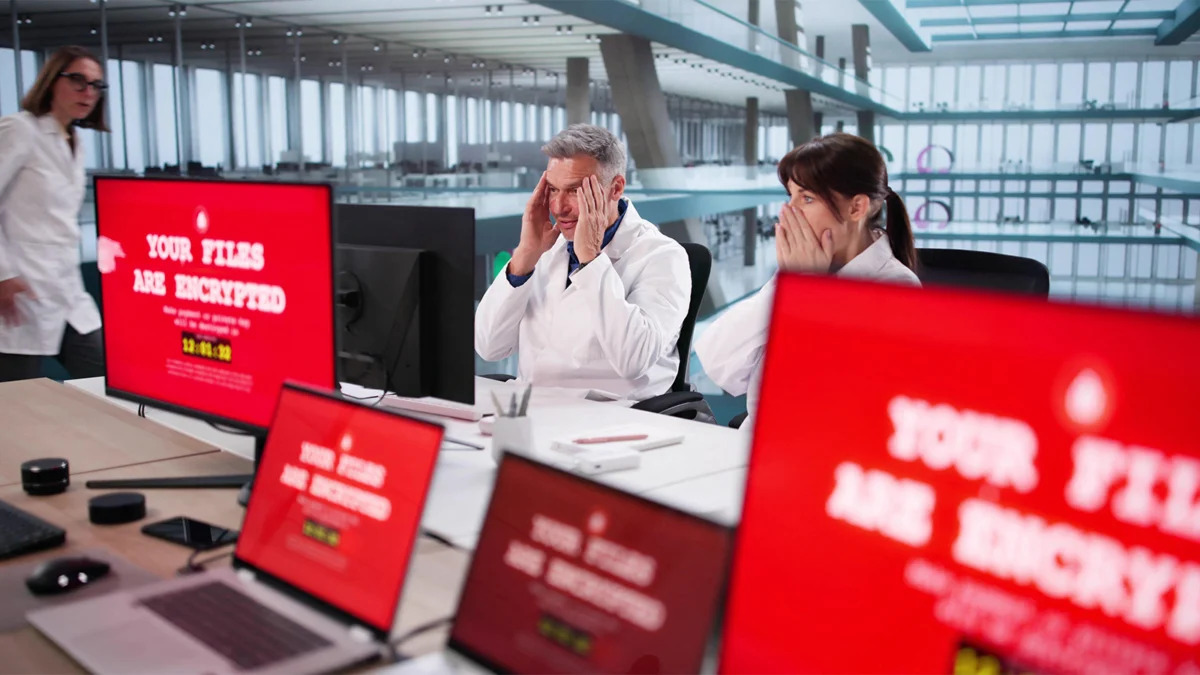
- The Demand: The ransom note appears, often featuring "double extortion" tactics. Attackers demand payment not only to decrypt the stolen data but to prevent the public release of sensitive Protected Health Information (PHI).
- The Clinical Chaos: Without an EMR, doctors cannot view allergy lists, verify medication dosages, or access real-time diagnostic imaging. Nurses are left to manage wards without digital monitoring, and surgical suites often resort to cancellations or diversions.
Supporting Data: The Human Cost of Digital Disruption
The narrative that cyberattacks are merely an "IT problem" is a dangerous fallacy. Research confirms that when hospital systems go down, patient outcomes deteriorate significantly.
A recent analysis of Medicare claims data revealed a chilling statistic: hospitals experiencing a ransomware attack see a 34% to 38% relative increase in mortality for patients already admitted at the time of the breach. The damage, however, is not contained within the walls of the victimized facility.
When a hospital is crippled, it initiates a "domino effect" on the surrounding medical ecosystem. Emergency departments are forced to divert ambulances, and elective surgeries are cancelled, creating a surge in patient volume at nearby facilities that were not prepared for the influx. This sudden strain ripples outward, delaying time-sensitive care for non-cyber-related emergencies like strokes and myocardial infarctions, ultimately leading to a measurable decline in regional health outcomes.
Official Responses and the Policy Standoff
The current regulatory environment regarding healthcare cybersecurity is a fragmented patchwork that experts argue is woefully inadequate for the modern threat landscape.
The FBI and HHS Stance:
Federal agencies, including the FBI and the Department of Health and Human Services (HHS), officially discourage the payment of ransoms. The rationale is clear: payouts incentivize future attacks and provide capital to criminal organizations. However, this advice creates an impossible moral hazard for hospital administrators. When a patient presents in anaphylaxis and the clinical team cannot verify their allergy status, the priority shifts from long-term security to immediate survival. How does an administrator "say no" when lives are hanging in the balance?
Regulatory Hurdles:
Hospitals are categorized as "critical infrastructure," yet they are treated as private businesses responsible for their own defense. While HIPAA requires "reasonable and appropriate" safeguards, the law is notoriously vague, failing to mandate specific technological architectures.
The HHS’s Healthcare Cybersecurity Performance Goals offer a more rigorous roadmap—including offline backups and multi-factor authentication—but these remain voluntary. An ambitious proposal to update the HIPAA Security Rule, introduced in late 2024, aims to codify these requirements. However, it has faced intense pushback from the healthcare industry, largely due to the staggering projected cost: an estimated $20 billion over three years. Consequently, final implementation has been pushed back to July 2027.
Reporting and Transparency:
Similarly, the Cyber Incident Reporting for Critical Infrastructure Act (CIRCIA) of 2022 was designed to streamline the reporting process, requiring entities to notify the Cybersecurity and Infrastructure Security Agency (CISA) within 72 hours of an incident and 24 hours of a ransom payment. Four years later, this act remains in a state of bureaucratic limbo, leaving the public and regulators in the dark during the most critical hours of an attack.
Implications: The Looming AI Threat
The current situation is not merely a static problem; it is an accelerating catastrophe. The integration of Large Language Models (LLMs) into the criminal underworld is poised to revolutionize cyber-crime. Small, low-resource criminal groups will soon have the capability to automate large-scale, sophisticated ransomware attacks that were previously the domain of nation-state actors.
If local hospitals are currently struggling to maintain continuity during manual attacks, they are utterly unprepared for the AI-driven "cyber-apocalypse" that security experts are predicting for the coming months and years.
A Path Forward: Centralization and Federal Intervention
The solution cannot be left to individual hospital boards or overworked IT departments. We must transition from a model of "every hospital for itself" to a federally supported, standardized system of defense.
- Federal Subsidy for Compliance: The $20 billion cost of security upgrades is prohibitive for rural and safety-net hospitals. The federal government must subsidize these upgrades, treating cybersecurity as a core pillar of public health infrastructure rather than an administrative line item.
- Centralized Negotiation: We treat hostage situations with professional law enforcement negotiators; we should treat ransomware the same way. Centralizing negotiations under a federal task force would provide hospitals with the expertise of organizations that understand the technical, legal, and criminal nuances of cyber-defense. It would also aggregate intelligence, allowing the government to track patterns and seize digital assets rather than just watching ransom money flow into crypto-wallets.
- Mandatory Clinical Continuity: Regulations must require that all hospitals possess the technological capacity to maintain "offline" clinical continuity. If a system goes down, there must be a fail-safe, standardized process to keep the patient safe.
- Delegated Expertise: In medicine, we often relinquish control to specialists—surgeons, radiologists, and intensivists—because we trust their domain expertise to prevent error. We must apply this same philosophy to cybersecurity. By delegating the defense of our hospitals to national institutions, we protect our patients from the consequences of our current, decentralized vulnerability.
Conclusion: The Final Click
I am standing in the OR, about to begin a complex reconstructive procedure. I turn to the nurse and ask her to pull up the patient’s CT scan one last time. I’ve seen it before, but in this profession, redundancy is the bedrock of safety.
She clicks the link. The screen remains static. The silence in the room is heavy, a lingering reminder that while the malware is gone, the structural rot remains. We are operating in an era where the most sophisticated medical technology in history is tethered to a digital house of cards. Unless we act to fortify the foundation, the next click might not just result in a blank screen—it might result in a tragedy we can no longer prevent.