










In what is being described by policy analysts and hunger advocates as a seismic shift in the federal approach to public health, the United States Department of Agriculture (USDA) has initiated a sweeping reorganization of the Food and Nutrition Service (FNS). The agency, which serves as the backbone of federal food assistance—including the Supplemental Nutrition Assistance Program (SNAP)—is undergoing a radical transformation that involves renaming, splitting, and physically relocating its core units across the country.
While the current administration frames this move as an effort to improve operational efficiency and move government closer to the "heartland," critics argue that the move is a thinly veiled effort to institutionalize bureaucratic paralysis, reduce program participation, and push out the veteran subject-matter experts who have long managed the nation’s safety net.
The Mechanics of the Reorganization
The scope of the reorganization is unprecedented in modern administrative history. Under the new directive, the Food and Nutrition Service is being rebranded as the "Food and Nutrition Administration" (FNA). Critics suggest that this change in nomenclature is symbolic of a broader shift in mission: moving away from the "Service" of vulnerable populations toward the "Administration" of bureaucratic oversight.
The most significant change, however, lies in the geographic dispersion of the agency’s vital functions. The USDA has announced that the newly minted FNA will be splintered into several regional hubs, physically separating units that have historically worked in close coordination to address food insecurity:
- Child Nutrition Programs: Relocating to Dallas, Texas.
- SNAP and Safety Programs: Relocating to Kansas City, Missouri.
- Research and Data Analysis: Moving to Raleigh, North Carolina.
- Emergency Management: Moving to Denver, Colorado.
- Retailer Compliance: Decentralized across four major cities: Atlanta, Los Angeles, Dallas, and New York.
While the operational headquarters—and the Administrator of the FNA—will remain in Washington, D.C., the functional reality is that the agency’s "boots on the ground" expertise will be scattered thousands of miles apart. Skeptics argue that this model makes cohesive, centralized oversight impossible, effectively creating a "management by geography" approach that serves to isolate staff and hinder communication.
Chronology: A Pattern of Disruption
This move is not an isolated incident but rather the latest chapter in a broader, multi-year strategy to relocate federal agencies out of the D.C. metropolitan area.
- Initial Signals: Over the past year, the USDA signaled a shift in its operational philosophy, emphasizing a "heartland-centric" model of governance. This followed previous attempts by federal agencies to move offices to regions perceived as more aligned with specific administrative priorities.
- The Announcement: Last week, the USDA released an official bulletin detailing the formal transition of the FNS to the FNA. The announcement was accompanied by a high-profile statement from USDA Secretary Brooke Rollins, who framed the move as a return to the roots of American agriculture.
- Implementation: The timeline for this transition is aggressive. With staff currently being notified of their relocation packages, the agency expects a significant portion of its veteran workforce to resign rather than uproot their lives, leading to a massive "brain drain" of institutional knowledge.
The Official Narrative: Efficiency and Responsiveness
Secretary Brooke Rollins has been vocal in defending the move, asserting that the reorganization is essential to modernizing the USDA. In a post on X (formerly Twitter), the Secretary emphasized that the goal is to shift staff "closer to those they support."
The official argument rests on three pillars:
- Efficiency: By decentralizing, the USDA claims it can reduce the overhead of a bloated D.C. bureaucracy.
- Responsiveness: The administration argues that being located in the "heartland" allows officials to better understand the needs of farmers and the families who rely on nutrition programs.
- Customer Service: The USDA claims that this move will result in "faster, better service" for families by aligning the agency more closely with regional agricultural hubs.
However, the tone of the announcement—marked by capitalized emphasis and populist rhetoric—has raised alarms among civil servants and non-partisan oversight groups. Critics point to the inherent contradiction in claiming that "efficiency" is gained by splitting an integrated team into five different time zones.
Supporting Data and the "Brain Drain" Reality
The concern among policy experts is rooted in the history of similar federal relocations. When federal agencies move staff, the resulting attrition rate is often staggering. By forcing a move, the agency effectively purges long-term employees who possess the technical knowledge required to navigate the complex regulatory environment of SNAP.
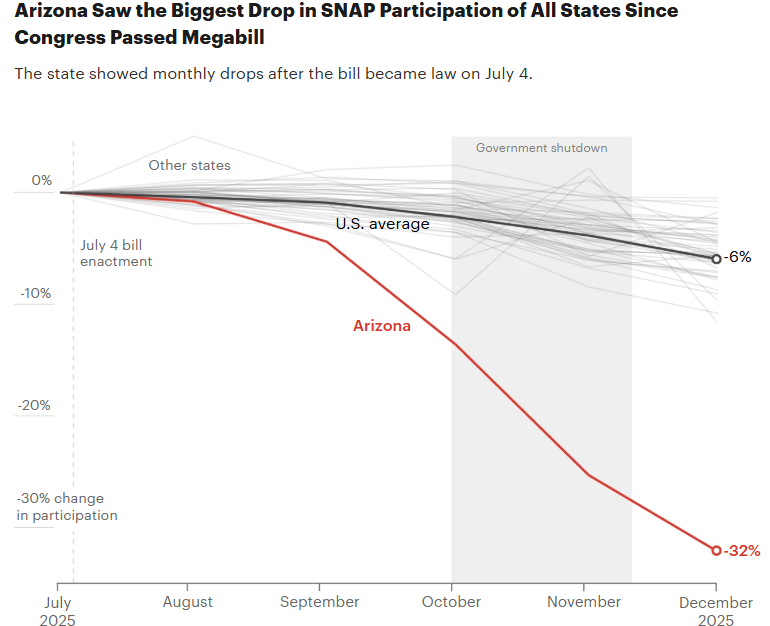
Recent data from states like Arizona, highlighted by reporting from ProPublica, suggests that even minor administrative friction can lead to significant drops in SNAP enrollment. When the personnel responsible for processing applications, managing retailer compliance, and auditing program integrity are either lost to attrition or forced into a chaotic period of transition, the administrative burden on the end-user increases.
If a mother in need of food assistance finds that her application is stuck in a system where the "research unit" is in North Carolina, the "compliance unit" is in New York, and the "oversight unit" is in D.C., the likelihood of that application being successfully processed diminishes significantly. The "efficiency" promised by the USDA appears, under scrutiny, to be an efficient way to lower participation rates by creating insurmountable bureaucratic hurdles.
The Implications for Food Security
The implications of this reorganization are profound and potentially long-lasting. By dismantling the FNS, the government is essentially weakening the central nervous system of federal food policy.
1. Erosion of Institutional Knowledge
The loss of veteran staff is perhaps the most immediate threat. Managing the nuances of SNAP—a program that functions through complex state-federal partnerships—requires years of training. Replacing this expertise with local hires who lack experience in federal food policy will inevitably lead to errors in compliance, data reporting, and service delivery.
2. The Vulnerability of the Safety Net
SNAP is designed to be a counter-cyclical program; it expands during economic downturns to catch those who have lost their jobs or face food insecurity. By fragmenting the agency, the USDA is making the system less agile. During an emergency, such as a natural disaster or an economic recession, the ability of the agency to surge resources and coordinate across state lines will be crippled by the physical separation of its key components.
3. Political Weaponization of Nutrition
Critics argue that the move is an ideological project disguised as a management one. If the goal were truly to "support families," the agency would focus on streamlining the application process and expanding outreach. Instead, the focus has been on "management" and relocation, which points to an agenda centered on reducing the footprint of the welfare state by making it harder to access.
A Critical Crossroads
The transformation of the Food and Nutrition Service into the Food and Nutrition Administration represents a significant pivot point in the relationship between the federal government and its citizens. While the USDA maintains that this is a "laser-focused" effort to improve service, the evidence points toward a structural breakdown.
The true test of this reorganization will not be the rhetoric found in official press releases or social media posts, but the tangible outcomes in the coming months. If SNAP enrollment continues to decline despite high rates of food insecurity, and if the administrative process becomes increasingly opaque and unresponsive, the public will have its answer regarding the true intent of this "national tragedy."
As the agency packs its boxes and prepares for a massive migration across the American landscape, one thing is certain: the stability of the nation’s food safety net is being placed in an precarious position. The loss of institutional cohesion, the predictable attrition of the most qualified staff, and the geographical fragmentation of core services suggest that the era of efficient, expert-led nutrition support is rapidly coming to an end.
For the millions of Americans who rely on these programs for their daily bread, the question remains: will the new "heartland-based" administration be there to provide the service they need, or has the system been intentionally designed to fail them? History, as well as upcoming enrollment data, will provide the definitive answer.