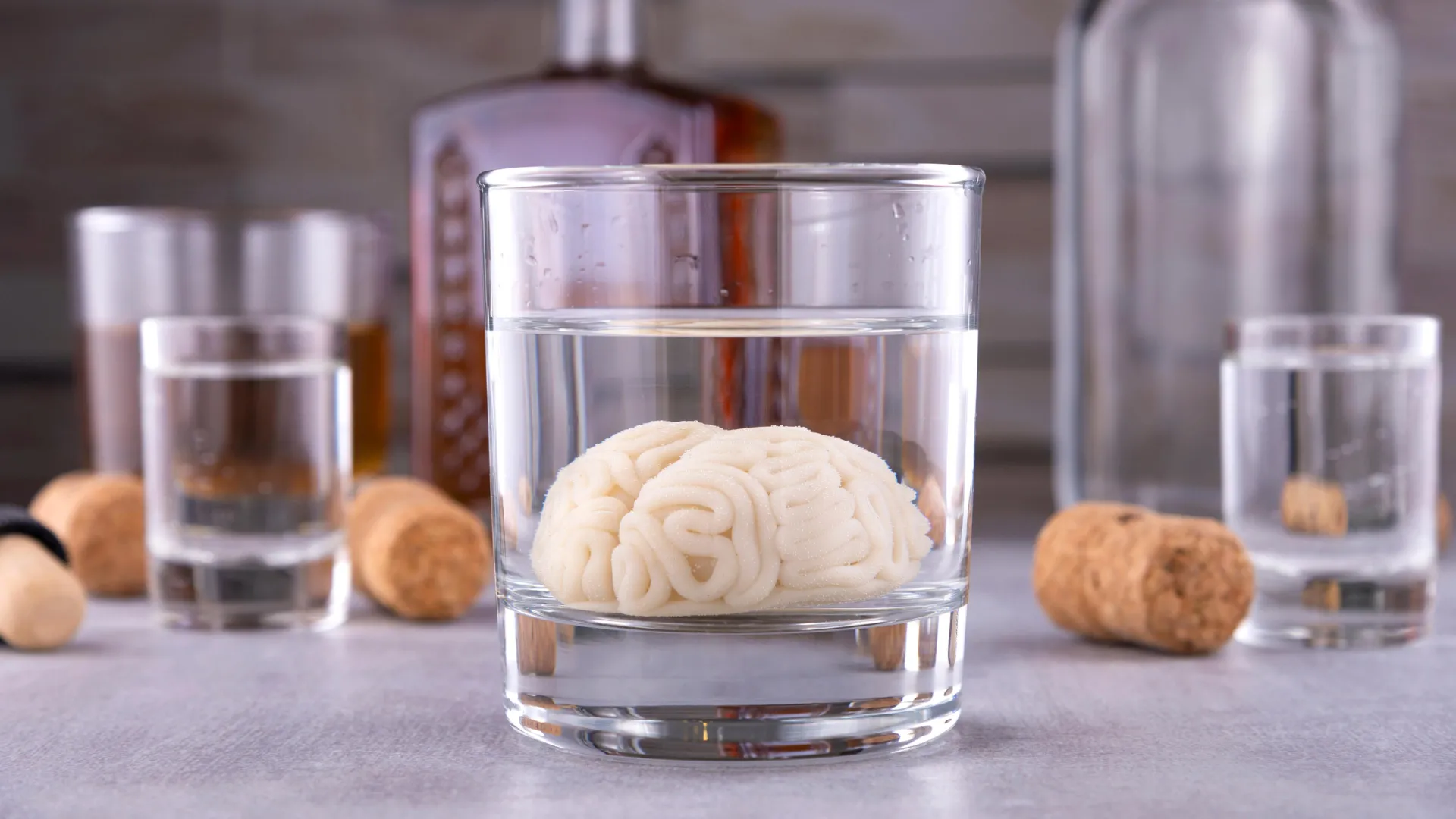
For decades, a pervasive narrative has dominated both medical advice and popular culture: that a glass of red wine with dinner or a modest daily "tipple" might actually be good for the brain. This "optimal dose" theory has suggested that low-to-moderate alcohol consumption could offer neuroprotective benefits, shielding the aging brain from cognitive decline. However, a landmark study recently published in BMJ Evidence Based Medicine has dealt a significant blow to this long-held belief.
Drawing on the largest combined observational and genetic dataset ever assembled on the subject, researchers have concluded that drinking alcohol—at any level—likely increases the risk of dementia. The findings suggest that the perceived health benefits of light drinking are not only illusory but are likely the result of a scientific misinterpretation known as "reverse causation."
The Core Findings: Challenging the "Optimal Dose"
The research team, utilizing data from over half a million participants, found no evidence that low levels of alcohol intake provide any protective effect against cognitive decline. Instead, the study reveals a linear relationship: as alcohol consumption rises, so does the risk of dementia.
For years, observational studies have shown a "U-shaped" curve regarding alcohol and health. In these studies, light drinkers appeared to have lower dementia risks than both lifelong abstainers and heavy drinkers. However, this study suggests that those "non-drinkers" in previous research may have included people who had already quit alcohol due to failing health, pre-existing conditions, or the early, subtle onset of cognitive decline. By failing to differentiate between lifelong abstainers and "former drinkers," previous research likely skewed the data in favor of alcohol.
By employing Mendelian randomization—a genetic technique that acts as a "nature’s clinical trial"—the researchers were able to bypass these confounding factors. The result was clear: there is no safe harbor for alcohol consumption when it comes to long-term brain health.
Chronology: A Multi-Year Deep Dive into Global Data
To reach these conclusions, the researchers leveraged two of the world’s most comprehensive biological databanks: the US Million Veteran Program (MVP) and the UK Biobank (UKB).
The Data Sources
- The US Million Veteran Program (MVP): A massive, diverse cohort including individuals of European, African, and Latin American ancestry.
- The UK Biobank (UKB): A large-scale longitudinal study focusing on participants of predominantly European ancestry.
The Monitoring Process
The study tracked 559,559 participants, aged 56 to 72 at the start of the monitoring period. The follow-up times were rigorous, spanning an average of four years for the US cohort and twelve years for the UK cohort. Researchers meticulously monitored participants from their initial recruitment until the earliest of three events: a formal dementia diagnosis, death, or the study’s conclusion date (January 2022).
Analysis Methods
The study was bifurcated into two analytical stages:
- Observational Analysis: Researchers reviewed questionnaire responses and the Alcohol Use Disorders Identification Test (AUDIT-C) to categorize consumption patterns, including binge drinking frequency.
- Mendelian Randomization: This involved 2.4 million participants from global genome-wide association studies (GWAS). By analyzing 641 independent genetic variants related to alcohol use, the team established a causal link that could not be attributed to lifestyle choices or socioeconomic status, which often muddy the waters in traditional observational studies.
Supporting Data: The Quantifiable Impact of Alcohol
The raw numbers gathered in this study paint a stark picture of the relationship between the bottle and the brain. During the monitoring period, 14,540 participants developed some form of dementia, and 48,034 passed away.
The "Reverse Causation" Phenomenon
One of the most critical revelations of the study was the pattern of alcohol consumption in the years leading up to a dementia diagnosis. The data showed that individuals who eventually developed dementia typically decreased their alcohol intake as they approached their diagnosis. This provides compelling evidence for "reverse causation": people aren’t getting dementia because they stopped drinking; rather, they stop drinking because their brain function is already beginning to deteriorate.
The Genetic Evidence
When the researchers looked at the genetic predisposition for alcohol consumption, the results were linear:
- 1–3 drinks per week: Associated with a 15% higher risk of dementia.
- Doubling genetic risk of dependency: Associated with a 16% increase in dementia risk.
- Heavy consumption: The risk of dementia rises steadily in tandem with the quantity of alcohol consumed, with no evidence of a "safe" threshold.
Unlike the observational data, which suggested a U-shaped curve, the genetic data showed a clear, upward trajectory. The higher the genetically predicted alcohol consumption, the higher the risk of cognitive impairment.
Official Responses and Scientific Context
The medical community has reacted with significant interest to the study, noting that it provides the most robust evidence to date for a causal link between alcohol and neurodegeneration.
While the researchers acknowledge certain limitations—such as the fact that the strongest statistical associations were found in populations of European ancestry—the use of Mendelian randomization provides a level of scientific rigor that is difficult to dismiss. Dr. [Name/Affiliation Placeholder], though not involved in the study, noted that "this paper effectively forces a paradigm shift in how we view moderate alcohol consumption. We can no longer rely on the comfort of the ‘red wine is healthy’ hypothesis."
The authors of the study, in their concluding remarks, were direct: "Our findings highlight the importance of considering reverse causation and residual confounding in studies of alcohol and dementia, and they suggest that reducing alcohol consumption may be an important strategy for dementia prevention."
Implications: What Does This Mean for Public Health?
The implications of this research are profound for both individual decision-making and public health policy.
For the Individual
For the average person, the message is clear: if you are drinking to "protect your heart" or "help your brain," you are acting on outdated and likely incorrect information. The study suggests that there is no amount of alcohol that is truly "safe" for the brain. For those concerned about long-term cognitive health, reducing or eliminating alcohol consumption is a actionable strategy that could significantly lower their risk profile.
For Public Health Policy
Health guidelines have long been hesitant to recommend total abstinence, fearing that such advice would be ignored by the public. However, if the medical consensus shifts to recognize that even light drinking is detrimental, we may see a revision in global health guidelines similar to the shifts we have seen regarding tobacco and processed sugars.
Future Research
The researchers emphasized that while this study is the largest of its kind, future work must focus on diversifying the cohorts. Understanding how alcohol affects the brains of non-European populations is critical, as genetic predispositions and cultural drinking patterns vary significantly. Furthermore, long-term studies that follow individuals from a younger age—rather than starting at 56—could provide even more clarity on the cumulative, lifelong effects of alcohol on the human brain.
Conclusion
The study published in BMJ Evidence Based Medicine serves as a sobering reminder that our understanding of health is constantly evolving. As we move away from the myth of the "beneficial drink," we gain a clearer understanding of the risks associated with alcohol. For the millions of people concerned about the rising global prevalence of dementia, the path forward appears to be one of moderation—or better yet, complete avoidance. The "optimal dose" of alcohol, it seems, is none at all.