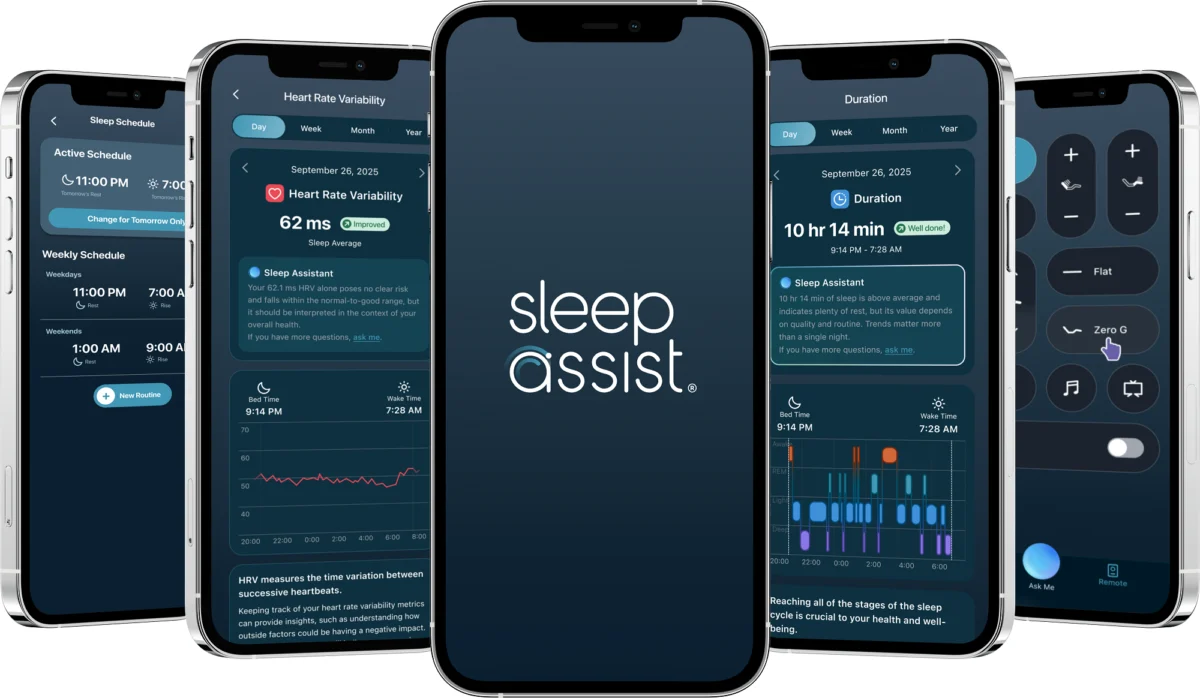
The intersection of biometric monitoring and smart home automation has long promised a revolution in how we approach our nightly rest. However, for many consumers, this promise has been hampered by fragmented ecosystems, expensive recurring subscription fees, and the physical discomfort of wearing trackers to bed. On August 1, Ergomotion—a global leader in adjustable bed technology—is poised to disrupt this landscape with the official launch of Sleep Assist, a unified, AI-powered platform designed to turn the bedroom into a proactive health-optimization environment.
The Core Innovation: A Unified Sleep Experience
At its heart, Sleep Assist is powered by "Ergomotion Intelligence," a sophisticated software suite that bridges the gap between passive biometric data collection and active physical adjustments. Unlike traditional sleep-tracking apps that rely on smartphone accelerometers or uncomfortable wearable devices, Sleep Assist leverages high-precision sensors integrated directly into the frame of compatible Ergomotion smart and adjustable beds.
This non-contact approach is a significant shift for the industry. By embedding the technology within the base of the bed, Ergomotion allows users to maintain their preferred mattress—be it memory foam, hybrid, or spring—while gaining access to clinical-grade insights. The platform will debut on iOS on August 1, with an Android rollout following in mid-August, marking a major milestone in the company’s push toward a fully connected sleep ecosystem.
Chronology: From Concept to Consumer Reality
The journey to Sleep Assist has been one of rigorous engineering and strategic development. The concept was first introduced to the public during CES 2026, where it generated significant buzz for its focus on privacy and lack of subscription overhead.
- January 2026: Ergomotion debuts the preliminary architecture of its AI-driven platform at CES, showcasing the integration of non-contact sensors with automated bed articulation.
- Spring 2026: Beta testing phase commences, focusing on the refinement of the AI Sleep Assistant’s natural language processing capabilities.
- August 1, 2026: Official launch of the Sleep Assist app for iOS users.
- Mid-August 2026: Expansion of platform support to the Android ecosystem.
- Fall 2026: Anticipated launch of the "Ergomotion Legacy Venti," a flagship smart bed designed to maximize the potential of the Sleep Assist software.
Decoding the Data: Supporting Metrics and Biometric Insights
What sets Sleep Assist apart from basic activity trackers is the depth of its data analysis. Because the sensors are localized within the bed base, the system captures physiological data without the signal noise often associated with wrist-based trackers.
The app provides a comprehensive dashboard featuring:
- Sleep Architecture: Detailed nightly, weekly, and monthly views of sleep efficiency, timing, and total duration.
- Restorative Markers: Measurement of heart rate variability (HRV) and lowest resting heart rate, both of which are critical indicators of recovery and stress levels.
- Behavioral Tracking: Analysis of snoring patterns, nighttime awakenings, and general restfulness.
- Personalized Trends: The app’s analytics engine identifies correlations between user habits and sleep quality, helping individuals visualize how their nightly patterns evolve over time.
Perhaps most notably, the platform is entirely subscription-free. In an era where "subscription fatigue" has become a genuine consumer pain point, Ergomotion’s decision to provide this level of analytical power without a monthly fee positions it as a highly attractive option for health-conscious homeowners.
The AI Advantage: A Conversational Wellness Coach
The centerpiece of the user experience is the integrated AI sleep assistant. Eschewing the complex charts and jargon-heavy reports that often frustrate users, the assistant allows for natural language interaction. Users can ask questions like, "Why was my sleep efficiency lower on Wednesday?" or "How does my snoring correlate with my sleeping position?"
The AI synthesizes the biometric data captured by the bed to provide tailored answers. This transforms the app from a passive repository of numbers into an active, conversational coach that guides the user toward actionable changes in their sleep hygiene.
Intelligent Comfort: The Mechanical Synergy
The true "killer app" of the Sleep Assist platform is its ability to physically intervene in the user’s sleep environment. When paired with compatible hardware, the software doesn’t just track—it acts.

Automatic Anti-Snore Intervention
One of the most requested features in sleep technology is the mitigation of snoring. The Sleep Assist system can detect the acoustic signs of snoring and automatically trigger a subtle, motorized elevation of the bed’s head section. By gently altering the user’s angle, the bed helps clear airways, often reducing or stopping snoring without the user ever waking up.
The Zero-G Experience
The app facilitates the "Zero-G" position—a neutral-spine posture that mimics the weightlessness experienced by astronauts. This position is scientifically proven to reduce pressure on the lower back and improve circulation. Through the app, users can program these positions to engage automatically at specific times of the night or upon awakening.
Smart Routines and Sonic Massage
For those who struggle with "sleep onset" (the time it takes to fall asleep), the platform offers relaxation presets. These can include a combination of soothing sonic massage and specific positioning. Furthermore, the app supports programmable routines, allowing the bed to transition from an upright "reading" mode to a flat "sleep" mode at a pre-set time, fostering better circadian rhythm consistency.
Hardware Compatibility and Future-Proofing
At launch, the software will be compatible with Ergomotion’s RIO Eco platform. This platform is a masterclass in modern bed design, incorporating active pillow tilt, lumbar support, and high-frequency sonic massage. By integrating the RIO Eco’s mechanical features with the Sleep Assist app’s data processing, Ergomotion has effectively created an "automated sleep environment."
Looking ahead, the company is preparing for the fall 2026 release of the Ergomotion Legacy Venti. This bed is expected to push the boundaries of what is possible in residential furniture, serving as the premium hardware anchor for the Sleep Assist ecosystem.
Official Responses and Strategic Implications
"Sleep Assist represents the next step in Ergomotion’s evolution as a connected sleep technology leader," says Gui Peres, CEO of Ergomotion. The sentiment behind this statement reflects a broader corporate strategy: moving away from the perception of a bed as a static piece of furniture and toward the definition of a bed as a "health-monitoring diagnostic tool."
The implications for the wellness and sleep technology industries are profound. By removing the "wearable barrier," Ergomotion is targeting a demographic that is interested in health optimization but is resistant to the friction of charging devices, syncing Bluetooth trackers, or managing subscription tiers.
Furthermore, the focus on "connected sleep environments" suggests a future where the bed communicates with other home devices—such as smart thermostats or lighting systems—to curate an optimal, temperature-controlled, and light-managed environment based on the user’s specific sleep stage.
Conclusion: A New Era of Passive Optimization
As we move deeper into the age of the "Quantified Self," the most successful technologies will be those that integrate seamlessly into our lives without requiring constant management. Ergomotion’s Sleep Assist platform is a significant leap toward this ideal. By combining sophisticated AI, granular biometric insights, and high-end mechanical adjustment, the company is not just selling a better bed; they are providing a foundation for a more restorative, data-informed life.
For consumers, the choice is clear: the future of sleep is not found in a wearable on your wrist, but in the intelligent environment surrounding your rest. With the August launch, Ergomotion is setting the standard for what that environment should look like.