From the fast-paced scroll of TikTok to the bestseller lists of health-focused diet books, vegetable oils—often categorized collectively as “seed oils”—have become the latest lightning rod in the nutrition world. In online forums, these oils are frequently maligned as “toxic sludge,” “motor oil,” or “the hateful eight.” Advocates of the carnivore and ancestral diet movements argue that these oils are the hidden architects of modern chronic disease, ranging from obesity to depression.
However, beneath the inflammatory rhetoric lies a more complex, nuanced reality. While the manufacturing processes of industrial oils deserve scrutiny, the blanket dismissal of all seed-derived fats ignores decades of cardiovascular research. To navigate the grocery aisle with confidence, one must look past the viral memes and examine the actual biochemistry of what we put in our pans.
The Evolution of the Anti-Seed Oil Argument
The modern skepticism toward vegetable oils is rooted in a narrative of “ancestral inconsistency.” The core argument suggests that human beings evolved over thousands of years consuming animal fats (tallow, lard, butter), whereas vegetable oils—derived from seeds like corn, soy, canola, and sunflower—are industrial inventions of the last century.
Critics argue that these oils were mass-produced for profit rather than health, marketed as heart-healthy alternatives to butter only to be revealed (in their eyes) as contributors to systemic inflammation. They point to the rise of processed foods as a parallel to the rise of seed oil consumption, suggesting that the correlation is causal.
Conversely, mainstream nutrition science often paints a different picture. Many lipid researchers point to the high levels of polyunsaturated fatty acids (PUFAs) in these oils as potentially heart-protective, especially when they replace saturated fats in the diet. This leaves the average consumer in a state of confusion: Are these oils the root of all modern illness, or are they a misunderstood tool for heart health?
The Anatomy of Production: How Oils Are Made
To understand why seed oils are controversial, one must understand how they reach the bottle. Unlike olive or avocado oil, which can be extracted through simple mechanical pressure—similar to how one might squeeze juice from an orange—seeds contain very little inherent fat.

To extract oil from corn or soybeans, manufacturers must employ an intensive, multi-step industrial process:
- Cleaning and De-hulling: Removing extraneous plant material.
- Grinding and Heating: Breaking down the seed structure to facilitate oil release.
- Solvent Extraction: Using chemical solvents like hexane to chemically strip the oil from the seed meal.
- Refining, Bleaching, and Deodorizing: These steps remove impurities, colors, and strong odors, resulting in a flavorless, highly stable product.
During this intense heat and chemical processing, some unsaturated fats can be transformed into trans fatty acids. While the FDA banned the addition of partially hydrogenated trans fats to foods in 2018, the industrial processing of these oils remains a point of contention for those who prefer "whole" or "minimally processed" foods.
Supporting Data: The Case for Extra Virgin Olive Oil (EVOO)
When looking at the gold standard of cooking fats, the research is unequivocal: Extra Virgin Olive Oil (EVOO) stands apart. Produced via cold-pressing, EVOO retains the polyphenols and antioxidants present in the olive fruit.
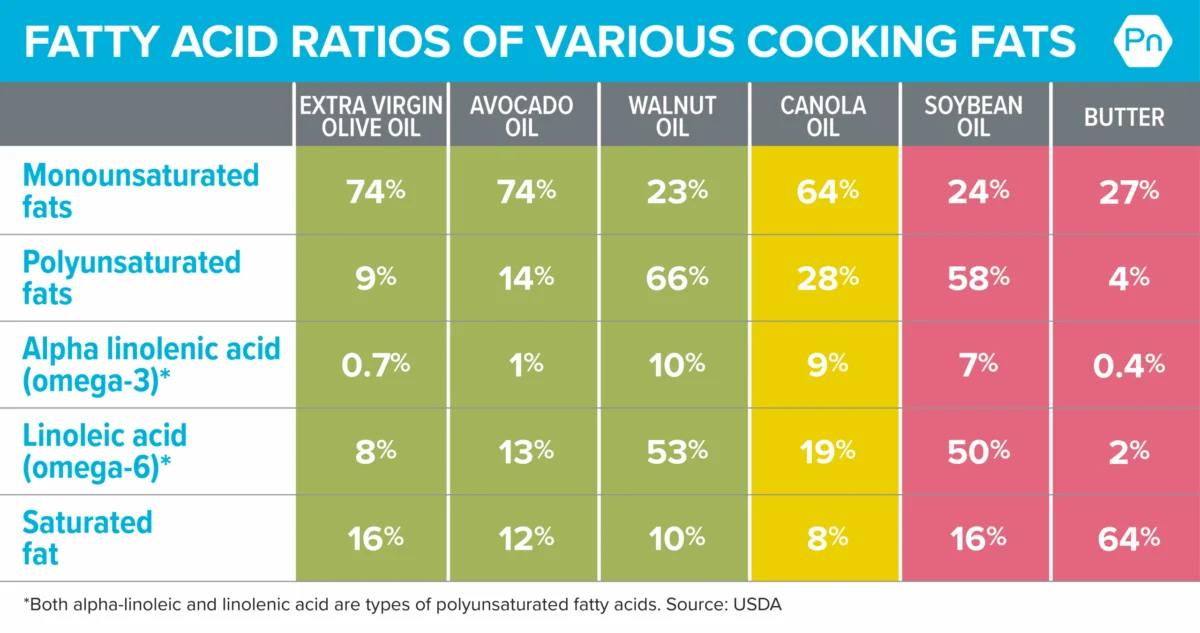
In a landmark study involving over 22,000 adults in Southern Italy, those who consumed more than two tablespoons of olive oil daily saw a 20 percent reduction in mortality over 13 years compared to those who consumed less than one tablespoon. Furthermore, EVOO is rich in monounsaturated fatty acids (MUFAs), which are highly stable at high temperatures—dispelling the long-held myth that you shouldn’t cook with olive oil. In comparative heat-stability testing, EVOO has been shown to remain more stable than even canola oil when heated to high temperatures.
The Omega-6 Paradox
The loudest criticism of seed oils involves the Omega-6 to Omega-3 ratio. Critics argue that the typical American diet is far too high in Omega-6 fats, which they claim fuels systemic inflammation.
While it is true that the modern diet has shifted away from the 1:1 or 4:1 ratio of Omega-6 to Omega-3 seen in ancestral diets, the scientific community is divided on the impact of this shift. Large-scale reviews published in journals like Circulation have suggested that, when consumed as part of a whole-food diet, Omega-6 fats are not inherently harmful and may actually correlate with a reduced risk of heart disease and stroke.

The vital distinction here is the "food matrix." When you consume Omega-6 fats in the form of whole walnuts or seeds, you receive a package of fiber, protein, and antioxidants. When you consume them in the form of highly refined, processed oil, you receive the fatty acids stripped of their protective botanical companions.
Implications for the Modern Diet
If the goal is to optimize health, the solution is not necessarily to panic over a bottle of oil, but to change the context in which we consume fats. The problem is rarely the occasional use of a neutral oil for roasting vegetables at home; the problem is the ubiquitous presence of refined oils in ultra-processed foods.
Ultra-processed foods—chips, cookies, frozen dinners, and packaged snacks—are the primary delivery system for industrial seed oils. These foods are designed for hyper-palatability, are calorie-dense, and are almost entirely devoid of the fiber and micronutrients that characterize a healthy diet.
Recommendations for Consumers:
- Prioritize Whole Food Fats: Get the majority of your fat intake from avocados, olives, nuts, seeds, and fatty fish. These come with the "nutritional insurance" of fiber and phytonutrients.
- Choose Minimal Processing: For cooking oils, prioritize extra virgin olive oil or cold-pressed avocado oil whenever the budget allows.
- Budget-Friendly Alternatives: If high-end oils are not accessible, expeller-pressed canola oil or high-oleic sunflower oil are acceptable, stable, and cost-effective alternatives.
- Cap Ultra-Processed Consumption: Aim to derive 80 percent of your calories from whole or minimally processed foods. This naturally limits your exposure to the industrial oils found in convenience snacks.
- Moderate Deep-Frying: Regardless of the oil type, repeated high-heat frying degrades the nutritional quality of any fat. Treat fried foods as an occasional indulgence.
Official Stance and Conclusion
While social media influencers might label seed oils as "toxic," the scientific consensus is more moderate. The danger of seed oils lies less in their inherent chemical structure and more in their role as a primary ingredient in the ultra-processed diet that has come to dominate the modern food supply.
There is no "perfect" fat that serves as a cure-all, and there is no "poison" fat that acts as a singular cause of death. By shifting the focus away from the fear of specific ingredients and toward the quality of the overall diet, consumers can move toward a more sustainable and healthy relationship with food.
Ultimately, the best approach is to enjoy fats in their most natural form, use high-quality oils when cooking at home, and view highly processed, oil-heavy convenience foods as a small, infrequent part of your nutritional repertoire rather than a dietary staple. By doing so, you can avoid the "toxic" noise and focus on what truly drives longevity: a diverse, whole-food-based diet.