For millions of Americans, the weekend ritual of heading to a local chain diner for a hearty breakfast is a cherished tradition. Whether it’s the bottomless coffee, the sizzle of a flat-top grill, or the nostalgic comfort of fluffy pancakes and crispy bacon, these establishments serve as the backbone of American morning culture. However, beneath the golden-brown crusts and the inviting scent of syrup lies a sobering reality: many of these breakfast platters are nutritional "bombs" that pack more calories than a typical lunch or dinner.
While an average cheeseburger typically ranges between 700 and 1,200 calories—a figure already considered substantial by most dietary standards—some restaurant breakfast platters routinely soar into the 2,000-calorie range. This article explores the caloric density of popular chain breakfast meals, analyzing why these dishes are so calorie-dense and what they mean for the average consumer’s health.
Main Facts: The "Burger Equivalent" Breakfast
The primary issue with modern breakfast platters is the "stacking effect." A single meal is often designed as an all-in-one experience, combining carbohydrates, fats, and proteins in massive portions. When you account for the breading on fried meats, the butter used to sear pancakes, the oil in hash browns, and the heavy gravies, the caloric total compounds rapidly.
Most medical professionals suggest that the average adult requires approximately 2,000 to 2,500 calories per day to maintain weight. When a single breakfast meal accounts for 100% or even 125% of that total, it places an immense strain on the body’s metabolic processes. The five meals listed below are not outliers; they are standard menu items that routinely match or double the caloric density of a standard fast-food cheeseburger.
Chronology of the "Super-Sized" Breakfast
The evolution of the American breakfast platter has tracked closely with the rise of the "value" mentality in the restaurant industry.
- The 1950s-1970s: Breakfast at diners was relatively modest—typically two eggs, a side of toast, and a modest serving of meat. Portions were smaller, and "add-ons" like double-stacked pancakes were considered luxury items.
- The 1980s-1990s: As competition between family-style restaurant chains intensified, marketing strategies shifted toward "value and volume." Chains began introducing "Big" or "Lumberjack" style platters to provide a perceived sense of higher value for the price.
- The 2000s-Present: The normalization of the massive breakfast. Today, diners compete for the "all-day breakfast" crowd. This has led to an arms race of portions, where adding an extra protein or an extra side is used to differentiate one chain from its competitors.
High-Calorie Culprits: A Closer Look
1. Black Bear Diner: Chicken Fried Steak & Eggs
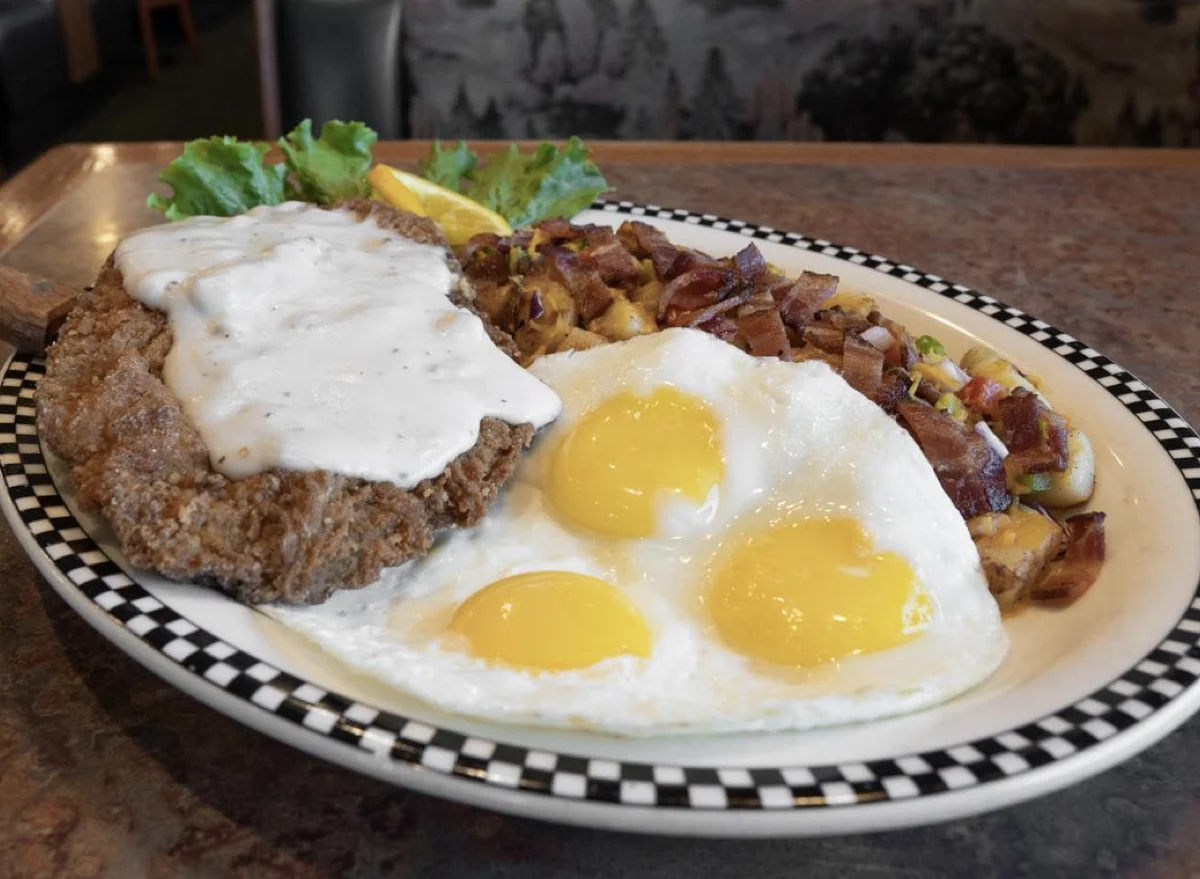
At the top of the list is the Black Bear Diner’s "Bigfoot" menu, which is specifically engineered for those with massive appetites. The Chicken Fried Steak & Eggs platter is a powerhouse of calories, clocking in at an astounding 2,450 to 2,510 calories. This meal consists of breaded, deep-fried beef, a generous ladle of country gravy, three eggs, and two oversized homemade biscuits. Their "Big Bacon Breakfast" follows closely behind, ranging from 2,110 to 2,170 calories.
2. Perkins: Classic Eggs Benedict
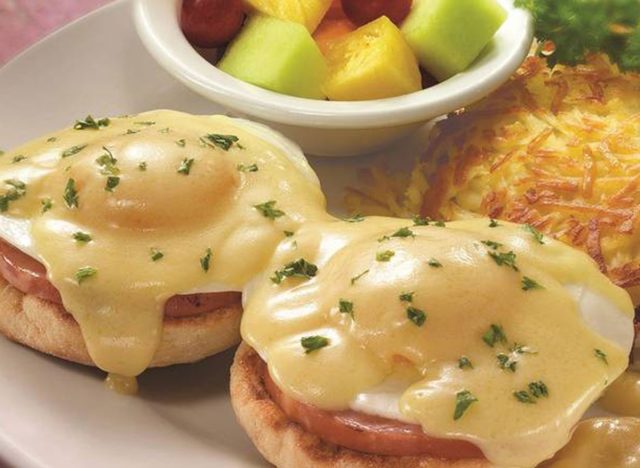
Perkins offers a more "refined" take on the calorie-dense breakfast, but the numbers remain striking. The Classic Eggs Benedict—consisting of two basted eggs, grilled ham, and creamy hollandaise sauce on an English muffin—totals between 1,280 and 1,830 calories when paired with fruit and hash browns. The Southern Fried Chicken Biscuit Breakfast is an even heartier choice, hitting the 1,550 to 1,620-calorie mark.
3. Bob Evans: Whole Hog Breakfast
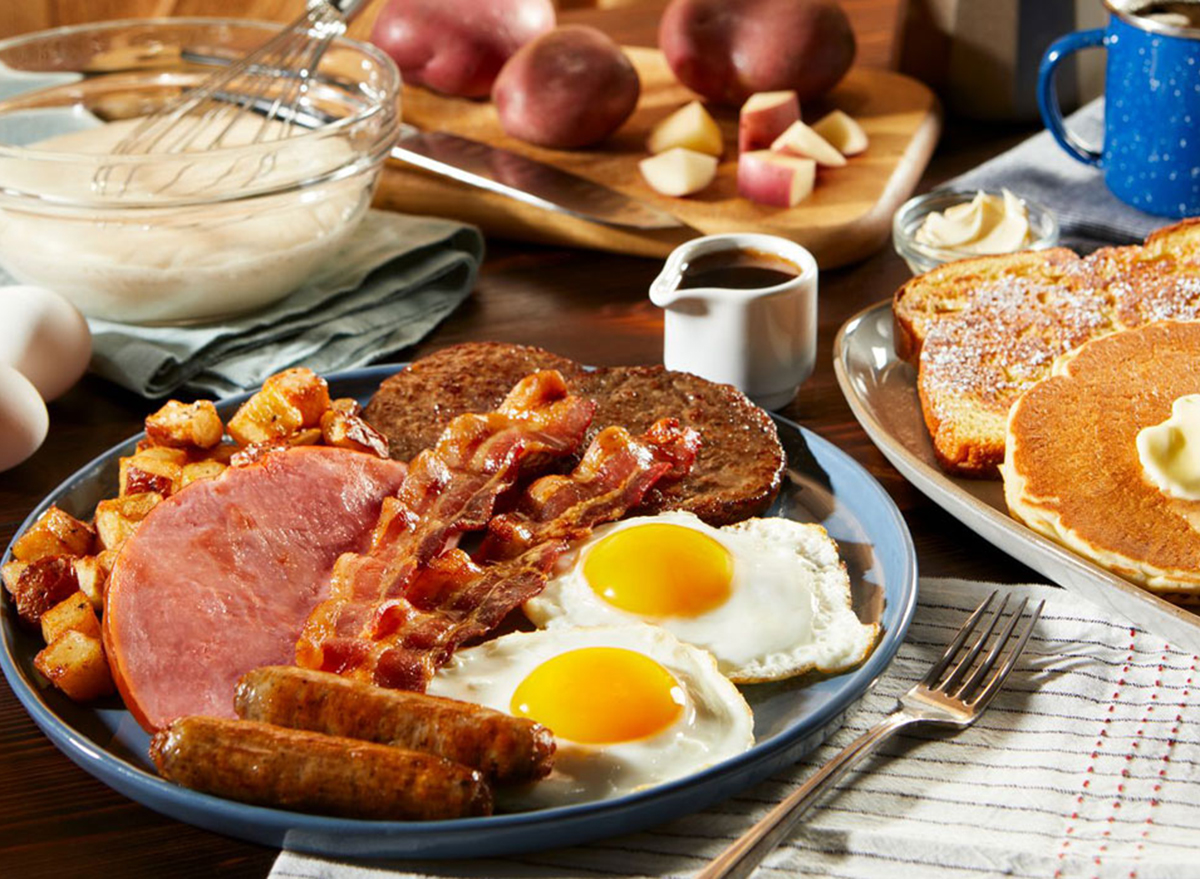
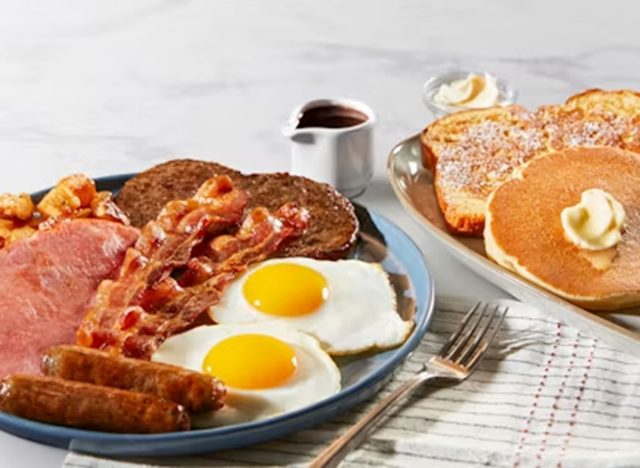
True to its name, the "Whole Hog" at Bob Evans is designed to satisfy the hungriest of patrons. It is a literal smorgasbord of pork products: two strips of crispy bacon, two sausage patties, two sausage links, and a slice of hickory-smoked ham. Throw in two eggs, a hotcake, a slice of brioche French toast, and a side of home fries, and you are looking at a caloric intake of 1,800 to 2,000 calories.
4. Denny’s: The Lumberjack Slam
Denny’s is synonymous with the classic American breakfast. The Lumberjack Slam is a staple, but it is a massive caloric investment. Ranging from 1,010 to 2,730 calories, the variance is largely due to the diner’s ability to customize. The base meal, featuring two buttermilk pancakes, ham, bacon, sausage, eggs, hash browns, and toast, provides a level of fuel that most humans do not need for a single morning.
5. IHOP: Country Fried Steak & Eggs
IHOP, the International House of Pancakes, excels at high-calorie breakfast comfort food. Their Country Fried Steak & Eggs is a significant caloric commitment at 1,480 to 1,580 calories. When you add a Buttermilk Biscuit and Gravy combo (1,450–1,550 calories), you are essentially consuming a full day’s worth of energy in one sitting.
Supporting Data and Nutritional Implications
The danger of these high-calorie breakfasts is not merely the energy content, but the composition of the nutrients.
- Sodium Overload: Most of these platters contain well over the daily recommended limit of 2,300mg of sodium in a single serving. This leads to water retention and elevated blood pressure.
- Saturated Fat: The reliance on butter, heavy cream in gravies, and fatty cuts of pork means these meals are often loaded with saturated fats, which contribute to cardiovascular strain.
- Refined Carbohydrates: Pancakes, white toast, and biscuits represent simple sugars that spike insulin levels, leading to an inevitable "crash" shortly after the meal.
Official Responses and Industry Context
In response to growing public scrutiny regarding nutrition, many of these restaurant chains have begun to provide clearer menu labeling. Following the implementation of FDA regulations requiring chain restaurants with 20 or more locations to disclose calorie counts on menus, consumers are finally seeing the "hidden" cost of their meals.
Many of these companies argue that these meals are meant to be shared or are designed for specific customer demographics—such as manual laborers or long-haul travelers—who require higher caloric intake for their daily activities. Spokespeople for these chains often emphasize that they offer "lighter" alternatives, such as egg white omelets, oatmeal, and fruit-based dishes, suggesting that the "Big" platters are a choice, not a mandate.
Implications: Making Smarter Choices
Understanding the caloric density of these meals does not mean that the local diner must be avoided entirely. Instead, it requires a shift in how we approach dining out:
- The "Half-Order" Rule: Many restaurants are happy to serve a half-portion if requested.
- Modify the Sides: Swap the hash browns for extra fruit or steamed vegetables.
- Share the Meal: These platters are often large enough to be split between two people, which immediately brings the caloric intake down to a more manageable level.
- Mindful Condiments: Ask for syrup, butter, and gravy on the side. These calorie-dense "toppings" often account for 300 to 500 calories of the total meal.
The bottom line is that the modern restaurant breakfast has transformed into a culinary excess. While the taste is often undeniably satisfying, the long-term health implications of making these meals a weekly habit are significant. By remaining informed and making deliberate choices, consumers can still enjoy the social benefits of a diner breakfast without compromising their long-term health goals.