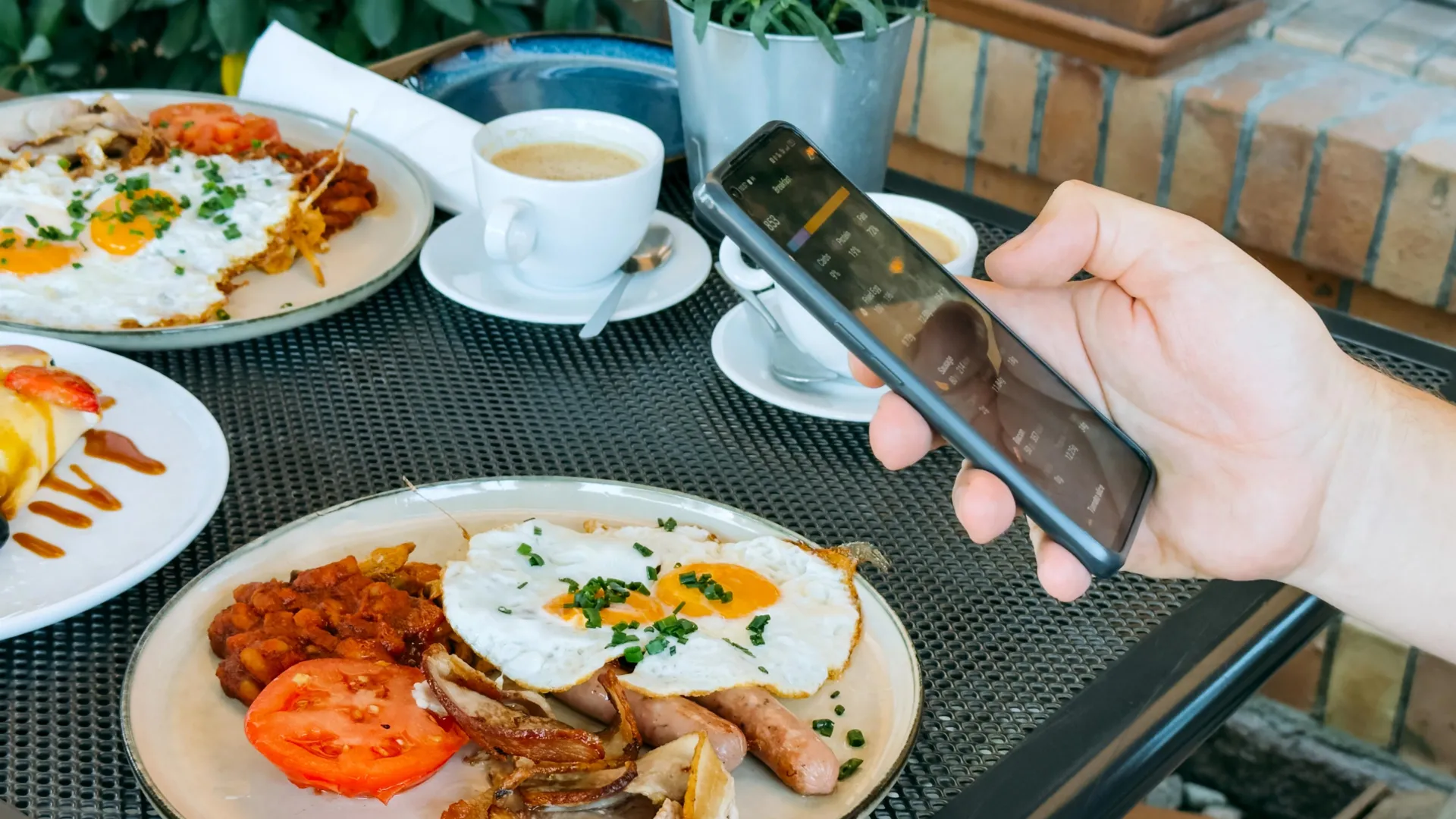
In the quest for optimal health, weight management, and fitness, the modern smartphone has become the ultimate tool. With a simple point-and-click, users of AI-powered calorie tracking apps can theoretically bypass the tedious labor of manual food logging. By leveraging image recognition, these applications promise to identify ingredients and estimate portion sizes from a single photograph, translating visual data into a precise nutritional breakdown.
However, a groundbreaking study presented at NUTRITION 2026—the annual flagship meeting of the American Society for Nutrition—suggests that this technological convenience may come at a significant cost to accuracy. Researchers from the National Institute of Diabetes and Digestive and Kidney Diseases (NIDDK), part of the National Institutes of Health (NIH), have found that these AI tools consistently underestimate caloric content, leaving users potentially misinformed about their true energy intake.
The Promise vs. The Performance: Main Findings
The convenience of "snap-and-track" technology is undeniable. By removing the friction of searching databases for specific brands or estimating serving sizes in cups and grams, AI apps have lowered the barrier to entry for health-conscious individuals. Yet, when subjected to rigorous scientific scrutiny, the technology falters.
In a comprehensive assessment of four popular calorie-tracking applications—MyFitnessPal, LoseIt!, CalAI, and Appediet—researchers discovered that the apps underestimated caloric intake by an average of one-third per meal. Across the board, the shortfall was significant, with estimates ranging from 250 to 345 calories below the actual content of the meals. Furthermore, fat content was consistently undervalued by approximately 30 grams.
For a user adhering to a strict caloric budget, a discrepancy of 300 calories per meal—amounting to potentially 900 calories a day—could be the difference between a successful weight-loss journey and an unexpected plateau or weight gain.
Chronology of a Clinical Investigation
The journey toward these findings began within the walls of the NIH Clinical Center. The investigation was not an isolated study on apps, but rather a subset of a broader, high-stakes nutrition trial designed to compare the metabolic effects of ketogenic (low-carbohydrate) diets against standard dietary patterns.
The Methodology of Precision
To ensure the study reached the highest level of empirical rigor, researchers utilized the NIH’s controlled metabolic kitchen. In this environment, every ingredient—from oil to protein—was measured to the nearest 0.1 gram. This provided a "gold standard" reference point that allowed the team to see exactly what the AI was "seeing" versus what was actually on the plate.
- The Initial Phase: The team collected standardized photographs of 102 meals prepared within the clinical kitchen. These images were then uploaded to the four participating apps to evaluate their computational performance.
- The Secondary Analysis: Following the initial shock of the results, the researchers expanded the scope of their inquiry. They processed more than 200 additional meals to determine if specific dietary compositions, such as high-fat keto meals, posed a greater challenge to the AI’s recognition algorithms.
- The Presentation: The final findings were synthesized and presented by Olivia Charles, a postbaccalaureate intramural research training fellow at NIDDK, during the President’s Oral Session at NUTRITION 2026 in National Harbor, Maryland.
Data Breakdown: Where the AI Fails
The study provides a granular look at the limitations of current image recognition technology in the context of human nutrition.
Macro-Nutrient Inconsistency
While the apps showed varying degrees of success, a pattern emerged: carbohydrates were generally tracked with more consistency than other macronutrients. Fats, however, proved to be the "blind spot" for these algorithms. Because fat is calorically dense (providing nine calories per gram compared to four for carbohydrates and protein), even a minor error in visual estimation of a fatty dressing, oil, or cut of meat results in a massive discrepancy in the total calorie count.
The "Keto" Challenge
The preliminary data regarding ketogenic diets is particularly telling. Because keto meals are inherently high in fat and often lack the visual "cues" of traditional, starch-heavy meals (like a large pile of pasta or a recognizable bun), the AI appears to struggle with volume and density estimation. The algorithms, which are often trained on "standard" Western diet images, appear to lack the depth perception or ingredient-density mapping required to identify the caloric weight of high-fat, low-volume foods.
Official Perspectives and Expert Commentary
Aaron Hengist, a postdoctoral visiting fellow at the NIDDK, has been at the forefront of this evaluation. His perspective is one of cautious skepticism toward current market trends in health-tech.
"Photo-based calorie tracking apps are very popular, especially for people trying to manage their health or lose weight," Hengist noted during the conference. "However, the accuracy of many of these apps has not been thoroughly evaluated. Our study helps address this question by looking at whether these apps can reliably estimate calories."
Hengist emphasizes that while the apps are useful as educational tools, they should not be treated as objective nutritional sensors. "People using a photo-based tracking app without adjusting the portions or entering the amounts of food should take the results with a grain of salt," he advised. "These apps tend to underestimate calories, especially from fats, so what they actually ate is likely higher than what the app shows."
Implications for Public Health and Future Technology
The implications of this research are twofold: they impact the individual consumer today and the developers who are shaping the future of digital health.
For the Consumer
For those currently relying on these apps, the message is clear: automation is not a substitute for mindfulness. The researchers suggest that the most accurate way to use these tools is to view them as a "starting point" rather than a final verdict. Combining image-based tracking with traditional methods—such as reading nutrition labels, using a digital kitchen scale, or manually confirming the portion sizes suggested by the app—is the current "best practice" for ensuring accuracy.
For Developers and AI Engineers
The failure of these apps to accurately identify fat-rich foods highlights a critical need for more robust training data. If AI models are primarily trained on standardized, generic images, they will continue to fail when confronted with complex, home-cooked, or culturally diverse cuisines. The industry must move toward a model that incorporates not just image recognition, but also contextual data and user-input verification to bridge the "calorie gap."
A Note on Scientific Process
It is vital for the public and the media to recognize the nature of this research. As presented at NUTRITION 2026, the study is categorized as a high-level scientific abstract. While the findings were selected by a committee of expert reviewers, the study has not yet undergone the full, formal peer-review process required for publication in a major scientific journal.
As such, these results should be viewed as preliminary. They serve as a critical clarion call for further research, but they also provide a necessary wake-up call for the fitness community. As AI continues to integrate into every facet of our lives, the "black box" of calorie tracking remains a space where human oversight is still, for the moment, indispensable.
Conclusion: The Path Forward
The marriage of AI and nutrition is still in its infancy. While the technology offers a revolutionary approach to the daily grind of food logging, it is currently hampered by an inability to accurately quantify the most calorie-dense components of our diets.
For now, the lesson for the health-conscious individual is simple: trust your eyes and your scale more than your camera. Until these algorithms can accurately discern the difference between a tablespoon of olive oil and a cup, the "300-calorie gap" will remain a hidden variable in the weight-loss equation. As research continues to advance, the hope remains that these tools will eventually match the accuracy of the metabolic kitchen, but until that day, a healthy dose of skepticism is the most important tool in any dieter’s kit.