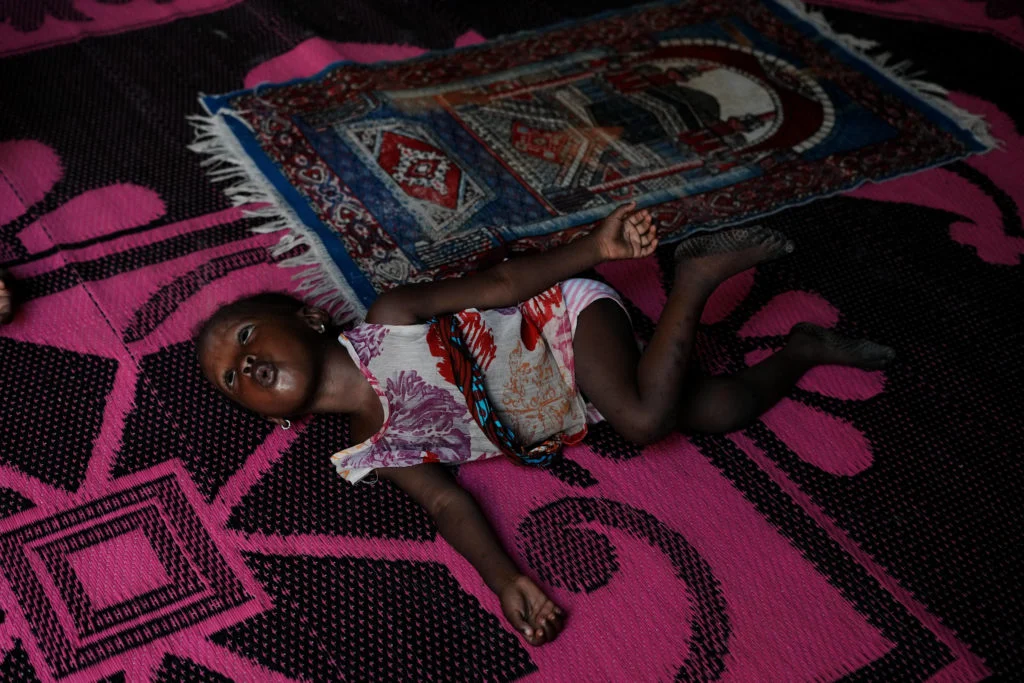
SOKOTO, Nigeria — In a modest, unvarnished two-bedroom home in the quiet town of Kware, the air is thick with the acrid scent of wood smoke. Maryam Aminu sits on a woven mat, her eyes fixed on her 18-month-old daughter. The child, listless and frail, has just been diagnosed with malnutrition for the second time this year. For Maryam, the diagnosis was not a surprise; it was a devastating confirmation of a reality she has been unable to escape.
"When she was diagnosed the second time, even though I suspected it, I was sad and angry because I knew why," Aminu says, gesturing to the coal stove that provides the only warmth for her family. "Times are tough, and the food is not consistent. I wish she were excited and full of life, but she is just tired."
The Aminu family’s struggle is a microcosm of a burgeoning humanitarian catastrophe in northern Nigeria. While headlines focus on the geopolitical theater of the Middle East and the military maneuvers of global powers, the human cost of these events is being paid in the silent, malnourished bodies of children thousands of miles away.
The Chain Reaction: From the Strait of Hormuz to the Nigerian Table
The nexus between the conflict in the Middle East and the hunger crisis in Sokoto lies in the global energy market. The Strait of Hormuz, a critical maritime chokepoint through which approximately one-fifth of the world’s oil and gas supply flows, has become a focal point of tension following the outbreak of war involving Iran.
As the conflict escalated, the disruption of shipping lanes triggered a worldwide fuel shock. The ripple effects were immediate and unforgiving. In Nigeria, a country already grappling with fragile economic infrastructure, the impact was visceral. Between February and April, fuel pump prices in Nigeria surged from 800 naira ($0.58) per liter to 1,400 naira ($1.02).
This 75% increase in fuel costs served as a catalyst for a broader inflationary spiral. Because transport costs underpin the price of nearly every consumer good, the cost of basic nutrition—grains, vegetables, and cooking fuel—skyrocketed. For families like the Aminus, who were already living on the knife’s edge of poverty, the math became impossible. Shehu Aminu, once a steady provider, lost his job as a taxi driver when the cost of operating his vehicle eclipsed his daily earnings.
"Then, 2,000 naira could buy you a nutritious meal for the whole family," Shehu explains. "Now, you need 5,000 naira to buy what 2,000 naira would buy. There is no way to feed the children."
Chronology of a Crisis: Economic Reforms and External Shocks
To understand the current desperation, one must look at the convergence of internal policy shifts and external global shocks:
- 2022–2023: The Nigerian government, led by President Bola Tinubu, initiates sweeping economic reforms, including the removal of long-standing fuel subsidies and the devaluation of the naira. These policies, intended to stabilize the macroeconomy, inadvertently drive record-high inflation.
- February 2024: The conflict in the Middle East intensifies, leading to blockades and threats near the Strait of Hormuz. Global energy prices spike, causing an immediate jump in Nigerian fuel costs.
- March 2024: Local health facilities in northern Nigeria report an uptick in "relapse" cases—children who had previously recovered from malnutrition returning to clinics in a weakened state.
- April 2024: Data from the World Bank confirms that 139 million Nigerians are now classified as poor or vulnerable to poverty.
- Current Status: UNICEF reports that up to 23.4 million additional children globally could fall into extreme monetary poverty by year-end, with 80% of these cases concentrated in Africa and Asia.
Supporting Data: The Rising Tide of Malnutrition
The anecdotal suffering of families in Kware is backed by clinical data. At hospitals across Sokoto, medical records obtained by The Associated Press reveal a harrowing trend: nearly 40 children who were treated for malnutrition as recently as February have returned to clinics, having fallen back into a state of severe nutritional deficiency.
These numbers are, by all accounts, an undercount. Many families in rural, insurgency-plagued areas have no access to formal healthcare, meaning the true scale of the crisis remains hidden in the shadows of the northern scrubland.
"I am worried and sometimes angry about the increasing numbers we are seeing," says Halimah Muhammad, a local health worker. "We are treating the same children again and again. It is a cycle of poverty that the current economic environment makes impossible to break."
The crisis is further exacerbated by the agricultural sector’s decline. The war has disrupted global fertilizer supply chains, driving up costs for local farmers. In northern Nigeria, where security concerns—including kidnapping for ransom and insurgent attacks—already prevent many from accessing their fields, the added burden of expensive inputs means the upcoming harvest is expected to be significantly lower than average.
Official Responses and International Concern
The international community is beginning to sound the alarm. During a recent visit to Sokoto, UNICEF Executive Director Catherine Russell highlighted the long-term, irreversible damage this crisis is inflicting on the next generation.
"Children are paying the price for the escalating conflict in the Middle East, including children far beyond the region," Russell stated. "Their development will be compromised. They are less likely to stay in school because their parents are under so much financial stress. So the long-term implications for children are absolutely terrible."
The United Nations has urged global leaders to consider the humanitarian fallout of their geopolitical posturing. However, diplomatic efforts—ranging from U.S. airstrikes and naval blockades to tense negotiations led by the Trump administration—have yet to stabilize the region or, by extension, the global supply chain.
Local experts argue that the response from the Nigerian government has been insufficient to shield the most vulnerable. Ikemesit Effiong, a partner at SBM Intelligence, a Lagos-based geopolitical risk advisory, notes that the government’s focus on macro-economic stability has left little room for social safety nets. "This distant war offers no relief for the north’s vulnerable," Effiong says. "The convergence of local insurgency and global price shocks creates a ‘perfect storm’ that the current administration is ill-equipped to manage."
Implications: A Lost Generation?
The consequences of this period will likely ripple through decades. Malnutrition in early childhood is not merely a short-term health issue; it causes stunting, impairs cognitive development, and weakens the immune system.
Larai Malami, a 35-year-old mother of ten, lives in a state of perpetual anxiety. Her youngest child, born in December, has already been diagnosed with malnutrition twice. Her husband, having lost his job as a motorcycle rider, has left the country for Niger in search of work, leaving the family in a state of suspended animation.
"I worry that the child might never be fully well," Malami says. "The fuel price keeps the cost of food high, and it keeps my husband away. We are trapped."
The geopolitical tensions in the Middle East show no sign of immediate abatement. As long as the Strait of Hormuz remains a flashpoint for conflict, the fuel prices that dictate the price of a bag of rice in Sokoto will remain volatile. For the Aminu and Malami families, and millions like them, the war is not a matter of foreign policy or military strategy—it is a daily, agonizing struggle to put a bowl of pap on the table.
Unless there is a fundamental shift in how the global economy accounts for the most vulnerable during times of conflict, the long-term outlook for Nigeria’s children remains bleak. The "cost of war" is not just measured in munitions and troop deployments; it is measured in the stunted growth, lost schooling, and fractured futures of children who are, quite literally, starving for a stability that remains out of reach.