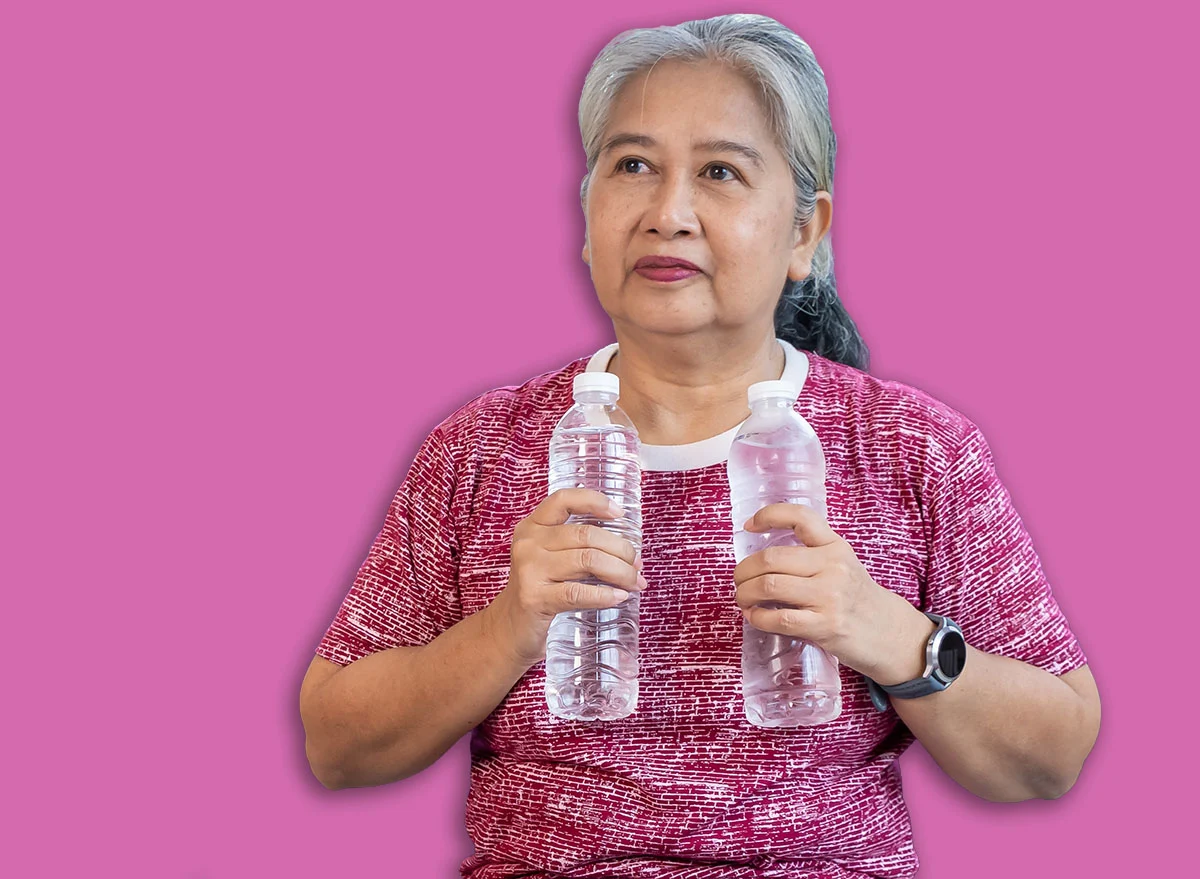
For many adults over the age of 65, the barrier to beginning a strength training regimen isn’t a lack of desire—it’s the intimidation factor of a commercial gym. The heavy iron, the complex cable machines, and the societal pressure of a fitness center environment can often lead to "exercise avoidance." However, modern sports science is increasingly validating a surprisingly accessible alternative: the common household water bottle.
As a Certified Strength and Conditioning Specialist (CSCS), I have seen firsthand how utilizing everyday objects can bridge the gap between sedentary living and active, functional health. By reframing the water bottle as a precision tool for light-resistance training, we can help older adults build essential arm strength, improve bone density, and maintain the independence required for daily living.
Main Facts: Why Light Resistance Matters
The primary goal for those over 65 is not to compete in bodybuilding, but to cultivate "functional longevity." As we age, the body undergoes sarcopenia—a natural, age-related decline in muscle mass and strength. This decline impacts everything from the ability to carry groceries to the capacity to push oneself out of a chair.
The beauty of the water bottle method lies in its versatility. Unlike a fixed-weight dumbbell, a water bottle’s weight is infinitely adjustable. By adding or removing water, you can calibrate the resistance to match your current strength level. This allows for "progressive overload"—the gold standard of fitness—without the need for an expensive rack of dumbbells. Furthermore, the grip required to hold a bottle, especially a textured or ergonomic one, helps maintain forearm and hand strength, which are critical for preventing slips and falls.
Chronology: A Roadmap to Better Arm Health
To build a sustainable habit, consistency must be prioritized over intensity. For those new to this routine, the following progression is recommended:
- Phase 1 (Weeks 1-2): Focus on form. Use empty or half-filled bottles. The objective is to master the "mind-muscle connection," ensuring you feel the target muscle contracting rather than relying on momentum.
- Phase 2 (Weeks 3-6): Increase the volume. Once the movements feel natural, aim for the higher end of the recommended rep ranges (15 reps). Focus on slowing down the "eccentric" phase—the portion of the movement where you lower the weight.
- Phase 3 (Weeks 7+): Increase the resistance. Fill the bottles completely. If you have progressed past 16-ounce bottles, graduate to larger liter bottles to continue challenging your muscular endurance.
Supporting Data and Clinical Insights
Recent research underscores the importance of resistance training in the geriatric population. A study published in the Journal of the American Geriatrics Society suggests that consistent, light-to-moderate resistance training can significantly improve gait speed and balance, which are primary indicators of longevity.
When you use a water bottle for a curl or a lateral raise, you are not just working the bicep or shoulder; you are engaging the stabilizer muscles of the core and back. Because water is a liquid, it creates a "dynamic" resistance. As you move the bottle, the water shifts inside, forcing your stabilizing muscles to work harder to keep your movement path smooth. This is a form of functional training that static, solid dumbbells cannot replicate.
The Five Essential Water Bottle Moves
To ensure a balanced approach, this routine targets all major upper-body muscle groups.
1. The Biceps Curl
This is the cornerstone of arm training. By keeping the elbow tucked close to the torso, you isolate the bicep.
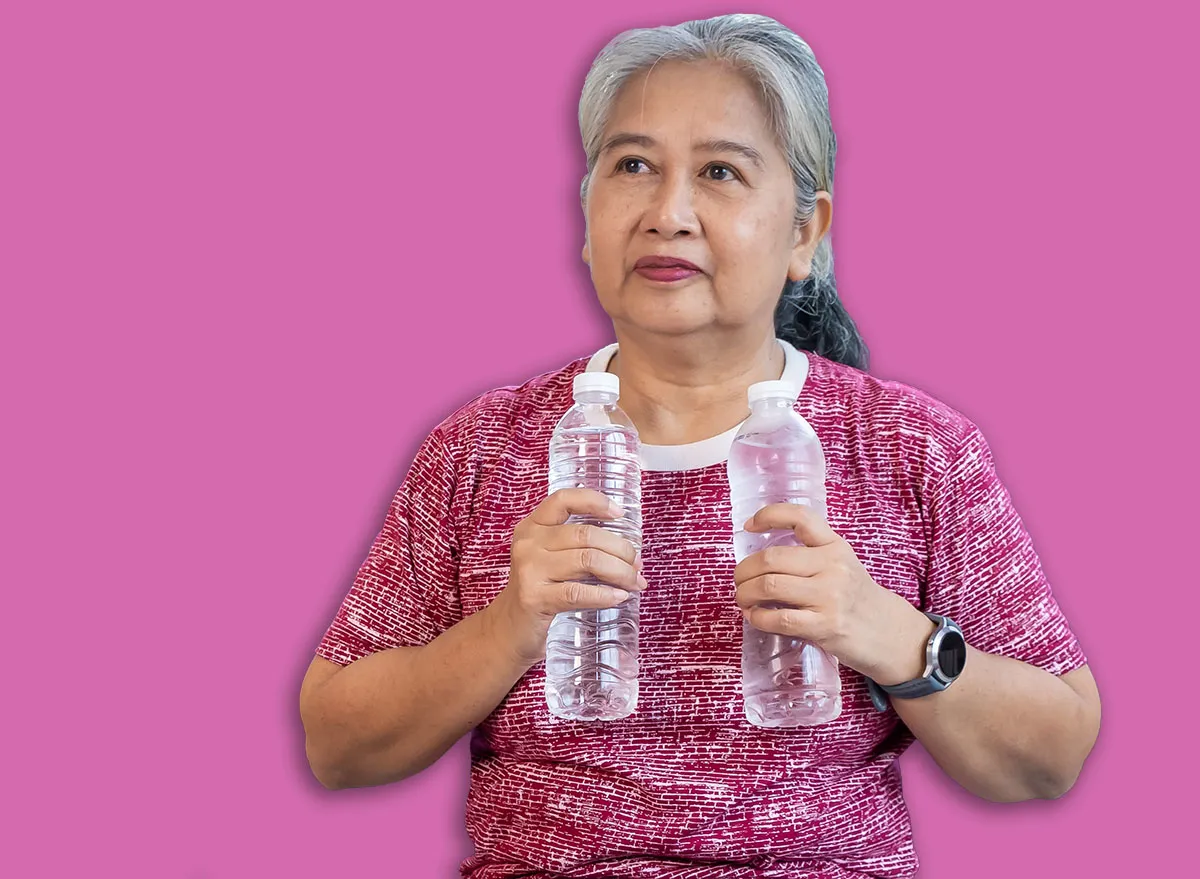
- The Technique: Stand or sit tall. With a bottle in each hand, palms facing forward, curl the bottles toward your shoulders. Avoid swinging your back.
- Why it works: It mimics the daily act of picking up items and prevents the "elbow flare" that often leads to joint strain.
2. Overhead Triceps Extension
Many people struggle with the "bat wings" or loose skin under the arms. This move targets the triceps directly.
- The Technique: Holding a bottle with both hands, raise it overhead. Bend your elbows to lower the bottle behind your head, then push back up.
- Why it works: This is essential for overhead mobility, such as reaching into high kitchen cabinets.
3. Front Raise
This movement builds the anterior deltoids, which are crucial for lifting items onto counters.
- The Technique: Keep your arms straight and raise the bottles to shoulder height in front of you. Lower them with a three-second count.
- Why it works: It strengthens the shoulders without the heavy impact that often causes rotator cuff irritation.
4. Lateral Raise
The "king" of shoulder shaping, this move creates a wider base of strength.
- The Technique: Raise your arms out to the side until they are parallel to the floor. Imagine you are pouring water out of the bottles at the top of the movement.
- Why it works: It improves posture by engaging the upper back and rear deltoids.
5. Triceps Kickback
A highly effective move for toning the back of the arm.
- The Technique: Hinge forward slightly at the hips, keeping your back flat. Pull your elbow up to your side and extend the arm backward, squeezing the tricep.
- Why it works: It builds the "pushing" strength required to get out of a bathtub or a deep chair.
Official Responses and Expert Perspective
The medical community is largely in favor of "low-impact" home exercise programs. Dr. Elena Rodriguez, a physical therapist specializing in geriatric care, notes: "The biggest hurdle to health for my patients over 65 is the transition from ‘feeling weak’ to ‘doing exercise.’ If a patient is afraid of a 10-pound weight, I tell them to start with a half-full water bottle. It removes the fear of injury and creates a low-stakes environment for success."
Implications for Long-Term Health
The implications of adopting this routine extend far beyond vanity. By maintaining arm and shoulder strength, you are essentially "future-proofing" your body.
Key takeaway for practitioners:
- Safety: Always clear new exercise routines with your primary care physician, especially if you have existing heart conditions or shoulder impingements.
- Hydration: Since you are already holding water, remember to drink it after your workout.
- Environment: Perform these moves in front of a mirror to ensure your form stays consistent. If your form breaks down, your weight is too heavy—simply pour a little water out.
In conclusion, strength training is not reserved for the elite athlete or the gym-goer. It is a biological necessity for healthy aging. By leveraging the simple, accessible, and adjustable nature of the water bottle, you can reclaim your strength, improve your daily function, and enjoy a higher quality of life—all from the comfort of your living room. Start small, stay consistent, and remember that every clean rep is a step toward a stronger, more independent future.