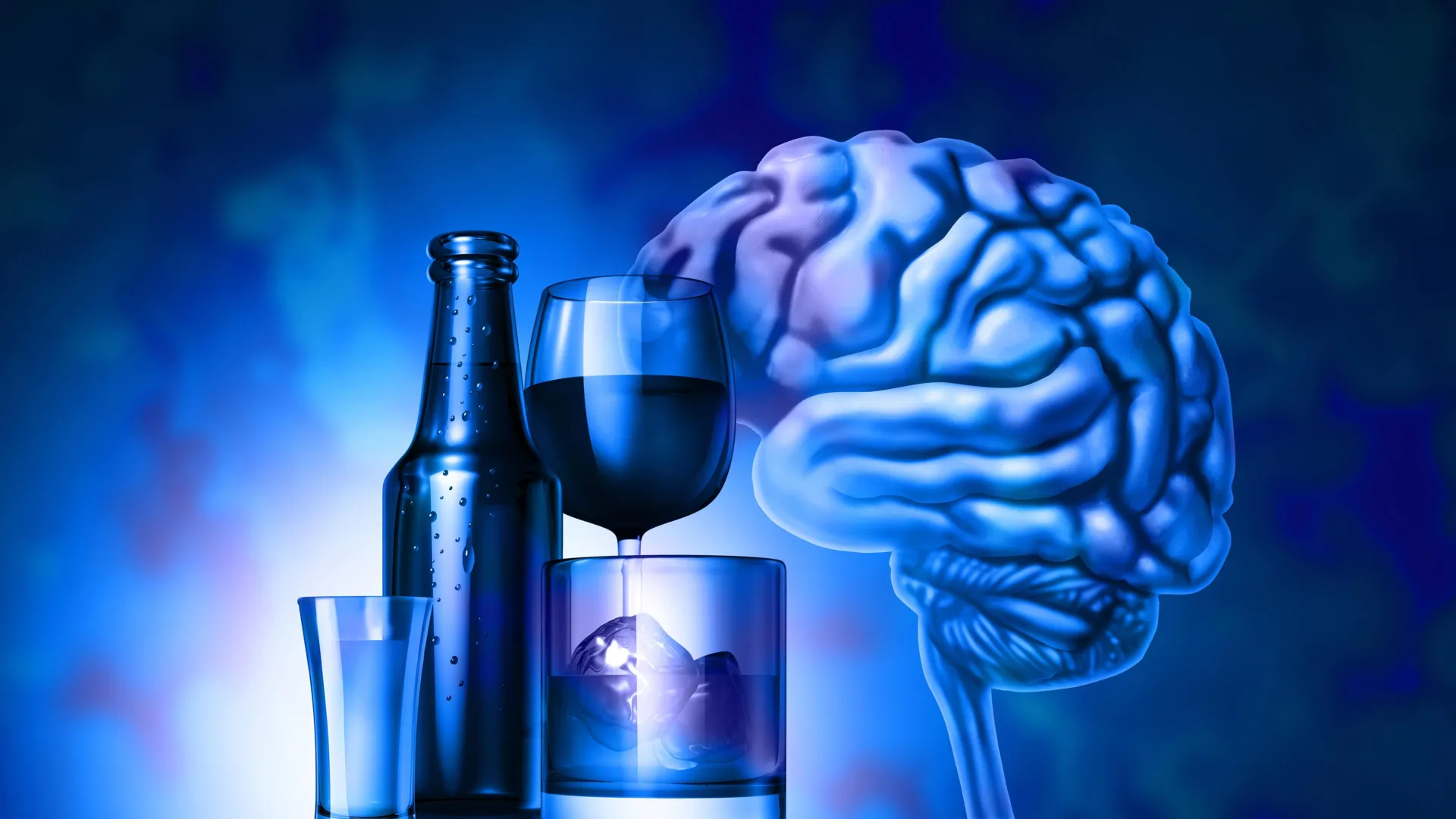
For decades, the medical community has viewed alcohol use disorder (AUD) through a lens of behavioral willpower and temporary chemical dependency. However, groundbreaking research from the University of Massachusetts Amherst is shifting this paradigm, suggesting that the consequences of "stress drinking" in early adulthood may be etched into the brain’s architecture far more deeply than previously understood.
A new study, published in the journal Alcohol Clinical and Experimental Research, indicates that the combination of alcohol consumption and chronic stress during one’s formative years can trigger lasting neurobiological changes. These shifts do not simply vanish with sobriety; instead, they persist, often surfacing by middle age as cognitive decline, impaired decision-making, and a heightened vulnerability to relapse.
The Vicious Cycle: How Stress and Alcohol Co-Conspire
The relationship between stress and alcohol has long been described by clinicians as a "vicious cycle." Initially, alcohol serves as a chemical pacifier, temporarily dampening the physiological response to stress. However, as the brain adapts to this external regulator, its own internal capacity to manage stressors begins to atrophy.
When an individual repeatedly turns to alcohol to cope with the pressures of early adulthood—a period characterized by career initiation, social navigation, and financial instability—the brain undergoes a process of negative reinforcement. Each drink weakens the natural neurocircuitry meant to handle adversity. Consequently, as the brain’s resilience wanes, the individual feels compelled to consume larger quantities of alcohol to achieve the same baseline of calm.
This creates a feedback loop. Heavy drinking leads to impaired judgment and poor life decisions, which in turn generate more stress, creating a greater need for the very substance that caused the chaos. Researchers at UMass Amherst sought to determine if this cycle leaves behind "biological footprints" that dictate how the brain ages long after the drinking has ceased.
A Chronology of Cognitive Erosion
To map the long-term trajectory of these changes, the research team—led by Elena Vazey, an associate professor of biology at UMass Amherst—employed a mouse model. By utilizing subjects whose brain circuits closely mirror those of humans, the team was able to observe how the early-life combination of alcohol and stress manifested as the subjects reached middle age.
The Phases of the Study:
- Early Adulthood (The Exposure Phase): Mice were subjected to a regimen of stress combined with alcohol consumption. This period was designed to mimic the lifestyle stressors and coping mechanisms common in human young adulthood.
- The Abstinence Phase: Following the exposure period, the subjects underwent a prolonged phase of complete sobriety, allowing researchers to observe if the brain could spontaneously recover from the damage.
- Middle Age (The Assessment Phase): As the subjects reached middle age—a developmental stage in mice analogous to middle age in humans—researchers assessed their cognitive function, decision-making capabilities, and susceptibility to relapse when re-exposed to stressors.
The results were stark. While the mice did not show significant deficits in basic learning abilities, their cognitive flexibility—the ability to adapt to shifting rules or changing environments—was severely compromised. This loss of flexibility is a hallmark of the early stages of dementia and Alzheimer’s disease, suggesting that early-life alcohol use may be an accelerant for age-related cognitive decline.
The Locus Coeruleus: A Key Decision-Making Center Under Siege
The core of the study’s discovery lies in a small, specialized brainstem region known as the locus coeruleus (LC). In a healthy brain, the LC is responsible for regulating alertness and orchestrating adaptive responses to stress. It functions like a thermostat: it activates during a stressful event to help the brain focus and make decisions, and then it "shuts off" or recalibrates once the stressor has passed.
Vazey and her team found that in subjects exposed to both alcohol and chronic stress, this "thermostat" becomes broken. The LC lost the molecular machinery required to deactivate itself. Consequently, the region remained in a state of chronic, low-level disruption.
Furthermore, the team detected high levels of oxidative stress within the LC. Oxidative stress, a state where there is an imbalance between free radicals and antioxidants in the body, is a known precursor to cellular death and is famously present in the brains of Alzheimer’s patients. Even after months of abstinence, the LC in the test subjects showed no signs of self-repair. The damage was not merely functional; it was structural and enduring.
Official Responses and Scientific Implications
The study, supported by the National Institute on Alcohol Abuse and Alcoholism (NIAAA), provides a critical pivot point for how we treat addiction. For years, the gold standard of treatment has focused on abstinence and behavioral therapy. While these remain essential, the UMass Amherst findings suggest that they may be insufficient for individuals whose neurological "wiring" has been fundamentally altered.
"The brain can really struggle to recover from a history of chronic stress and drinking in early adulthood," says Professor Vazey. "We think that the oxidative damage might be one of the things that keeps the heavy drinking going, that can lead to someone going back to alcohol even after long-term abstinence. It’s these persistent changes in the brain that also impair decision making."
Redefining Recovery
The implications for public health are profound. If the brain’s decision-making circuitry is damaged, the act of "quitting" becomes exponentially harder than traditional willpower-based models suggest.
- Beyond Willpower: The research challenges the stigma surrounding relapse. If the LC is physically unable to regulate the stress response effectively, a person may be physiologically predisposed to seek alcohol as a means of "correcting" a brain that no longer knows how to settle itself.
- Targeted Pharmacotherapy: Understanding that the damage is linked to oxidative stress opens the door to potential new treatments. Rather than focusing solely on dopamine receptors or withdrawal symptoms, future therapies might look at neuroprotective agents or treatments designed to reverse the oxidative damage in the brainstem.
- Early Intervention: The study underscores the importance of addressing stress management during the late teens and twenties. By teaching healthy coping mechanisms during this critical window, clinicians may be able to prevent the neurobiological changes that lead to long-term cognitive decline.
Looking Toward the Future: The Path to Neuro-Repair
As the global population ages, the prevalence of cognitive impairment is expected to rise. Identifying that early-life alcohol and stress combinations act as a precursor to these conditions provides a vital clue for medical researchers.
The UMass Amherst study serves as a call to action for the clinical community. It highlights that we cannot treat the brain as a blank slate that simply resets once the alcohol is removed. Instead, we must treat the "scarred" brain with the same care and medical intensity that we would apply to any other chronic organ disease.
Future research will likely focus on whether these neuro-circuits can be "re-trained" or pharmacologically restored. Can the locus coeruleus be repaired? Can we boost antioxidant levels in the brainstem to prevent the onset of dementia? These are the questions that now sit at the forefront of addiction and geriatric research.
For those who have navigated the difficulties of stress-based drinking in their youth, this research offers both a warning and a validation. It confirms that their struggle was not a failure of character, but a physiological reality. It suggests that the path to true recovery requires a medical strategy that acknowledges the long-term changes in the brain’s architecture—and that in the quest for sobriety, the most important tool we have is a deeper understanding of the brain itself.