







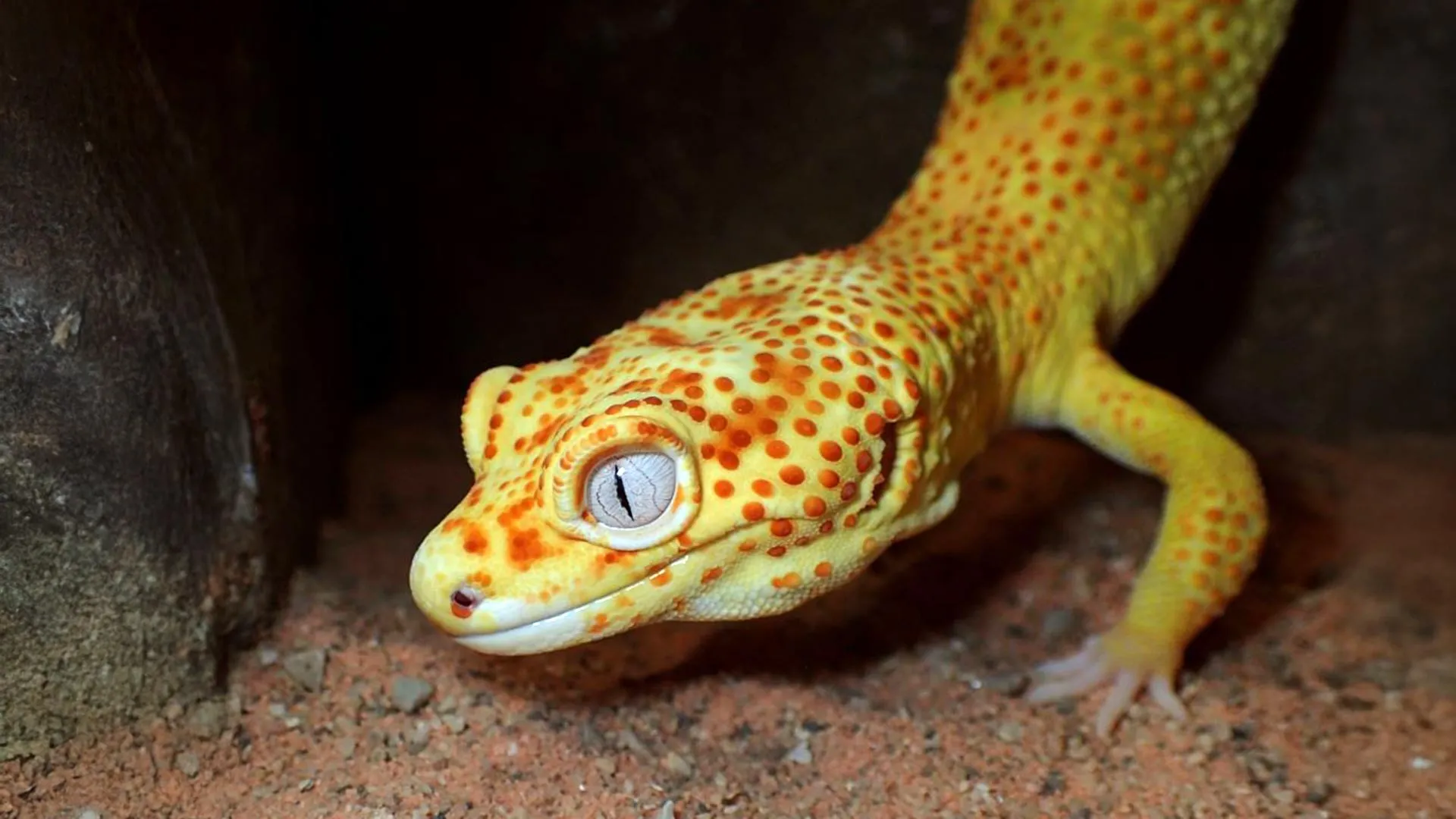
In the specialized world of reptile hobbyists, the "Lemon Frost" leopard gecko is a marvel of aesthetic breeding. Characterized by its brilliant, high-contrast yellow-and-white scales, the morph became an instant sensation upon its arrival in the pet trade. However, behind this striking appearance lies a biological tragedy that has inadvertently opened a new frontier in medical science. A groundbreaking study led by the University of Nottingham has identified this specific gecko variety as a potent, naturally occurring model for cancer research, offering scientists a unique window into the mechanics of tumor formation, metastasis, and genetic susceptibility.
The Main Facts: A Natural Laboratory for Oncology
The study, published in the peer-reviewed journal BMC Biology, marks a significant shift in how researchers approach cancer modeling. Traditionally, the field has relied heavily on laboratory mice—animals that are often genetically engineered or chemically induced to develop tumors. While invaluable, these models do not always mirror the complexity of spontaneous, naturally occurring cancer in a living, breathing organism.
The Lemon Frost leopard gecko, by contrast, develops aggressive skin tumors—specifically iridophoromas—in approximately 80% of its population. These tumors often appear at a relatively young age and exhibit a high propensity for metastasis, or spreading to other organs. By analyzing the genetic architecture of these reptiles, an international team of researchers has discovered that the biological pathways fueling these tumors overlap significantly with those found in human oncology. This convergence suggests that the Lemon Frost gecko is not merely a biological curiosity but a vital tool for understanding the fundamental "drivers" of cancer across the tree of life.
A Chronology of Discovery: From Breeding Labs to Genome Sequencing
The history of the Lemon Frost morph is a classic example of selective breeding yielding unintended consequences. The trait first appeared as a spontaneous genetic mutation within a large commercial breeding colony. Breeders, captivated by the vibrant coloration, selectively propagated the gene, unaware that they were also propagating a high susceptibility to malignancy.
As the morph spread through the pet trade, the high incidence of cancer became impossible to ignore. Veterinary clinicians and researchers began to notice that these geckos were not merely prone to benign skin conditions; they were suffering from aggressive, systemic disease.
The formal research project began when a diverse, international team—comprising experts from the University of Nottingham, the University of Birmingham, Marquette University, the University of Florida, and the University of Trieste—sought to quantify this risk. The research followed a rigorous timeline:
- Phenotypic Identification: Initial observation confirmed that the "Lemon Frost" phenotype was inextricably linked to the high tumor incidence.
- Whole Genome Sequencing: Researchers performed comprehensive genomic analysis, comparing tissue samples from the tumors of the geckos against their own healthy, non-tumor tissue.
- Cross-Species Comparison: The team utilized advanced bioinformatic tools—many of which were originally designed for human cancer research—to analyze the gecko’s genetic mutations.
- Verification of Pathways: The study identified specific genetic disruptions that matched known human cancer-associated genes, validating the gecko as a relevant model for study.
Supporting Data: Decoding the Genetic Blueprint
The core of the study lies in the genomic evidence. By sequencing the genomes of affected geckos, the team discovered that the cancer is driven by specific, recurring genetic alterations. These changes do not occur in isolation; they disrupt biological pathways that regulate cell growth, division, and apoptosis (programmed cell death).
When these pathways are damaged, cells lose their ability to "check" themselves, leading to the rapid, uncontrolled proliferation characteristic of cancer. Remarkably, the software and analytical frameworks used to map these mutations in the geckos were the same programs used to track the progression of human cancers. This methodological success confirms that the basic "machinery" of cancer is highly conserved across the animal kingdom.
While turtles and tortoises represent the other end of the spectrum—exhibiting a remarkable, almost ancestral resistance to the disease—the Lemon Frost gecko provides the "positive" control, a system where the disease thrives, allowing researchers to observe exactly how and why the body’s internal defenses fail.
Official Responses and Expert Perspectives
The researchers involved in the study emphasize that this is a collaborative effort that bridges the gap between herpetology and clinical medicine.
Dr. Ylenia Chiari, lead researcher from the University of Nottingham’s School of Life Sciences, emphasized the evolutionary value of the study. "By studying why some animals are so susceptible to cancer while others are remarkably resistant, we hope to uncover the different ways species have evolved to deal with cancer," she noted. "Specifically, this gecko could become an incredible model in cancer research because tumors appear naturally at a relatively early age. Together, these natural strategies could inspire new ways of preventing, detecting, and treating cancer in humans."
Brandon Hastings, a PhD researcher on the project, highlighted the interdisciplinary nature of the work. "Overall, our paper demonstrates the importance of looking across the tree of life in search of answers that are needed to better understand diseases that can have a profound impact on human life," Hastings stated. "Methodologically, it also highlights that the variety of genomic software programs developed to analyze human cancers can be adapted to provide meaningful insights in diverse organisms."
Dr. Scott Glaberman of the University of Birmingham added a broader philosophical perspective on the necessity of biodiversity. "We often look inward to solve human problems, but every species has something to teach us," he said. "By studying both animals that are vulnerable to cancer and those that resist it, we have far greater power to understand the disease itself. This is one of the many reasons why protecting biodiversity is so important."
Implications: The Future of Cancer Research
The implications of this study are far-reaching. By diversifying the "model organisms" used in medical research, scientists can circumvent the limitations of traditional laboratory rodents. The Lemon Frost gecko provides a natural, spontaneous model that mirrors the human experience of cancer with greater fidelity than a chemically induced model ever could.
1. New Avenues for Drug Discovery
Understanding the specific genetic pathways that lead to metastasis in the Lemon Frost gecko could help pharmaceutical researchers identify new therapeutic targets. If a drug can interrupt the specific pathway identified in the gecko, it may prove effective in humans suffering from similar oncological profiles.
2. Early Detection and Monitoring
Because the Lemon Frost gecko’s cancer is visible and develops at a predictable, early stage of life, it serves as an ideal subject for testing new non-invasive imaging techniques or biomarkers that could detect cancer before it becomes systemic.
3. A Call to Protect Biodiversity
Perhaps the most significant takeaway is the argument for conservation. As Dr. Glaberman noted, the answers to human medical crises are often hidden in the genomes of the world’s vast, under-studied species. The Lemon Frost gecko is a reminder that when we lose a species, we potentially lose a biological key to curing a disease. The more diverse the organisms we have available to study, the more "options" we have to find the genetic solutions to human illness.
4. Ethical Considerations in Breeding
The study also casts a sobering light on the ethics of the pet trade. The selective breeding of animals for extreme aesthetic traits often comes at a hidden cost to the animal’s welfare. While the Lemon Frost gecko is now a gift to science, its existence as a "cancer-prone" creature is a cautionary tale regarding the genetic manipulation of captive populations.
Conclusion
The story of the Lemon Frost leopard gecko is one of scientific serendipity. What began as a commercial endeavor to create a visually striking reptile has evolved into a significant asset for global oncology. By applying human cancer-tracking technology to the reptile’s genome, researchers have confirmed that the battle against cancer is a universal one—a struggle shared by all complex life forms.
As this research progresses, the gecko may well become a standard fixture in the oncology lab, standing alongside the traditional mouse model. In doing so, these small, bright-yellow lizards may help humanity unlock the secrets to treating some of the most aggressive and elusive forms of cancer, proving once and for all that in the quest for medical breakthroughs, the most unlikely creatures can lead the way.