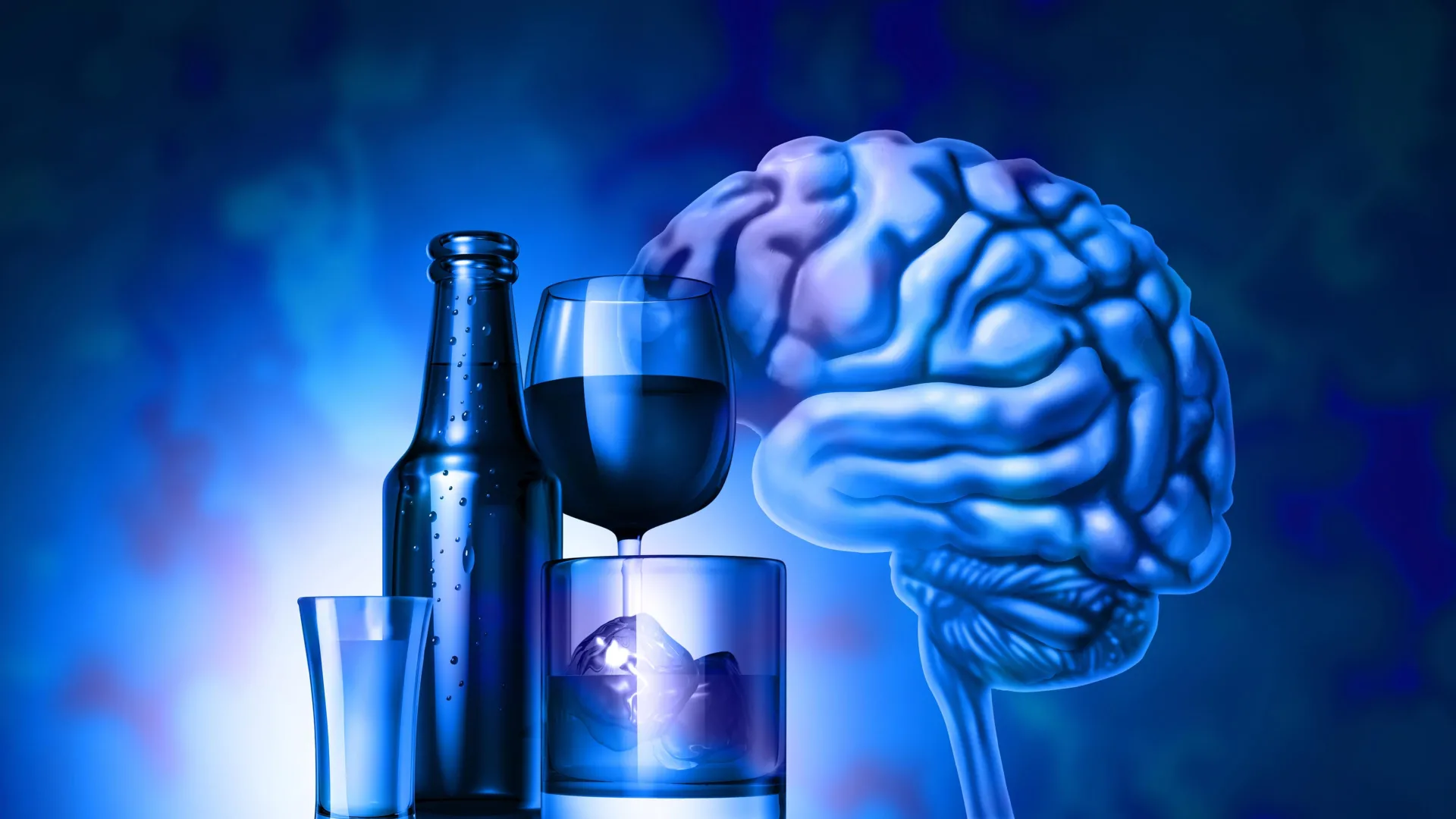
For decades, the medical community has viewed alcohol misuse primarily through the lens of acute toxicity and behavioral habituation. However, groundbreaking research from the University of Massachusetts Amherst is challenging this narrative, suggesting that the "scars" left by alcohol consumption in early adulthood are not merely behavioral—they are structural, persistent, and potentially permanent.
A study published in the journal Alcohol Clinical and Experimental Research indicates that when alcohol is used as a coping mechanism for stress during early adulthood, it initiates a neurobiological chain reaction. These changes appear to lie dormant until middle age, at which point they manifest as reduced cognitive flexibility, a heightened susceptibility to relapse, and an increased risk of cognitive decline akin to the early stages of dementia and Alzheimer’s disease.
Main Facts: The Intersection of Stress and Neurobiology
The central revelation of the UMass Amherst research is that the brain’s response to stress and alcohol is synergistic rather than additive. While alcohol may provide a temporary, pharmacological "anesthetic" to stress, the brain pays a high price for this relief.
The study highlights that the interaction between these two factors systematically dismantles the brain’s ability to self-regulate. Over time, the neurological "brakes" that allow an individual to manage stress independently are weakened. As these biological buffers fail, the individual is forced to rely on alcohol in increasing quantities to achieve the same baseline of calm. This creates a feedback loop: stress leads to drinking, which causes poor decision-making, which in turn generates more stress, further embedding the behavior into the brain’s circuitry.
The researchers specifically identified a brainstem region known as the locus coeruleus (LC) as the epicenter of this damage. The LC is a critical command center for adaptive decision-making. In a healthy brain, the LC modulates its activity in response to external pressures, firing during stress and returning to a resting state once the danger has passed. In the subjects exposed to early-life stress-drinking, the LC lost the molecular "switches" required to shut down after a stressful event. Consequently, the brain remained in a state of chronic, low-level disruption, rendering the individual less capable of navigating complex or changing environments.
A Chronological Look at the Descent into Cognitive Rigidity
To understand the long-term trajectory of these changes, the research team—led by Elena Vazey, associate professor of biology at UMass Amherst—employed a longitudinal model using murine subjects. The study provides a grim timeline of how early interventions shape the aging brain.
Phase 1: Early Adulthood (The Formative Period)
During the equivalent of young adulthood, the subjects were exposed to both high stress and voluntary alcohol consumption. This phase was characterized by the initial "coping" behavior. The researchers observed that even as the brain was undergoing its final stages of maturation, the combination of stress and alcohol began to degrade the molecular integrity of the locus coeruleus.
Phase 2: The Period of Abstinence
Following the initial exposure, the subjects underwent a prolonged period of complete abstinence. In standard behavioral models, one might expect the brain to recover or "reset" once the alcohol is removed. However, the study found that the physiological damage persisted. The brain had not returned to its baseline; instead, it had entered a state of latent vulnerability.
Phase 3: Middle Age (The Emergence of Decline)
It was only upon reaching middle age that the most significant impairments surfaced. Despite having been sober for a long duration, the subjects displayed a profound inability to adjust to changing circumstances—a trait defined by researchers as a loss of cognitive flexibility. While their raw learning ability remained relatively intact, their ability to apply that learning to new, evolving situations was severely compromised. This timeline mirrors the clinical presentation of early-stage dementia, where patients often struggle with "executive function"—the ability to shift gears when life demands a new strategy.
Supporting Data: Why "Willpower" is Not the Only Factor
With funding from the National Institute on Alcohol Abuse and Alcoholism (NIAAA), the research team was able to pinpoint the exact cellular damage occurring within the locus coeruleus. They identified high levels of oxidative stress—a condition where the brain’s cells are overwhelmed by toxic byproducts—within this region.
Oxidative stress is a hallmark of neurodegenerative diseases like Alzheimer’s and Parkinson’s. By comparing the brains of formerly heavy-drinking subjects to lighter drinkers, the researchers found that the damage to the LC was not easily reversed. The cells responsible for managing stress-response circuitry had essentially been "scarred."
This finding is perhaps the most significant in terms of public health policy. It suggests that for many individuals, the return to alcohol during middle age is not a failure of willpower or a lack of moral character. Rather, it is a physiological necessity triggered by a broken biological system. When the brain’s decision-making center is physically damaged and incapable of processing stress, the drive to return to the only substance that ever provided relief becomes nearly impossible to resist through cognitive effort alone.
Official Responses and Scientific Perspective
The academic community has largely praised the study for its granular approach to the neurocircuitry of addiction. By moving beyond the broad concept of "addiction" and focusing on the specific mechanics of the locus coeruleus, the UMass Amherst team has provided a concrete target for future therapeutic interventions.
"We all know that drinking can often lead to poor decision-making, but we wondered how early adulthood drinking combined with stress affects that circuitry, especially as we grow older," said Elena Vazey. "If we can figure out how alcohol and stress change the brain’s circuitry, then we can help figure out how best to help people."
Vazey’s comments underscore a shift in perspective for the field of addiction medicine. Historically, treatment programs have focused heavily on behavioral modification and total abstinence. While these remain essential, the UMass findings suggest that they may be insufficient if the underlying physical architecture of the brain has been compromised. The study calls for a move toward "neuro-restorative" treatments that could potentially repair the damage to the LC or mitigate the effects of chronic oxidative stress.
Implications: A New Era for Addiction and Geriatric Care
The implications of this research are far-reaching, affecting how we approach everything from college-age alcohol education to geriatric mental health.
1. Re-evaluating College Drinking Culture
The study highlights that "binge drinking" in college is not just a phase that one grows out of. It is a period of neurological development where the foundation for mid-life cognitive health is being laid. Education programs may need to emphasize that the damage caused by stress-drinking is not necessarily reversible, providing a more compelling deterrent than vague warnings about "health risks."
2. Redefining "Relapse" in Middle Age
For clinicians, this research provides a new framework for understanding why middle-aged patients often relapse after years of sobriety. If the brain’s decision-making circuitry is physically impaired, the patient is essentially fighting an uphill battle against their own biology. Treatment plans may need to include medical interventions that address cognitive flexibility and oxidative damage, rather than relying solely on counseling.
3. A Link to Dementia Prevention
Perhaps most strikingly, the study bridges the gap between addiction medicine and neurology. By identifying the parallels between stress-drinking damage and Alzheimer’s-related cellular decay, researchers may have uncovered a preventative pathway for dementia. If we can treat the oxidative stress in the LC before it progresses, we may be able to delay or prevent the onset of cognitive decline in a large segment of the aging population.
Conclusion: Moving Beyond Willpower
The research from UMass Amherst serves as a sobering reminder that the choices made in our youth leave an indelible mark on our future selves. However, it also offers a message of hope. By acknowledging that the brain’s wiring is physically altered by trauma and substance use, we can stop blaming the individual for "lacking willpower" and start treating the biological reality of their condition.
The path forward requires a multi-disciplinary approach—one that combines the expertise of neuroscientists, addiction specialists, and geriatricians to develop therapies that don’t just ask patients to stop drinking, but help their brains regain the strength to navigate a complex and stressful world. As we continue to age as a global population, understanding the long-term legacy of early-life choices will be essential to ensuring that our later years are defined by clarity, rather than the fading echoes of past coping mechanisms.