Introduction: A Vision Cluttered by Contradictions
The Trump administration’s "Make America Healthy Again" (MAHA) commission entered the national stage with an ambitious, high-minded objective: the eradication of childhood chronic disease. On its face, the initiative mirrors the aspirational spirit of past public health efforts, such as Michelle Obama’s "Let’s Move" campaign. However, eighteen months into its tenure, the MAHA commission finds itself mired in a deepening credibility crisis. While the administration touts its strategy as a transformative blueprint for the next generation, critics and public health experts argue that the initiative is being undermined by a combination of scientific negligence, conflicting executive actions, and a widening gap between rhetorical promises and tangible policy implementation.
The project’s legitimacy was arguably compromised at its inception. Early reports from the commission were found to contain hallucinated citations, a tell-tale sign of reliance on generative artificial intelligence rather than rigorous peer-reviewed research. For a commission tasked with setting the scientific standard for American nutrition and health, this lapse served as a potent symbol of a broader systemic issue: the prioritization of optics over evidence.
The Chronology of an Ambiguous Mandate
The MAHA initiative has been defined by a rapid, often chaotic sequence of policy shifts. To understand the current state of the program, one must look at the timeline of its development.
- Early 2025: The administration announces the formation of the MAHA commission, promising to overhaul food policy and address the root causes of metabolic syndrome and chronic illness in children.
- March 2025: The HHS and USDA, the primary agencies tasked with executing these goals, face significant budgetary and staffing cuts. Simultaneously, the FDA is directed to explore the elimination of the "Generally Recognized as Safe" (GRAS) pathway—a move that, while lauded by some, occurs alongside the cancellation of $1 billion in local food purchasing programs for schools.
- September 2025: The commission formally releases its "Strategy Report," outlining a suite of promises ranging from school lunch reform to the regulation of food dyes.
- February 2026: An executive order is signed prioritizing the supply of glyphosate-based herbicides, a move that directly contradicts the commission’s stated desire to reduce environmental triggers for childhood disease.
- Mid-2026: The administration begins to claim "big wins" in a series of promotional materials, citing regulatory progress that many policy analysts describe as either incomplete or purely performative.
Supporting Data: Where Rhetoric Meets Reality
The efficacy of the MAHA commission can be measured by comparing its stated goals against the regulatory landscape of 2026.
The Regulatory Disconnect
While the commission has promised to crack down on ultra-processed foods and aggressive marketing to children, substantive rulemaking remains elusive. The administration frequently points to the "Dietary Guidelines for Americans (2025-2030)" as a victory, yet critics argue that these guidelines are often diluted by industry lobbying. Furthermore, while the FDA has initiated tracking of food industry pledges regarding petroleum-based dyes, these pledges remain voluntary, lacking the enforcement mechanism required for systemic health improvement.
The Institutional Undermining
Perhaps the most damaging aspect of the MAHA rollout has been the simultaneous dismantling of the very public health infrastructure required to implement its goals. The "DOGE" (Department of Government Efficiency) cuts, while intended to streamline, have resulted in a significant brain drain at the FDA. Although the agency has recently moved to hire 2,200 new staffers to replace those lost, the lag time in expertise and institutional knowledge has left food safety enforcement in a state of suspended animation.
Environmental Policy and Conflicting Orders
The MAHA mission is ostensibly about "clean" health, yet the Environmental Protection Agency (EPA) continues to approve PFAS chemicals and provide support for coal-burning power plants. The February 2026 Executive Order regarding glyphosate—the active ingredient in many herbicides—is perhaps the most glaring example of a policy that prioritizes short-term agricultural output over long-term public health, directly negating the commission’s purported focus on reducing toxic exposures for children.
Official Responses and the "Win" Narrative
The administration has aggressively defended its record. HHS communications have consistently framed the ongoing initiatives as "Big Wins," citing the "Operation Stork Speed" program for infant formula, hospital nutrition service updates, and new nutrition accreditation standards for medical schools as proof of progress.
In a recent interview, Calley Means, a prominent voice within the MAHA movement, pushed back against the criticism of the commission’s slow pace. Means noted that the administration has only had eighteen months to navigate a deeply entrenched bureaucracy, whereas veteran public health advocates have struggled for decades without achieving similar levels of high-level visibility.
However, this defense acknowledges the very point that critics are making: that power, once acquired, has not been leveraged effectively. There is a palpable difference between an administration that wants to change the food system and one that has the political capital to enforce those changes. The disappointment, for many, stems from the perception that the administration is taking credit for administrative housekeeping—such as new hospital guidelines—while ignoring the heavy lifting required to regulate the food industry or overhaul the school lunch program.
Implications: The Future of Childhood Health
The implications of the current trajectory are significant. If the MAHA commission continues to prioritize political posturing over scientific rigor, it risks leaving a legacy of missed opportunities.
The Erosion of Public Confidence
Perhaps the most dangerous byproduct of the MAHA era is the systematic undermining of trust in foundational public health measures. By casting doubt on long-standing practices such as water fluoridation and vaccination, the commission has inadvertently emboldened a subset of the population that is increasingly skeptical of all public health guidance. When the government itself questions the validity of basic science, it becomes exponentially harder to build consensus for the truly difficult policy changes—like taxing sugar-sweetened beverages or limiting food marketing to minors—that are actually required to curb childhood chronic disease.
A Missed Opportunity for Structural Reform
The potential for a "whole-of-government" approach to nutrition was, and remains, immense. Had the administration utilized its executive power to aggressively challenge the "Big Food" industry, it could have fundamentally shifted the American diet. Instead, the focus has remained largely on peripheral issues, with the most impactful reforms—those that would regulate ultra-processed ingredients and improve the nutritional quality of school meals—either delayed or left to languish in the rulemaking process.
The Verdict of Time
As we look toward the remainder of the administration’s term, the question remains: will the MAHA commission pivot toward substance, or will it continue to rely on a "victory lap" narrative that masks a lack of real progress?
The history of public health policy suggests that change is rarely the result of a single commission or a short-term executive order. It is the result of persistent, evidence-based advocacy and the courageous application of regulatory power. If the MAHA commission truly wishes to "Make Our Children Healthy Again," it must move beyond the marketing of health and toward the messy, politically fraught, and essential work of regulation. Until that happens, the movement will remain a case study in how even the most well-intentioned goals can be hollowed out by political expediency and the failure to respect the very science they claim to protect.
References and Further Reading
- The MAHA Report: Assessment. (May 2025). The White House.
- Jacobs, P. (May 30, 2025). "Trump officials downplay fake citations in high-profile report on children’s health." Science.
- Brown, M. (March 10, 2025). "USDA cancels $1B in local food purchasing for schools, food banks." Politico.
- The White House. (February 18, 2026). "Promoting The National Defense by Ensuring an Adequate Supply Of Elemental Phosphorus And Glyphosate-Based Herbicides." Executive Orders.
- MAHA. (September 2025). "Strategy Report: Make Our Children Healthy Again."
- HHS, USDA. (2025). "Dietary Guidelines for Americans, 2025-2030."
- FDA. (June 16, 2026). "Tracking Food Industry Pledges to Remove Petroleum Based Food Dyes."
- Akst, J. (June 24, 2026). "FDA hiring 2,200 people to staff up after last year’s DOGE cuts." BioSpace.
- Wallace-Wells, D. (July 3, 2026). "Has the MAHA Movement Given Up?" The New York Times.
- Center on Budget and Policy Priorities. (June 22, 2026). "SNAP Tracker: People Are Losing Food Assistance."
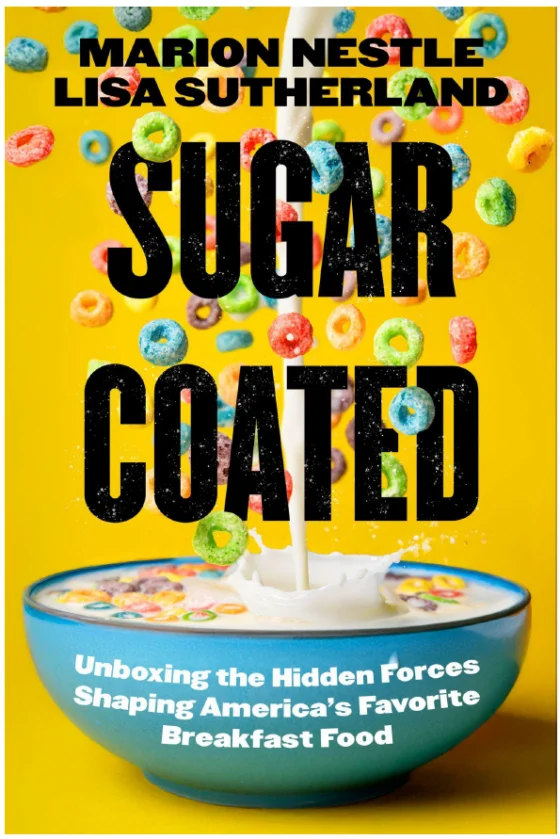
Author’s Note: For those interested in the deeper structural issues surrounding the food industry and the history of nutrition policy, my upcoming book, "Sugar Coated," will be released on September 8. It examines the long-term impacts of industry influence on federal dietary guidelines and is available for pre-order with a 30% discount via UC Press using code UCPSAVE30.