











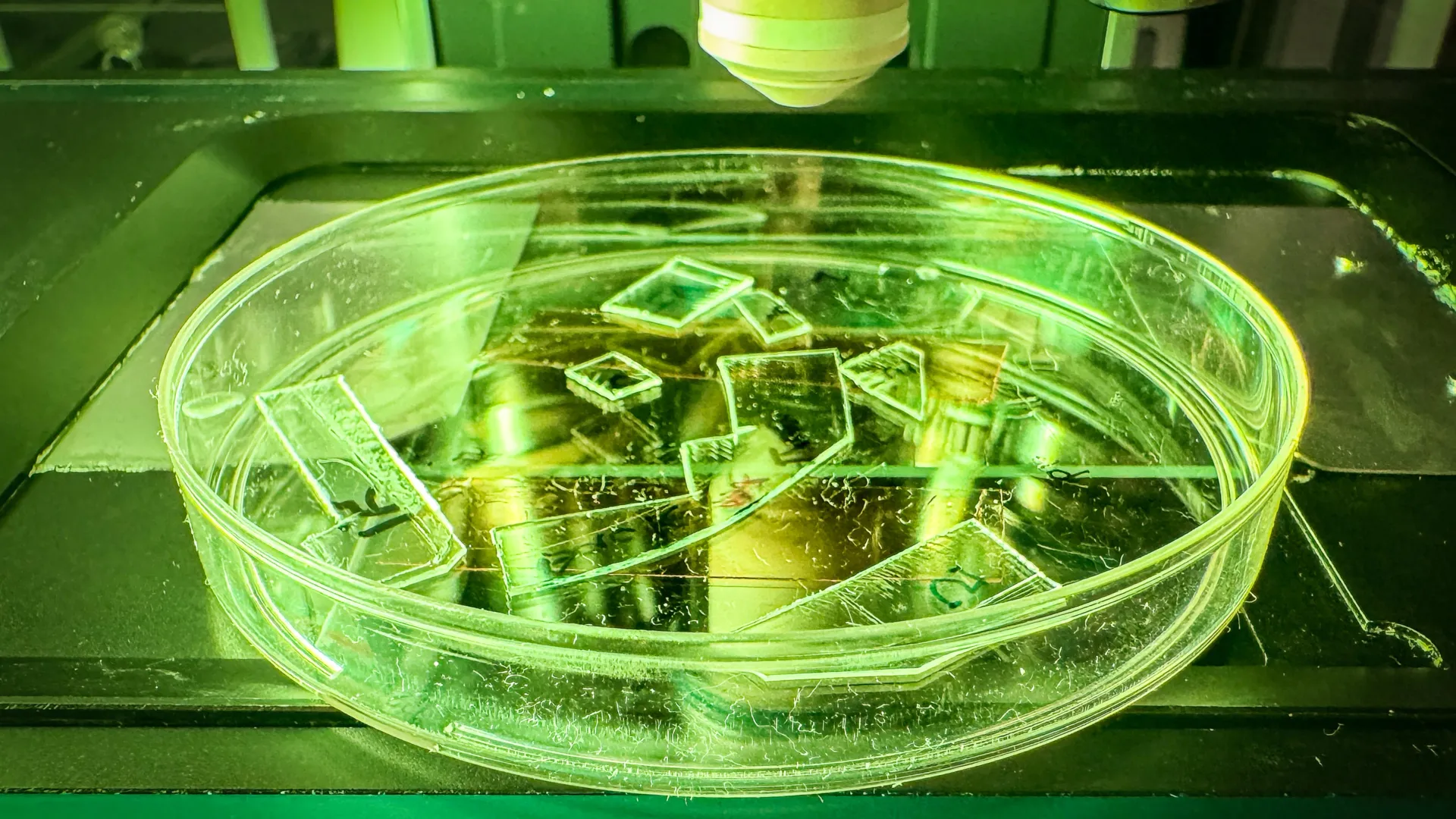
In the ongoing global battle against infectious disease, the primary line of defense has long been chemical: alcohol-based sanitizers, bleach-based wipes, and toxic disinfectants. However, a revolutionary breakthrough from researchers at RMIT University in Australia promises a paradigm shift. Scientists have engineered a thin, flexible plastic film capable of physically destroying viruses the moment they make contact with its surface. By abandoning chemical intervention in favor of mechanical force, this innovation could transform high-touch surfaces—from smartphone screens and laptop keyboards to hospital bed rails—into self-sanitizing barriers.
The Science of Mechanical Inactivation: How Nanopillars Tear Viruses Apart
At the heart of this innovation lies a deceptively simple concept: the "nanopillar." The researchers have developed a thin film made from acrylic, textured with an array of microscopic structures that act like a bed of nails. However, unlike the spikes used in early, rigid prototypes, these nanopillars operate on a principle of mechanical tension.
When a virus lands on the film, the nanopillars grip the viral surface. Rather than attempting to puncture the virus—a method that has shown limited success in previous studies—this new design stretches the virus’s outer lipid membrane. As the virus settles onto the pillars, the mechanical strain applied to its shell exceeds the structural integrity of the pathogen, causing it to rupture. Once the envelope of the virus is torn, the internal machinery required for replication is exposed and disabled, effectively neutralizing the virus before it can find a human host.
The Superiority of Stretching Over Puncturing
Earlier research into antiviral surfaces often focused on "nanospike" designs, typically constructed from silicon or metal. These designs relied on sharp, needle-like protrusions intended to pierce the viral shell. While effective in theory, these rigid materials were brittle, difficult to manufacture, and prone to losing their efficacy over time.
The RMIT team’s findings, published in the journal Advanced Science, indicate that the "stretching" method is significantly more efficient than the "piercing" method. By utilizing a flexible, durable acrylic polymer, the researchers have created a surface that is not only more robust but also far more capable of handling the fluid dynamics of viral particles. The research demonstrates that even blunt nanopillars can be highly lethal to viruses if the geometry of their arrangement is optimized.
Chronology of Development: From Concept to Lab-Tested Reality
The journey to this discovery represents a multi-year effort to refine nanofabrication techniques. Initially, the scientific community struggled to create surfaces that could kill viruses without being prohibitively expensive or brittle.
- Phase I (The Proof of Concept): Researchers identified that viruses with fatty, enveloped membranes—such as influenza—were susceptible to physical disruption. The challenge was creating a surface that could engage these viruses at scale.
- Phase II (Material Selection): The team moved away from expensive, rigid silicon wafers to flexible, low-cost acrylic. This transition was crucial for potential real-world applications, as it allowed the film to be produced using roll-to-roll manufacturing—a standard process in industrial plastics.
- Phase III (Optimization): Through rigorous experimentation, the team identified the "Golden Ratio" of nanopillar spacing. They discovered that height was secondary to density.
- Phase IV (Verification): The team tested the film against the human parainfluenza virus 3 (hPIV-3), a common respiratory pathogen. The results were conclusive: within 60 minutes of contact, 94% of the viral particles were rendered inert.
Supporting Data: The Crucial Role of Nanopillar Spacing
Perhaps the most significant contribution of the RMIT study is the discovery of a "design rule" for antiviral surfaces. The team found that the effectiveness of the film is almost entirely dependent on the spacing between the nanopillars.
"By tweaking the spacing and height of the nanopillars, we discovered how tightly they are packed together is far more important than how tall they are for breaking viruses apart," says lead author and PhD candidate Samson Mah.
The data highlights a clear threshold of efficiency:
- 60 Nanometers (The Optimal Zone): Surfaces with pillars spaced 60 nanometers apart demonstrated the highest kill rates. At this distance, multiple pillars can simultaneously anchor onto a single virus, exerting enough tension to snap the membrane.
- 100 Nanometers (The Decline): As the distance between pillars increased, the ability to stretch the virus significantly diminished.
- 200 Nanometers (The Ineffectiveness Threshold): At this spacing, the antiviral effect was almost completely lost, as the virus could settle between the pillars without being adequately stressed.
This clear, mathematically driven design rule provides a blueprint for manufacturers. It moves the technology out of the realm of "trial and error" and into the domain of precision engineering, allowing for the predictable production of antimicrobial materials.
Official Perspectives and Expert Insight
The research team at RMIT, led by Distinguished Professor Elena Ivanova, views this as a major step forward in public health infrastructure. The team is now actively seeking commercial partners to bridge the gap between laboratory success and widespread market adoption.
Samson Mah on Manufacturing Potential
"As nanofabrication tools get better, our results give a clearer guide to which nanopatterns work best to kill viruses," Mah stated. "Our mold can be adapted to roll-to-roll manufacturing, meaning antiviral plastic films could be produced at scale with existing factory equipment. We could one day have surfaces like phone screens, keyboards, and hospital tables covered with this film, killing viruses on contact without using harsh chemicals."
Professor Elena Ivanova on Future Prospects
Professor Ivanova emphasized the urgency of moving this technology into the real world. "We think this texturing is a strong candidate for everyday use, and we’re ready to partner with companies to refine it for large-scale manufacturing," she noted. Her team’s focus is now on durability testing—ensuring that the nanopillars retain their shape and function after months of daily wear and tear.
Implications for Public Health and Industry
The implications of this technology are vast. The modern world is characterized by high-touch surfaces that serve as reservoirs for pathogens. In clinical settings, the use of this film could significantly reduce the transmission of hospital-acquired infections (HAIs), which contribute to thousands of deaths annually.
Beyond the Lab: Overcoming Hurdles
Despite the promise, the team acknowledges that several hurdles remain. The current study focused on hPIV-3, an enveloped virus with a delicate membrane. The researchers are now turning their attention to "non-enveloped" viruses. These pathogens, such as norovirus or poliovirus, lack the fatty outer layer that makes the influenza virus so vulnerable to the "stretching" effect. Developing a nanostructure that can destroy these tougher, more resilient viruses is the next frontier.
Additionally, the researchers are investigating the behavior of the film on curved surfaces. A smartphone screen is flat, but a door handle or a faucet is curved; if the surface curvature is too extreme, the spacing of the nanopillars could be distorted, potentially weakening their effectiveness.
The Sustainability Factor
One of the most compelling aspects of this research is its environmental potential. By creating a surface that is intrinsically antiviral, we could significantly reduce our reliance on chemical disinfectants. Many common cleaners contain volatile organic compounds (VOCs) and chemicals that can be irritating to human skin or harmful to the environment. A permanent, non-toxic mechanical shield offers a sustainable, "set-it-and-forget-it" solution to surface sanitation.
A Future Defined by Structural Defense
The transition from chemical warfare to structural engineering marks a sophisticated evolution in our fight against pathogens. As the team at RMIT continues to refine their nanopillar patterns, the prospect of "smart" plastic surfaces becomes increasingly tangible.
This is not merely a story about a new type of plastic; it is a story about the intersection of physics and public health. By understanding the mechanical limits of viral architecture, scientists have unlocked a method to render our surroundings naturally hostile to disease. As the project moves toward commercialization, we may soon be living in a world where our devices, tables, and touchscreens are actively protecting us, one nanometer at a time. The era of the "active-passive" shield has arrived, promising a future where the surfaces we touch are no longer vectors for disease, but the first line of defense.