










In the ongoing battle against heart disease—the leading cause of mortality in the United States—medical science has long focused on the dangers of visceral white adipose tissue. However, a groundbreaking study recently published in the journal Arteriosclerosis, Thrombosis, and Vascular Biology has shifted the narrative, suggesting that not all body fat is created equal. The research indicates that adults with obesity who retain active brown adipose tissue (BAT) may benefit from significantly lower levels of inflammation in the aorta, potentially offering a biological buffer against the development of cardiovascular disease.
This discovery highlights a critical, often overlooked nuance in human physiology: the presence of "good" fat that acts as a metabolic engine rather than a passive energy reservoir.
The Biological Distinction: White Fat vs. Brown Fat
To understand the significance of this study, one must first distinguish between the two primary types of adipose tissue. White adipose tissue (WAT) is the body’s primary energy storage site. While essential for insulation and cushioning organs, an excess of white fat—particularly visceral fat—is metabolically inert in a way that promotes systemic inflammation and insulin resistance.
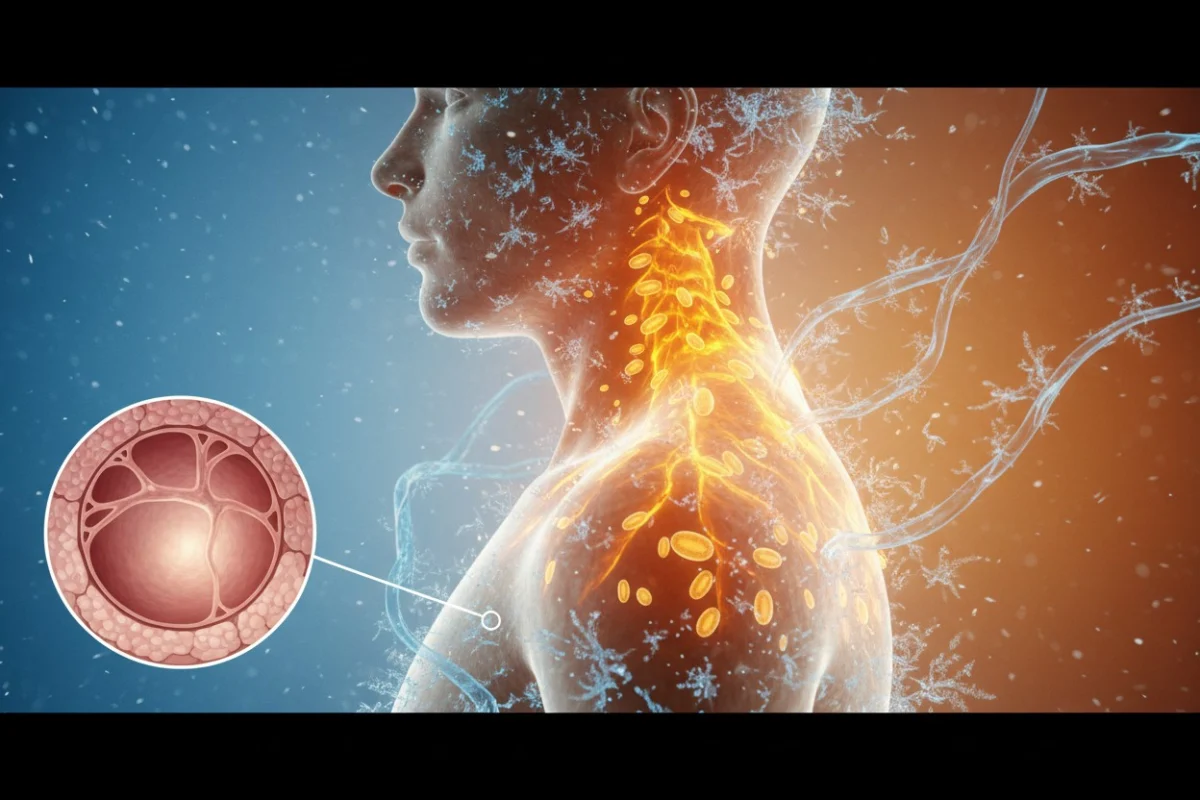
In contrast, brown adipose tissue (BAT) is highly metabolically active. Packed with a high density of iron-rich mitochondria—which give the tissue its characteristic brown color—BAT functions as the body’s internal furnace. Its primary role is thermogenesis: the process of burning calories to generate heat. While once believed to be exclusive to infants as a means of temperature regulation, modern medical imaging has confirmed that many adults retain functional deposits of brown fat, typically located around the neck, collarbones, and upper back.
Chronology of Discovery: From Infancy to Adulthood
For decades, the prevailing consensus in biology was that brown fat vanished shortly after the neonatal period. This belief persisted until the late 2000s, when advanced positron emission tomography and computed tomography (PET/CT) scans began identifying active brown fat depots in adult subjects.
The timeline of this research trajectory is as follows:
- Early 20th Century: Brown fat is identified as a unique tissue, but its function remains largely mysterious.
- 2009: Landmark studies using PET/CT imaging prove that brown fat persists into adulthood and can be activated by cold temperatures.
- 2010s: Researchers link brown fat activation to improved blood glucose regulation and metabolic health, setting the stage for deeper cardiovascular investigations.
- 2023-2024: The current study in Arteriosclerosis, Thrombosis, and Vascular Biology marks a shift from systemic metabolic markers to localized vascular health, specifically targeting aortic inflammation.
Study Design: Quantifying the Metabolic Furnace
The researchers aimed to determine whether the thermogenic activity of brown fat could serve as a protective mechanism for the vascular system in individuals with obesity. The study cohort consisted of 65 adults with obesity, a population often at high risk for chronic, low-grade vascular inflammation.
The Methodology
To ensure accuracy, the investigators employed a rigorous protocol:
- Standardized Cold Exposure: Participants were exposed to controlled, cool temperatures before imaging. Cold exposure is the primary physiological trigger for brown fat, forcing the tissue to activate to maintain core body temperature.
- Imaging Precision: PET/CT scans were utilized to visualize and quantify the metabolic activity of brown fat.
- Vascular Analysis: Researchers measured inflammatory activity within the aorta, the body’s largest artery. This provided a direct look at the health of the vessel walls, which are often the first to show damage in cardiovascular disease.
- Biomarker Screening: Blood samples were analyzed to correlate vascular health with systemic anti-inflammatory and pro-inflammatory molecules.
Approximately one-third of the participants displayed detectable brown fat activity, allowing for a clear comparative analysis between those with "active" brown fat and those without.
Supporting Data: The Dose-Dependent Relationship
The results were statistically significant. Participants who exhibited active brown fat showed a marked reduction in aortic inflammation. Most strikingly, the relationship appeared to be dose-dependent: the higher the metabolic activity of the brown fat, the lower the inflammatory signal in the aorta.
Key Clinical Findings:
- Lower Inflammatory Markers: Those with active brown fat exhibited significantly lower levels of Interleukin-6 (IL-6), a cytokine known to be a primary driver of chronic inflammation and a precursor to atherosclerotic plaque formation.
- Elevated Anti-Inflammatory Molecules: The presence of active BAT correlated with higher concentrations of beneficial, anti-inflammatory signaling molecules in the blood.
- Independent Protection: Crucially, these findings persisted even after researchers adjusted for age, body mass index (BMI), and traditional cardiovascular risk factors such as cholesterol levels and hypertension. This suggests that brown fat acts as an independent variable in vascular health.
Official Responses and Implications
The scientific community has received these findings with a mix of excitement and cautious optimism. While the study does not claim that brown fat is a "cure" for heart disease, it reframes the tissue as a potent therapeutic target.
"The discovery that brown fat may actively counteract vascular inflammation suggests that we have an internal system designed to mitigate the damage caused by obesity," noted one of the lead researchers. "If we can pharmacologically or behaviorally harness this, we could potentially reduce cardiovascular risk without the heavy reliance on systemic drugs."
However, medical experts urge patience regarding clinical application. "This is an observational study," says Dr. Elena Rossi, a cardiovascular researcher not involved in the study. "We see a correlation, but we have yet to prove that increasing brown fat activity will directly prevent a heart attack in a clinical trial. It is a promising piece of the puzzle, but not the whole picture."
The Mechanism: How Brown Fat Defends the Arteries
Why would a tissue responsible for heat production impact the arteries? Researchers point to the endocrine and paracrine functions of brown fat. When activated, brown fat does more than burn glucose and fatty acids; it secretes specific molecules, often called "batokines," that travel through the bloodstream and signal other organs, including the endothelium (the inner lining of the blood vessels).
Furthermore, the process of uncoupling—where mitochondria generate heat instead of chemical energy—requires the consumption of large amounts of lipids and glucose. This "clearing" effect may prevent the buildup of harmful, inflammatory fats in the bloodstream, thereby sparing the aortic walls from toxic accumulation.
Lifestyle Implications: Can We Cultivate Brown Fat?
For those interested in the potential cardiovascular benefits of brown fat, the study concludes with a message of empowerment. While genetics play a role in how much brown fat an individual retains, lifestyle factors appear to be strong modulators.
Practical Steps to Stimulate Brown Fat:
- Cold Exposure: Brief, regular exposure to cooler temperatures—such as keeping the thermostat slightly lower, taking cool showers, or enjoying outdoor walks in autumn/winter—can stimulate brown fat thermogenesis.
- High-Intensity Exercise: Beyond simple caloric burn, high-intensity interval training (HIIT) has been linked to the "browning" of white fat, where white adipose cells begin to take on the characteristics of brown fat.
- Nutritional Support: While the study did not focus on diet, the authors noted that reducing the intake of highly processed, pro-inflammatory foods may reduce the overall burden on the vascular system, allowing the body’s natural protective mechanisms, like brown fat, to function more efficiently.
Limitations and Future Directions
Despite the promising nature of the research, the study acknowledges several limitations:
- Sample Size: A cohort of 65 is sufficient for a pilot study but too small to draw definitive conclusions for the general population.
- Observational Design: Because the study did not involve an intervention (i.e., actively trying to increase brown fat in patients), it cannot definitively prove cause and effect.
- Duration: The study provides a snapshot in time; longitudinal data is needed to see if the protective effects of brown fat remain stable over decades.
Future research will likely focus on "browning" therapies—pharmaceutical or lifestyle interventions that turn white fat into brown-like fat—and whether these interventions can definitively lower the rate of cardiac events.
Conclusion
The study published in Arteriosclerosis, Thrombosis, and Vascular Biology serves as a profound reminder of the complexity of human metabolism. By shifting the focus from the mere presence of fat to the functional quality of fat, researchers have opened a new frontier in preventative cardiology. As we continue to decode the role of brown adipose tissue, we move closer to a more nuanced understanding of heart health—one that emphasizes the body’s innate, and often untapped, ability to protect itself.