











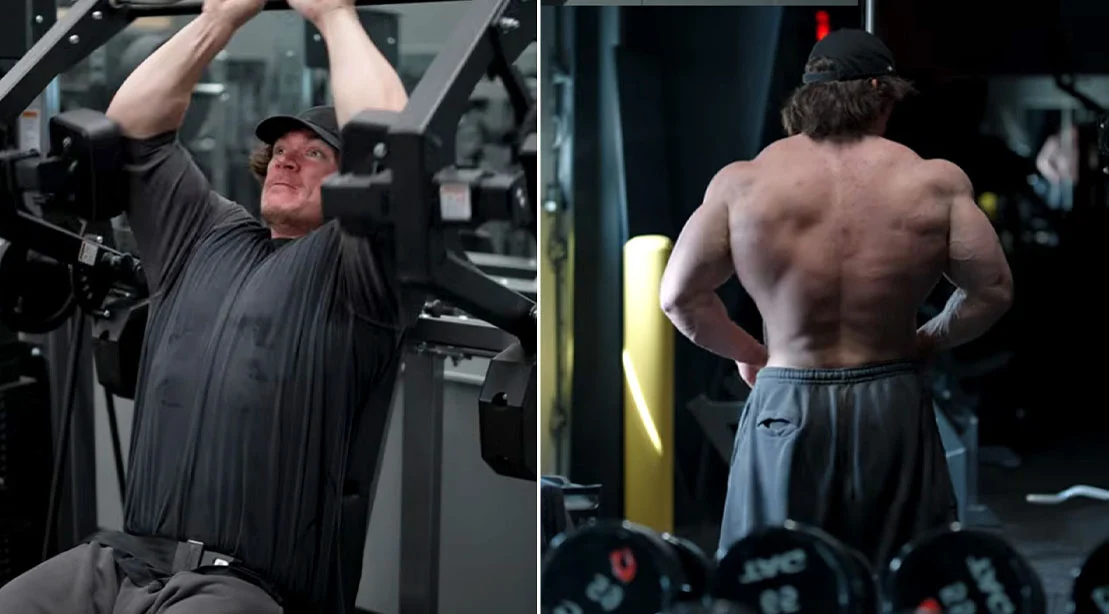
In the ever-evolving world of professional bodybuilding, few figures have captured the collective attention of the fitness industry quite like Sam Sulek. A social media titan and a formidable competitor in the IFBB Men’s Classic Physique division, Sulek has become synonymous with a high-intensity, "no-nonsense" approach to training. Following a highly successful spring campaign that saw him secure an impressive eighth-place finish at the Arnold Classic U.S. and a seventh-place standing at the Arnold Classic U.K., Sulek has returned to the grind. His current objective is clear: to pack on significant mass and refine the structural integrity of his back before his next competitive outing.
The Foundation of a Pro-Level Back
The back is arguably the most complex muscle group in the human body, requiring a multifaceted approach to training that balances thickness, width, and detail. For a competitor of Sulek’s caliber, "back day" is not merely about moving weight; it is a calculated exercise in biomechanics.
In a recent training session, the content creator outlined his strategic philosophy: "I think I’m going to start with all rows, then all pulldowns," he stated, emphasizing the importance of prioritizing heavy compound rowing movements to establish a thick foundation before transitioning to the vertical pulling motions that define the aesthetic "V-taper" so crucial to the Classic Physique division.
Chronology of a High-Volume Training Session
Sulek’s training style is defined by a deep-seated proclivity for the "pump"—a state of maximal blood flow to the target musculature. While many modern influencers opt for high-repetition, low-intensity circuits, Sulek remains a proponent of heavy, failure-driven training.
Phase 1: The Rowing Emphasis
Sulek began his session by focusing on the mid-back, utilizing rowing variations that challenge the posterior chain. He is particularly mindful of muscle bias. "We all know you’re working your lats in a row," Sulek explained during the workout. To avoid excessive lat-dominance, he adjusted his form by elevating his elbows during the row, forcing the rear deltoids and rhomboids to take a more active role.
His mental cue for this movement is iconic: he imagines his rear delts "bumping" together at the peak of the contraction. While physically impossible, the visualization serves as a powerful tool to ensure full retraction of the scapula.
Phase 2: Maintaining Range of Motion
A common critique of heavy bodybuilding is the loss of form in favor of ego lifting. Sulek, however, balances his intensity with a strict adherence to range of motion (ROM). If he feels his form beginning to slip, he does not hesitate to adjust the load. This was evident during his T-bar row set, where he prioritized complete reps over maximal weight to ensure that the lats, traps, and rhomboids were fully taxed without compensation from secondary muscle groups.
Phase 3: Cable Isolation and Pullovers
The workout transitioned to bench-assisted cable rows, a movement that keeps the trainee stationary, thereby eliminating momentum and maximizing the tension on the biceps, lats, and shoulders. Following this, he moved to the seated pullover machine. Sulek’s philosophy on weight selection is simple yet effective: "The weight must be heavy enough that I feel the resistance, yet light enough that I can maintain the squeeze."
He offered a crucial technical tip for the pullover: avoid locking the arms out at the top of the movement. By maintaining a slight bend, he keeps the tension squarely on the lats and prevents unnecessary strain on the elbow joints.
Phase 4: Vertical Pulling and Final Engagement
For his final exercises, Sulek moved to the cable lat pulldown. He began with a narrow grip bar to minimize wrist discomfort while maximizing the stretch in the lats. For the final set, he transitioned to the standard lat bar to alter the angle of pull, hitting the upper back from a different mechanical disadvantage.
Supporting Data: Why This Routine Works
The efficacy of Sulek’s approach lies in the principles of mechanical tension and metabolic stress. By alternating between horizontal rowing (which targets back thickness) and vertical pulldowns (which target back width), he addresses all aspects of the latissimus dorsi and the supporting musculature of the posterior deltoids and trapezius.
The inclusion of cable-based movements is also backed by sports science. Unlike free weights, which have a specific "strength curve," cables provide constant tension throughout the entire movement. This constant tension is a cornerstone of hypertrophy, as it prevents the muscle from entering a resting phase during the repetition, thereby increasing the "time under tension" that is vital for muscular growth.
Official Responses and Industry Context
Sulek’s meteoric rise has been met with both acclaim and intense scrutiny. In the professional bodybuilding sphere, his ability to maintain a massive physique while adhering to the strict weight classes of the Classic Physique division is a testament to his dietary and training discipline.
His training videos, which have garnered millions of views, often serve as an informal masterclass for amateur athletes. However, experts remind followers that Sulek’s level of intensity is not meant for beginners. "It is essential to figure out your own form by going light first," the article notes. "Find a working weight that suits your individual strength level before attempting the high-intensity sets that define the elite."
Implications for the Future of Classic Physique
The implications of Sulek’s training regimen extend beyond his own development. He has effectively bridged the gap between "old-school" bodybuilding—characterized by heavy, grit-filled training—and the modern digital age. His transparency regarding his workouts and his post-workout posing sessions provide a rare look into the reality of a professional athlete’s life.
Following his recent posing session, where he revealed a "granite-like" back and an enviable lat spread to his 4.5 million YouTube subscribers, it is clear that Sulek is not resting on his laurels. His focus on structural development suggests that he is aiming for a more refined, detailed aesthetic for his next competition. By addressing the "gaps" in his back development through specific elbow-angle adjustments and controlled, high-tension movements, Sulek is positioning himself as a perennial contender in the IFBB circuit.
Conclusion: The Road Ahead
As Sulek continues his off-season preparation, the fitness world will be watching closely. Whether one views him as a polarizing figure or an inspiration, his commitment to the craft of bodybuilding is undeniable. For those looking to mirror his progress, the lesson is clear: progress is not found in a single "magic" exercise, but in the consistent, intelligent application of intensity and form.
Sulek’s journey is a reminder that even at the highest levels of the sport, the fundamentals—rows for thickness, pulldowns for width, and a mind-muscle connection that demands perfection—remain the bedrock of greatness. As he says himself, after a grueling, high-volume session, he is "leaving the gym a happy camper." For the rest of us, the path to such success requires the same dedication to the grind that Sulek displays every single day.
References and Further Learning
- For those interested in the specific mechanics of the T-bar row and other back-building staples, visit the Muscle & Fitness exercise database.
- To keep track of competitive results and upcoming IFBB events, consult the NPC News Online database.
- To follow Sam Sulek’s ongoing training logs and future competitive announcements, subscribe to his YouTube channel here.