











The sun set hours ago, plunging the campus into a deep, rhythmic silence. Inside the laboratory, the only signs of life are the soft, rhythmic hum of a centrifuge, the cool glow of a high-resolution monitor, and the methodical ticking of a digital timer. A researcher, gloved and focused, stands at a pristine benchtop. When the timer pings, they move with practiced, clinical precision—swapping a sample, adjusting a pipette, resetting the clock. This cycle will repeat until the early hours of the morning.
This is not the cinematic version of science. There are no dramatic orchestral swells, no instant breakthroughs, and no headlines announcing a cure. Yet, this quiet, repetitive, and often isolating labor is the true face of cancer research. It is the unglamorous foundation upon which every modern medical miracle is built.
The Reality Behind the Breakthroughs
During National Cancer Research Month, the Cancer Research Institute (CRI) is pulling back the curtain on the grueling reality of scientific inquiry. While the public often views cancer research through the lens of triumphant press releases and FDA approvals, those milestones represent only the final 1% of a journey that spans decades.
The day-to-day life of a researcher is defined by the “slow churn.” It involves experiments that are repeated until the results are statistically undeniable, data that requires months of interpretation, and fundamental questions that may remain stubbornly unanswered for years.
"The public sees the finish line," notes one senior investigator. "They don’t see the thousands of miles of track that had to be laid by hand, in the dark, just to get there."
The Science of Consistency: Why We Repeat
To the uninitiated, running the same experiment dozens of times might seem like a waste of resources. However, in the realm of oncology, reproducibility is the highest form of integrity.
Consider the analogy of a master chef. You follow a recipe with absolute fidelity, yet the dish tastes different. Was it the humidity in the kitchen? A slightly different brand of salt? The calibration of the oven? In a laboratory, these "variables" are magnified. A slight fluctuation in cell culture temperature or a microscopic variance in a chemical reagent can derail weeks of work.
"Science is about identifying the invisible variables," says a lead scientist at the CRI. "We aren’t just testing a hypothesis; we are stress-testing reality. We tweak the temperature, the concentration, the timing—one element at a time—until the result is consistent, reproducible, and, above all, trustworthy."
This rigor is not merely for the sake of accuracy; it is for the sake of human lives. When a discovery is finally published, it must hold up under the intense scrutiny of the global scientific community. Only when data is bulletproof can it transition from the bench to the preclinical stage, and eventually, to a clinical trial.
The Anatomy of Failure and the Path to Progress
If consistency is the goal, failure is the constant companion. In the laboratory, experiments fail—sometimes for obvious reasons, often for reasons that defy explanation.

For many researchers, months can pass without a single "successful" data point. This is where the emotional toll of the work becomes apparent. It requires a specific type of resilience to return to the bench after weeks of negative results, to rethink the methodology, and to try again.
"Every failure is not an endpoint," explains a CRI-supported researcher. "It is a data point. It is a clue. It tells us where the wall is, so we can stop running into it and start looking for the door."
Over time, these incremental steps accumulate. A signal that was once buried in noise begins to clarify. A pattern emerges. A hypothesis that once felt like a flight of fancy begins to hold the weight of evidence. This is the moment where discovery takes shape—the "aha" moment that only arrives after thousands of hours of "no."
The Funding Crisis: A Threat to Innovation
The persistence required for this work is not enough on its own; it requires fuel. Scientific funding is the lifeline that sustains the "slow churn," yet this vital resource is increasingly under threat.
Dr. Alicia Zhou, CEO of the Cancer Research Institute, has expressed deep concern regarding the current state of financial support for the sector. "Funding cuts are disproportionately impacting young investigators and researchers," Dr. Zhou notes. "These are individuals who are just beginning their careers, filled with the energy and fresh perspectives needed to solve the most complex problems in oncology. If we choke off the pipeline at the source, we aren’t just losing experiments; we are losing the next generation of scientific leaders."

The implications of these cuts extend far beyond the laboratory walls. Without adequate funding, high-risk, high-reward research—the kind that truly moves the needle—is often abandoned in favor of safer, incremental projects.
Bridging the Gap: Translational Research
One of the most critical challenges in the modern era is the "valley of death"—the chasm between a fundamental discovery in the lab and its application as a clinical intervention.
"There is a huge need for support of translational research," says Dr. Valsamo (Elsa) Anagnostou, a CRI CLIP Investigator. "It is one thing to identify a gene or a protein that drives cancer. It is an entirely different, and equally expensive, challenge to translate that into an intervention that makes a difference in patient outcomes."
This translational work is where the "quiet" science meets the "loud" results. It requires collaboration between biologists, immunologists, data scientists, and clinicians. It is a multi-disciplinary effort that is rarely recognized until a patient is finally standing on the other side of a recovery.
The Human Element: Persistence in the Face of Uncertainty
History is filled with stories of researchers who found the answers they were looking for only after an initial, disastrous detour. Dr. Kenneth Murphy, a recipient of the 2026 AACR-CRI Lloyd J. Old Award in Cancer Immunology, reflects on his own journey: "The truth of it is, we stumbled across that gene for the wrong reasons, and it was a disaster, and we finally figured out what was missing."
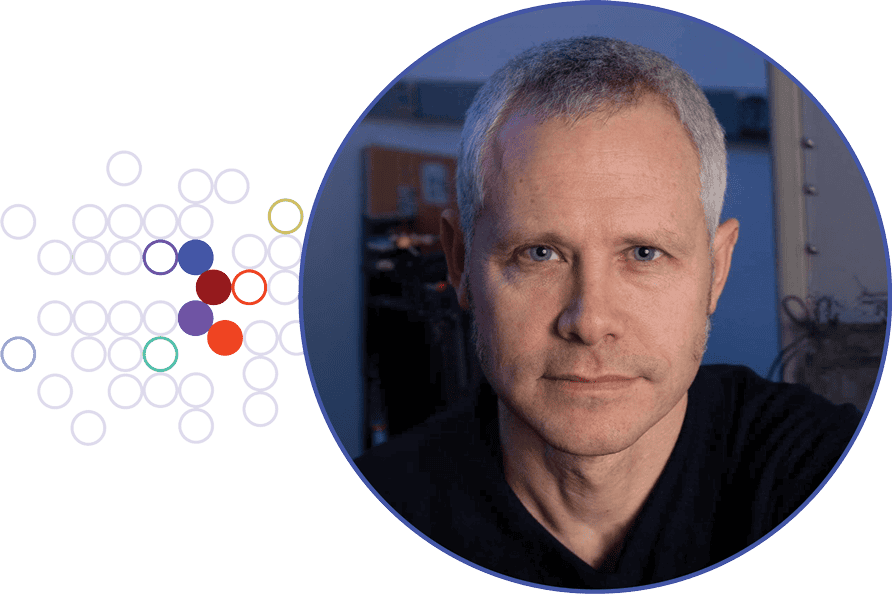
That "disaster" led to fundamental discoveries regarding dendritic cells, which have since rewritten the textbooks on how we understand immune responses. It is a reminder that the path to a breakthrough is almost never a straight line.
Dr. E. John Wherry, Associate Director of the CRI’s Scientific Advisory Council, emphasizes the long-term stakes: "If we don’t protect this next generation of researchers, we risk losing the very people who will drive the discoveries of tomorrow. The work is hard, the hours are long, and the path is uncertain. We need to ensure that the environment supports that kind of bravery."
Conclusion: A Legacy of Lives Saved
The true impact of this work is best articulated not by scientists, but by those who have lived to tell the tale. Sharon Belvin, a stage 4 melanoma survivor, serves as a living testament to the efficacy of this process.
"My life, and the lives of so many others, are living proof that this work actually matters," Belvin says.
Every new therapy, every improved outcome, and every life extended traces back to those moments in the dark: to the scientist resetting a timer, to the data being re-analyzed, and to the refusal to give up when the answers weren’t obvious.

Before the headlines, before the clinical trials, and before the life-saving treatments, there is the laboratory. And tonight, long after the sun has gone down, a light will remain on in a lab somewhere, and another experiment will begin. The architecture of the future is being built, one pipette at a time, in the quietest corners of our world.
For those interested in supporting the researchers who make these breakthroughs possible, or to learn more about the ongoing projects at the forefront of immunotherapy, please visit the Cancer Research Institute’s official portal.