









For decades, the medical community has operated on a foundational premise regarding heart health: that cardiovascular disease is a condition of middle or old age, signaled by traditional "red flags" like high cholesterol, hypertension, and a history of smoking. However, a landmark international study has shattered this conventional wisdom, revealing that the silent buildup of plaque in the arteries—the primary driver of heart attacks and strokes—is far more pervasive and begins much earlier in the adult lifespan than previously estimated.
The findings, presented during a Hot Line session at the ESC Congress 2026 and simultaneously published in The New England Journal of Medicine, mark a turning point in cardiology. By shifting the focus from "estimating risk" to "detecting disease," researchers are advocating for a paradigm shift that could fundamentally change how we prevent the world’s leading cause of death.
Main Facts: A Paradigm Shift in Cardiovascular Health
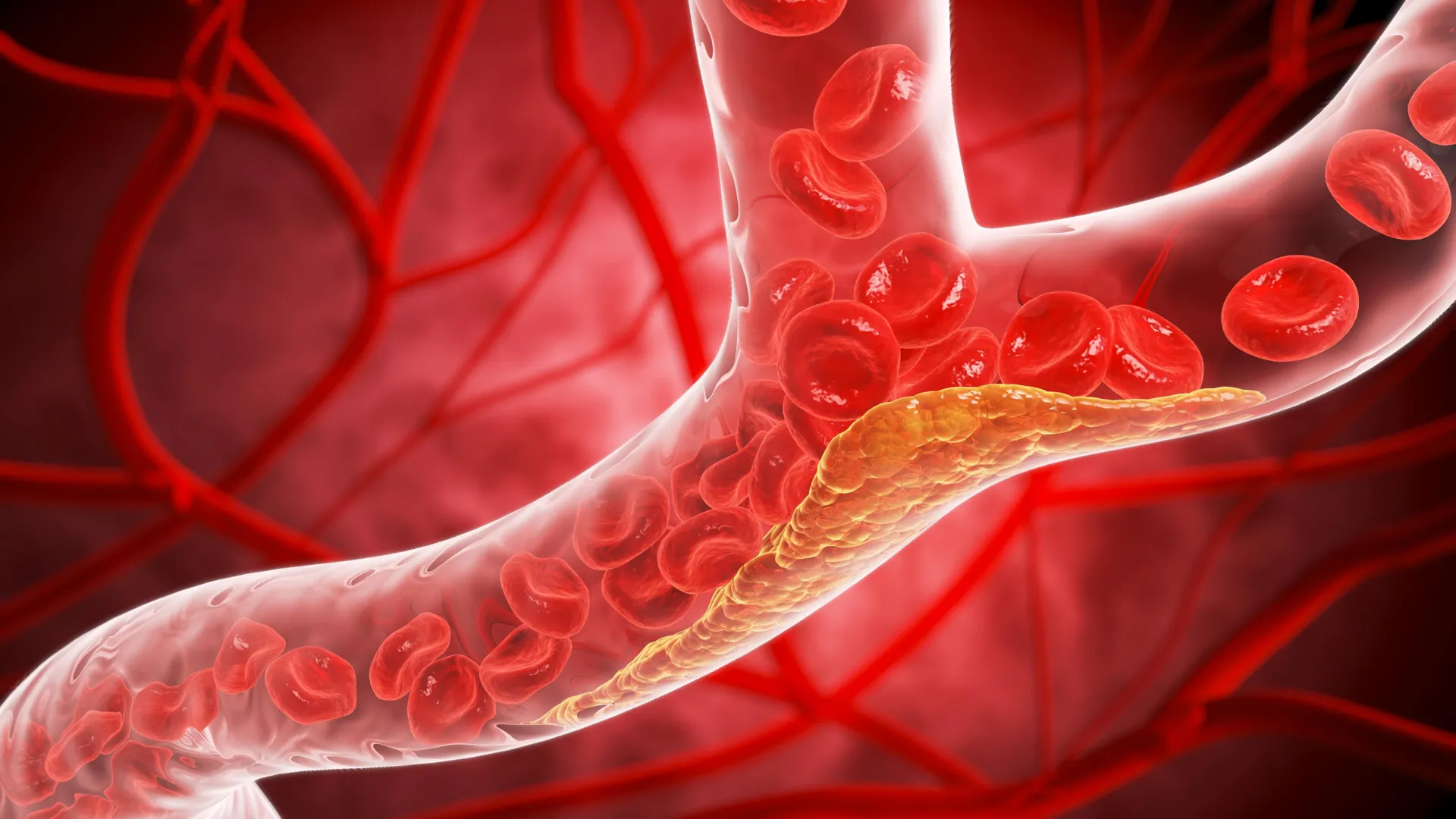
Atherosclerosis—the chronic, often silent accumulation of fatty deposits and inflammatory cells within the walls of the arteries—is the culprit behind nearly 20 million deaths annually. Until now, clinicians have relied on probabilistic risk scores (such as SCORE2) to predict the likelihood of a future cardiovascular event. These scores look at biomarkers and lifestyle factors to guess a patient’s risk.
The REACT (Researching Early Atherosclerosis in the Cardiovascular Tract) study, a massive international effort, argues that this guesswork is no longer sufficient. By utilizing advanced imaging across a cohort of over 16,000 asymptomatic individuals, the researchers have confirmed that atherosclerosis is not merely a disease of the elderly, but a condition that can be detected in young, seemingly healthy adults. The study suggests that waiting for symptoms or "high-risk" markers to appear may be a strategy that arrives too late.
Chronology: The Evolution of the REACT Initiative
The REACT project is designed as an ambitious, multi-phase, eight-year longitudinal study intended to map the progression of silent atherosclerosis across the entire adult lifespan.
- 2024: Phase 1, dubbed "REACT-DETECT," officially commenced. Funded by a EUR 23 million grant from the Novo Nordisk Foundation, the initiative brought together a coalition of researchers from Rigshospitalet in Copenhagen, Denmark, and the Centro Nacional de Investigaciones Cardiovasculares (CNIC) in Spain.
- 2026: The first major data set from Phase 1 was unveiled at the ESC Congress. The study enrolled 16,808 participants aged 18 to 70, all of whom had no prior history of cardiovascular disease. This phase provided the most comprehensive "atlas" of arterial health ever assembled, covering the carotid (neck), femoral (legs), and coronary (heart) arteries.
- 2027–2032 (Proposed): Subject to continued funding, Phase 2, or "REACT-PROTECT," is scheduled to launch. This phase will move beyond detection to intervention, aiming to determine whether imaging-guided treatment can effectively halt or reverse the progression of plaque in high-risk individuals.
Supporting Data: The Anatomy of a Silent Disease
The data generated by the REACT study is staggering in its scope and clarity. By performing advanced imaging on thousands of participants, the researchers uncovered a clear, age-dependent trajectory of the disease.
Prevalence Across Age Groups
The imaging results showed a stark reality: atherosclerosis is already present in a significant portion of young adults. Among participants aged 18 to 29, approximately 1 in 13 already displayed signs of arterial plaque. As the cohort aged, the prevalence increased with clinical precision: by the time participants reached the 60–70 age bracket, nearly 9 out of 10 individuals showed evidence of the disease.
The Power of Peripheral Imaging
One of the most consequential findings involves the correlation between arterial sites. The study found that individuals who exhibited plaque in their coronary arteries almost invariably showed signs of the disease in their carotid or femoral arteries. This is a crucial discovery because while scanning coronary arteries for plaque is invasive or requires high-end CT technology, the carotid and femoral arteries are easily and noninvasively accessible via portable ultrasound.
Gender-Based Divergence
The study also provided granular detail on how the disease manifests differently between the sexes. Men tend to show an earlier onset of the disease, with the prevalence curve rising roughly five to ten years earlier than in women. Women, conversely, experience their most rapid increase in plaque accumulation between the ages of 40 and 60—a window that aligns with the hormonal shifts of menopause. These findings suggest that gender-specific prevention strategies are not just helpful, but essential.
Official Responses and Strategic Vision
The leadership behind the REACT project, including Professor Henning Bundgaard of Rigshospitalet and Dr. Borja Ibáñez of CNIC, view these findings as a mandate for change.
"The vision of REACT is to transform primary cardiovascular prevention through a precision medicine approach," says Professor Bundgaard. "Until now, we have been shooting in the dark, relying on estimates of risk rather than the presence of the disease itself. We now have the scientific foundation to say that detection is possible, and it is possible early."
Dr. Borja Ibáñez, the project’s Scientific Director, emphasizes the revolutionary nature of this approach: "We are moving from a model of estimating probability to a model of detecting disease. If we can identify atherosclerosis in its earliest stages, we can tailor treatments with a level of precision that was previously impossible. This is about catching the fire while it is still a spark, rather than trying to extinguish a full-blown blaze."
Dr. Valentin Fuster, Director General of CNIC and a key figure in the project, adds that this work stands on the shoulders of the seminal PESA-CNIC-Santander study. While PESA confirmed the presence of the disease in middle-aged adults, REACT has successfully pushed the investigation into the young-adult population, essentially mapping the "birth" of the disease. "For years," Dr. Fuster notes, "we have hypothesized that early intervention could not only slow the progression of atherosclerosis but potentially lead to a cure. REACT is designed to finally answer that question."
Implications: The Future of Preventative Medicine
The implications of the REACT findings are profound, touching upon public health policy, clinical practice, and the global economy of healthcare.
Rethinking Risk Assessment
The study’s most stinging indictment of current medical practice is the revelation that traditional risk scores miss the majority of people with existing atherosclerosis. Many individuals who appear to have a "healthy" profile according to blood pressure or cholesterol metrics are, in fact, harboring significant plaque buildup. This suggests that current screening protocols are systematically failing to identify a massive segment of the population that is already at risk.
Ultrasound as the New Stethoscope
If the healthcare system adopts the REACT approach, the primary tool for cardiovascular screening could shift to the portable ultrasound. By empowering healthcare professionals to perform simple, quick, and noninvasive scans of the carotid and femoral arteries, the medical community could move toward universal screening for silent atherosclerosis. This would effectively turn a diagnostic process that currently relies on complex laboratory work and CT scans into a standard, office-based procedure.
The Path to Clinical Trials
The ultimate goal of the REACT project is to prove that early detection leads to better health outcomes. By launching large-scale randomized clinical trials in the coming years, researchers hope to demonstrate that aggressive, imaging-guided intervention can prevent the "clinical manifestations" of the disease—heart attacks, strokes, and sudden death.
As the study expands its collaborations into India, Singapore, Tanzania, and Mexico, it is becoming a truly global endeavor. The researchers are committed to validating these findings across diverse populations to ensure that the "precision medicine" approach is applicable regardless of ethnicity or geography.
In conclusion, the REACT study has provided a stark, data-driven wake-up call. Cardiovascular disease is not a sudden event that happens at the end of life; it is a slow, steady, and silent process that begins in early adulthood. By moving from a culture of risk estimation to a culture of direct detection, the medical field may finally be positioned to curb the world’s most lethal epidemic, transforming a life-long threat into a manageable—and potentially reversible—condition.