











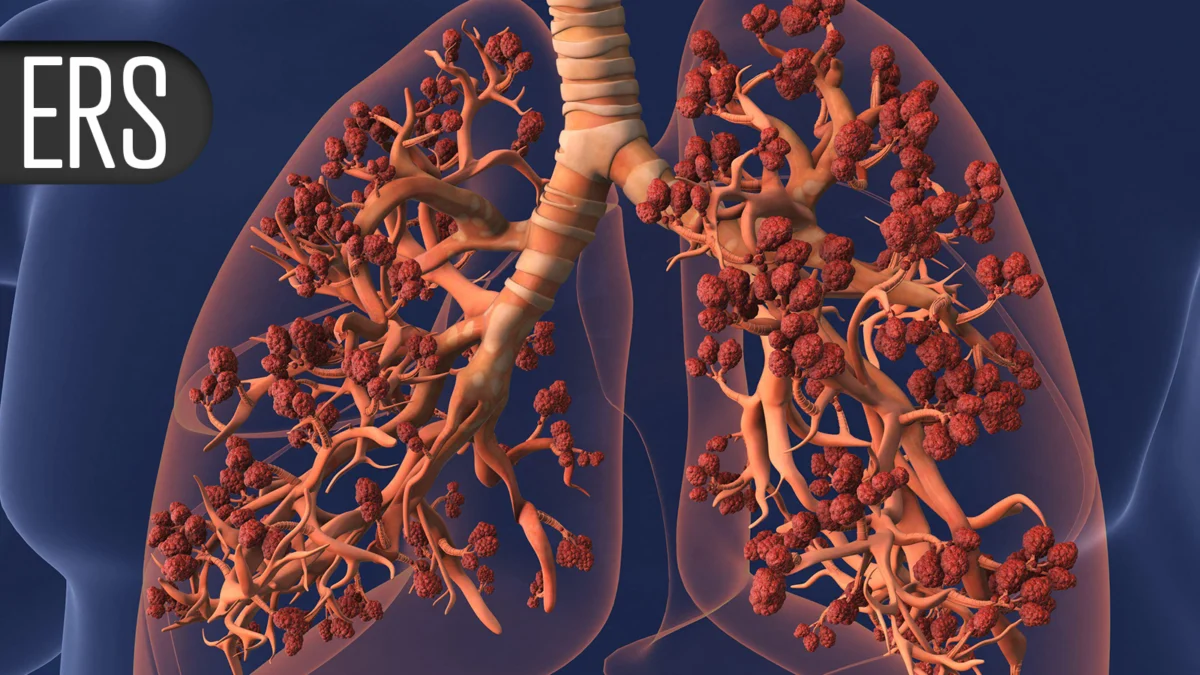
In an era where synthetic polymers have become as ubiquitous as the air we breathe, a startling new study presented at the European Respiratory Society (ERS) Congress in Barcelona has brought the invisible crisis of airborne pollution into sharp focus. Researchers have identified a statistically significant correlation between the presence of inhaled microplastics in the respiratory tract and the occurrence of lung cancer, raising urgent questions about the long-term biological consequences of living in a plastic-saturated world.
The Findings: A Statistical Link
The prospective observational study, led by Dr. Ilias Dimeas of University College Dublin and the University of Thessaly, Greece, examined 100 individuals undergoing diagnostic bronchoscopy. By utilizing bronchoalveolar lavage (BAL) and direct airway tissue sampling, the researchers sought to quantify the "plastic burden" within the human lung.
The results were sobering: patients diagnosed with lung malignancy exhibited a significantly higher frequency of microplastic particles compared to the control group. Specifically, 66% of cancer patients tested positive for microplastics in their samples, compared to 46% of those without lung malignancy (P=0.044).
When adjusting for confounding variables—including age, sex, and smoking history—the statistical link remained robust. The study calculated an odds ratio (OR) of 2.00 (95% CI 1.01-3.95), suggesting that the presence of these particles is independently associated with the disease state. Perhaps most notably, the median count of microplastic particles found in the BAL of cancer patients was one, compared to approximately zero in the control group, suggesting that even minute concentrations of synthetic debris may be relevant in a clinical context.
Chronology of the Research
The study represents a significant leap forward in a field that has, until recently, relied largely on laboratory models or environmental assessments rather than human clinical data.
- Initial Cohort Recruitment: The research team recruited 100 participants scheduled for bronchoscopy. The cohort was split between individuals with newly diagnosed lung malignancy and those undergoing procedures for non-chronic, benign respiratory indications.
- Methodological Rigor: The team employed a dual-sampling approach, performing BAL—a procedure where a sterile saline solution is flushed into a section of the lung and then collected for analysis—and, in half of the participants, direct tissue biopsies of the airway.
- Data Analysis: Following the collection phase, the samples were processed to detect synthetic polymers, identifying both the frequency of detection and the total particle burden per patient.
- Presentation: Dr. Dimeas unveiled the preliminary findings during a featured poster session at the ERS Congress in Barcelona, sparking immediate debate among respiratory experts regarding the mechanisms of particle deposition and retention.
Supporting Data and Particle Dynamics
The study’s findings go beyond simple prevalence. One of the more complex observations reported by Dr. Dimeas was the "inverse relationship" between the burden of microplastics found in the BAL fluid versus the actual airway tissue in cancer patients.
This observation suggests that the way these particles interact with the lung environment is not uniform. The research team noted that this might be indicative of "compartment-specific pulmonary particle dynamics," implying that as lung tissue becomes diseased, its ability to clear or retain foreign materials changes. Whether the diseased tissue traps particles that would otherwise be expelled, or whether the accumulation of particles itself alters the tissue’s biological state, remains the subject of intense ongoing debate.
Dr. Dimeas noted that while the study confirms a higher presence of plastics, it does not confirm causality. "Microplastics could contribute to inflammation or other biological processes that may contribute to diseases like cancer, but it is also possible that diseased lungs simply retain particles differently than healthy lungs," he explained. The team has already transitioned into follow-up laboratory experiments to categorize the specific types of plastics—such as polyethylene, polypropylene, or synthetic fibers—to determine how these polymers interact with human lung cells on a molecular level.
Expert Commentary and Professional Skepticism
While the study offers a compelling snapshot of environmental contamination, the scientific community is exercising caution. Dr. Ria Devereux of the University of East London, in comments shared via the Science Media Centre, emphasized the preliminary nature of the research.
"This study is an important preliminary study, but it does not establish that microplastics are a cause or risk factor for lung cancer," Dr. Devereux noted. She raised several pertinent questions regarding the study’s limitations:
- Occupational and Environmental Exposure: The study did not account for the participants’ specific work environments or their exposure to general air pollution, which are known precursors to lung disease.
- Medical History: The potential for previous medical procedures or interventions to introduce synthetic debris into the respiratory tract was not fully accounted for.
- Procedural Contamination: A critical question remains: could the bronchoscopy equipment itself, which contains various synthetic components, have introduced microplastics into the samples during the procedure?
Dr. Barbara Hoffmann of the University of Düsseldorf, chair of the ERS Advocacy Council, provided a broader perspective. While she was not involved in the study, she underscored the systemic nature of the issue. "In the meantime, we advocate for the fundamental human right to breathe clean air, and this includes air that is not polluted with microplastics," she stated. Her remarks highlight a shift in public health rhetoric: the expectation that clean air must be free from synthetic industrial byproducts, not just traditional pollutants like sulfur dioxide or particulate matter (PM2.5).
Implications for Public Health and Policy
The discovery that our lungs serve as a repository for the remnants of mass industrial production—ranging from synthetic textiles to degraded plastic packaging—has profound implications for preventative medicine.
Reducing Exposure
While the scientific jury is still out on the definitive link to oncogenesis, health experts suggest that minimizing exposure is a prudent step. Current guidance for individuals concerned about microplastic inhalation includes:
- Indoor Air Quality: Replacing synthetic fibers in upholstery and carpets with natural materials, and ensuring frequent dusting to reduce airborne microplastic fibers.
- Kitchen Habits: Avoiding the use of nonstick cookware, which can shed particles when scratched or overheated. Eliminating the practice of heating or washing plastic containers in high-heat environments like dishwashers or microwaves, which accelerates the degradation of polymers.
- Material Substitution: Transitioning away from plastic food storage in favor of glass or stainless steel and replacing plastic wrap with aluminum foil or reusable silicone covers.
- Environmental Awareness: Avoiding the burning of plastics, which releases high concentrations of micro-particulates into the immediate atmosphere.
Future Research Directions
The path forward for researchers like Dr. Dimeas involves longitudinal studies that can track exposure over time. To move from correlation to causation, future studies must account for:
- The "Plastic Signature": Identifying whether the plastics found in the lungs match the materials commonly encountered in the patients’ daily lives.
- Inflammatory Pathways: Determining if these plastics trigger a chronic inflammatory response that damages DNA or promotes tumor growth, similar to the mechanisms seen with asbestos or coal dust.
- Clearance Mechanisms: Analyzing how the human immune system, specifically macrophages, attempts to engulf and remove these particles and why that process might fail in the context of malignancy.
Conclusion: A Growing Concern
The findings presented in Barcelona serve as a clarion call for further investigation. We live in a world where synthetic materials have provided immense convenience and utility, yet we are only now beginning to quantify the biological "cost" of this material dependence.
As microplastics continue to infiltrate the air, water, and soil, their presence in human tissue has shifted from a theoretical concern to a clinical reality. Whether these particles are mere "innocent bystanders" caught in the pathology of lung cancer, or active participants in the disease’s progression, remains the defining question of the next decade of respiratory research. For now, the medical community agrees on one fundamental principle: the human lung was never designed to process synthetic polymers, and the global effort to reclaim clean, particulate-free air has never been more urgent.