









In the fast-paced modern world, the line between "productive" and "overextended" is often blurred. As professional responsibilities, social obligations, and the demands of travel mount, sleep is frequently the first luxury sacrificed. However, new data from the American Academy of Sleep Medicine (AASM) highlights a sobering reality: when you sacrifice sleep, you aren’t just compromising your health—you are compromising the safety of everyone on the road.
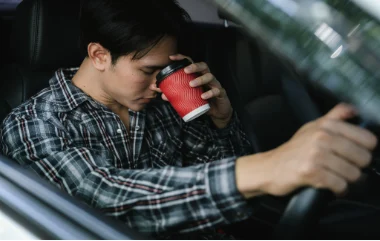
Recent findings indicate that a staggering 41% of American adults have experienced such extreme sleepiness while operating a vehicle that it compromised their ability to drive safely. This isn’t merely a case of feeling "a bit tired"; it is a systemic public health crisis that claims tens of thousands of lives annually. As we navigate an era where convenience often overrides safety, understanding the mechanics, risks, and prevention of drowsy driving has never been more critical.
The Hidden Mechanics of Drowsy Driving
Drowsy driving is often misunderstood as simply "falling asleep at the wheel." While that is the most extreme outcome, the danger begins long before the eyes close completely. Sleep deprivation acts as a cognitive depressant, mimicking the effects of alcohol intoxication.
When a driver is sleep-deprived, their brain struggles to process information, leading to delayed reaction times, diminished peripheral vision, and poor decision-making. These impairments happen incrementally, often without the driver realizing they are losing focus.
The Phenomenon of Microsleep
One of the most dangerous aspects of fatigue is "microsleep." These are involuntary, brief episodes of unconsciousness that can last anywhere from a fraction of a second to several seconds. During a microsleep, a driver may continue to operate the vehicle—maintaining speed or even steering—but their brain has essentially checked out. At highway speeds, a three-second microsleep means traveling the length of a football field while completely oblivious to the road ahead. It is a blind flight, and it is a leading cause of sudden, high-speed collisions.
Chronology of a Crisis: Data from 2017 to 2025
The trajectory of drowsy driving awareness has evolved significantly over the last decade. Research institutions, including the AAA Foundation for Traffic Safety, have spent years quantifying the relationship between sleep loss and vehicular accidents.
- 2017–2021 (The Critical Window): A comprehensive five-year study of crash investigation data revealed a grim statistic: approximately 17.6% of all fatal crashes in the United States involved a drowsy driver. This resulted in 29,834 lives lost over that period. This data served as a wake-up call to transportation safety experts, proving that drowsy driving was not just a nuisance but a leading contributor to fatal roadway incidents.
- 2025 (The Current Climate): The latest AASM survey confirmed that the trend has not abated. Despite increased awareness campaigns, 41% of adults still admit to driving while dangerously sleepy. The persistence of this behavior suggests that the cultural stigma surrounding "powering through" exhaustion remains stronger than the fear of the consequences.
Supporting Data: The Alcohol Equivalence
Perhaps the most startling revelation in traffic safety research is the direct correlation between sleep deprivation and Blood Alcohol Concentration (BAC). The AAA Foundation for Traffic Safety conducted rigorous testing that placed sleep-deprived drivers in a simulator to compare their performance against those who had consumed alcohol.
The results were chilling:
- 4–5 hours of sleep: Drivers operating on this amount of rest performed with the same level of impairment as a driver with a BAC of 0.08—the legal limit for intoxication in most states.
- Less than 4 hours of sleep: This level of deprivation elevated the crash risk to a range comparable to a BAC of 0.12 to 0.15.
This data dismantles the myth that caffeine or loud music can "sober up" a sleepy driver. Just as one cannot "sober up" after a night of drinking by simply opening a window, one cannot counteract the physiological need for sleep with external stimulants.
Official Responses and the "Quick Fix" Myth
Despite the risks, the AASM survey found that 65% of drivers still turn to "quick fixes" when they feel drowsy behind the wheel. These include:
- Drinking coffee or caffeinated energy drinks.
- Opening the windows for fresh air.
- Turning up the radio or listening to high-tempo music.
- Eating snacks to keep the jaw moving.
Public health officials are unequivocal in their response: These measures do not work. While they may provide a fleeting burst of adrenaline or alertness, they do not address the biological pressure of sleep debt. The only effective remedy for sleepiness is sleep. Relying on caffeine creates a false sense of security that encourages the driver to stay on the road longer than they should, often pushing them closer to the point of a catastrophic microsleep.
Implications: The Social and Legal Burden
The consequences of drowsy driving extend far beyond the immediate crash site. There are profound legal, financial, and emotional implications for both the victims and the perpetrators.
Legal and Insurance Consequences
In many jurisdictions, law enforcement is becoming more adept at identifying signs of drowsy driving in crash reports. While there is no "breathalyzer" for sleepiness, investigators look for skid marks—or the lack thereof. A lack of braking or steering maneuvers before an impact is a classic indicator that the driver was not awake at the moment of the crash. This can lead to charges of reckless driving or vehicular manslaughter, with legal consequences that can mirror those of drunk driving.
The Moral Weight
For the driver who survives a drowsy driving accident, the psychological toll is immense. The realization that a preventable decision—to drive while tired—caused injury or death to oneself or others creates a lifelong burden of grief and guilt.
Strategies for Prevention: A Call to Action
As we observe National Sleep Foundation’s Drowsy Driving Prevention Week (Nov. 1–7), the mandate for the public is clear: prioritize sleep as a non-negotiable aspect of travel.
1. Pre-Trip Planning
Safety begins at home. If you are planning a long road trip, schedule it with the same care you would a flight. Ensure you have had seven to nine hours of sleep the night before departure. Do not start a long drive after a full day of work.
2. Recognize the Warning Signs
If you experience any of the following, you are already too tired to drive:
- Frequent yawning or blinking.
- Difficulty keeping your head up.
- Drifting into other lanes or hitting rumble strips.
- Inability to remember the last few miles driven.
- Irritability or restlessness.
3. The "Pull-Over" Mandate
If you feel the onset of these symptoms, do not attempt to "push through." Find a safe, well-lit location to pull over. If possible, take a 20-minute nap or, preferably, find a hotel for the night. The time lost is negligible compared to the cost of a collision.
4. Share the Burden
On long trips, utilize the "buddy system." Rotate drivers every two hours, and have a passenger stay awake to monitor the driver for signs of fatigue.
Conclusion: Redefining Our Relationship with Sleep
The modern obsession with productivity has led us to treat sleep as a flexible variable rather than a biological requirement. However, the road is an unforgiving environment that demands our full cognitive capacity. When we choose to drive while drowsy, we are not just risking our own lives; we are placing the lives of everyone sharing the road into the hands of a brain that is essentially offline.
Moving forward, the goal must be a cultural shift. We must move away from the "tough it out" mentality and toward a culture of accountability. Whether it means delaying a departure, choosing a different mode of transportation, or admitting that we are too tired to drive, the safest choice is always the one that keeps us—and everyone else—off the road when our eyes are heavy. Sleep is not a luxury; it is the ultimate safety feature.