











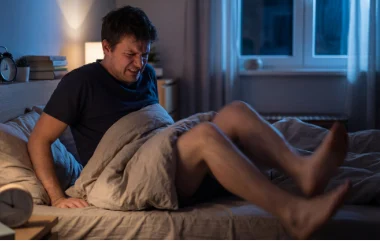
For millions of people, the transition from the day’s activities to the restorative quiet of the bedroom is marred by an unwelcome visitor: leg discomfort. Whether it is a phantom sensation of crawling insects or the sudden, searing agony of a tightened muscle, nocturnal leg pain is a primary driver of chronic insomnia and sleep fragmentation. However, not all leg discomfort is created equal. Understanding the clinical nuances between Restless Legs Syndrome (RLS) and sleep-related leg cramps is not merely a matter of semantics; it is the essential first step toward effective treatment and a better night’s rest.
The Physiology of Nocturnal Discomfort: Main Facts
When patients report "leg pain at night," clinicians must immediately distinguish between neurological urges and muscular spasms. Restless Legs Syndrome, clinically known as Willis-Ekbom disease, is a sensorimotor neurological disorder. It is characterized by an irresistible urge to move the limbs, usually accompanied by uncomfortable, deep-seated sensations.
In stark contrast, sleep-related leg cramps are involuntary, forceful muscle contractions. They are mechanical in nature, often involving the calf or foot, and represent a localized physical event rather than a systemic neurological urge. While both conditions disrupt the sleep-wake cycle, their origins, diagnostic criteria, and management strategies occupy entirely different domains of medicine.
A Chronological Breakdown of Symptoms
To better understand these conditions, it is helpful to look at how they manifest over the course of an evening and night.
The RLS Pattern: The Evening Onset
The hallmark of RLS is its circadian rhythm. Symptoms are rarely present during the active hours of the morning or early afternoon. As the day wanes and the body enters a period of inactivity—such as sitting on the couch to watch television or lying in bed—the symptoms begin to surface. This "rest-induced" onset is a diagnostic pillar. The sensation creates a feedback loop: the discomfort triggers an urge to move, the movement provides temporary relief, but the sensation returns the moment the limbs are stilled again. This makes the process of falling asleep a repetitive, exhausting struggle.
The Cramp Pattern: The Sudden Interruption
Leg cramps do not respect the same temporal rules as RLS. A cramp is an acute, episodic event. It does not typically "build up" as the evening progresses, nor does it necessarily correlate with the amount of time one has been sitting. A person can be in a deep stage of sleep and be jolted awake by the sudden, intense hardening of the gastrocnemius (calf) muscle. Unlike RLS, which is a chronic, persistent urge, a cramp is a discrete event that, once resolved, may not return for the rest of the night.
Supporting Data: Comparative Analysis
Medical data suggests that while the two conditions are distinct, they often share a demographic overlap.
- Prevalence: RLS is estimated to affect roughly 7% to 10% of the adult population, with a higher prevalence in women and older adults. Leg cramps are nearly ubiquitous, with reports suggesting that up to 60% of adults experience them at some point in their lives, particularly as they age.
- Sensory Profile: RLS sensations are notoriously difficult to articulate. Patients describe them as "crawling," "tingling," "pulling," or "electric." Leg cramps have a singular description: "painful," "tight," and "hard."
- Movement Response: The most telling piece of data is the patient’s reaction to movement. In RLS, movement is a therapeutic necessity. In the case of a leg cramp, movement is often impossible or agonizingly difficult, and the primary relief comes from passive stretching of the affected muscle group.
Expert Perspectives: Medical Insights
According to medical professionals like Dr. Shalini Paruthi, the confusion between these two conditions often stems from the fact that they can coexist. A patient may suffer from RLS-induced insomnia and also experience the occasional nocturnal cramp due to dehydration or electrolyte imbalance.
"The key," says Dr. Paruthi, "is to look at the ‘why’ behind the movement." When a patient feels the need to move, is it because the leg hurts in a static way (cramp), or is it because the leg feels wrong, as if it is buzzing or crawling (RLS)? By decoupling these two sensations, doctors can better tailor therapies. RLS might be treated with iron supplementation or dopamine agonists, while leg cramps are frequently addressed through hydration, mineral intake (such as magnesium), and physical therapy techniques.
Implications for Patient Health and Sleep Hygiene
The long-term implications of misdiagnosing these conditions are significant. If a patient believes their RLS is just a "cramp," they may waste months or years trying home remedies like quinine or hydration salts, which will do nothing to address the underlying neurological pathways of RLS. Conversely, treating a benign muscle cramp with heavy-duty neurological medications is an unnecessary intervention.
Chronic sleep deprivation, regardless of the cause, has systemic health implications. It is linked to hypertension, cardiovascular disease, impaired cognitive function, and metabolic issues. Therefore, the ability to clearly describe one’s symptoms is not just about comfort; it is a vital component of long-term preventative health.
Navigating the Clinical Visit: A Strategic Approach
Before consulting a physician, patients should engage in a period of "symptom journaling." To facilitate a swift and accurate diagnosis, consider the following checklist:
The Diagnostic Questionnaire
- The Nature of the Sensation: Can you describe the feeling? Is it a sharp, localized muscle pain (cramp) or a vague, creeping sensation (RLS)?
- The Trigger: Do your symptoms start specifically when you are sitting or lying down?
- The Relief: Does walking or stretching make the sensation vanish completely, or does it only subside while you are physically moving?
- The Timing: Are the symptoms more frequent in the evening, or do they happen sporadically throughout the night?
- The Physicality: Is there a visible hardening or knotting of the muscle during the episode?
Preparing Your Notes
When you meet with your doctor, do not simply say, "My legs hurt." Provide a narrative: "I notice that around 9:00 PM, while sitting on the sofa, I get an overwhelming urge to kick my legs. It feels like static electricity. When I walk, it goes away, but it returns the moment I get back into bed. This happens almost every night."
This specific level of detail allows the clinician to rule out "mimics," such as peripheral artery disease or neuropathy, and hone in on the appropriate diagnostic path.
Conclusion: Empowering the Patient
The journey to restful sleep begins with an understanding of one’s own physiology. While the discomfort of nocturnal leg pain can feel overwhelming, it is almost always treatable once identified correctly. By distinguishing the neurological "urge to move" of Restless Legs Syndrome from the mechanical "muscle spasm" of a cramp, you are not just describing a symptom—you are providing the vital data your doctor needs to restore your sleep.
Do not accept chronic nocturnal discomfort as a normal part of aging or a burden to be endured. Keep your journal, track your patterns, and engage with your healthcare provider. The goal is to silence the legs so that the mind can finally rest.
Disclaimer: This article is for informational purposes only and does not constitute medical advice. Always seek the guidance of your physician or other qualified health provider with any questions you may have regarding a medical condition.