









Introduction: A Silent Crisis
In the corridors of Washington, a quiet but persistent movement has emerged, seeking to address a glaring disparity in American public health: the systemic neglect of men’s health outcomes. As of late 2025, the conversation has moved from the fringes of medical advocacy to the upper echelons of the Department of Health and Human Services (HHS).
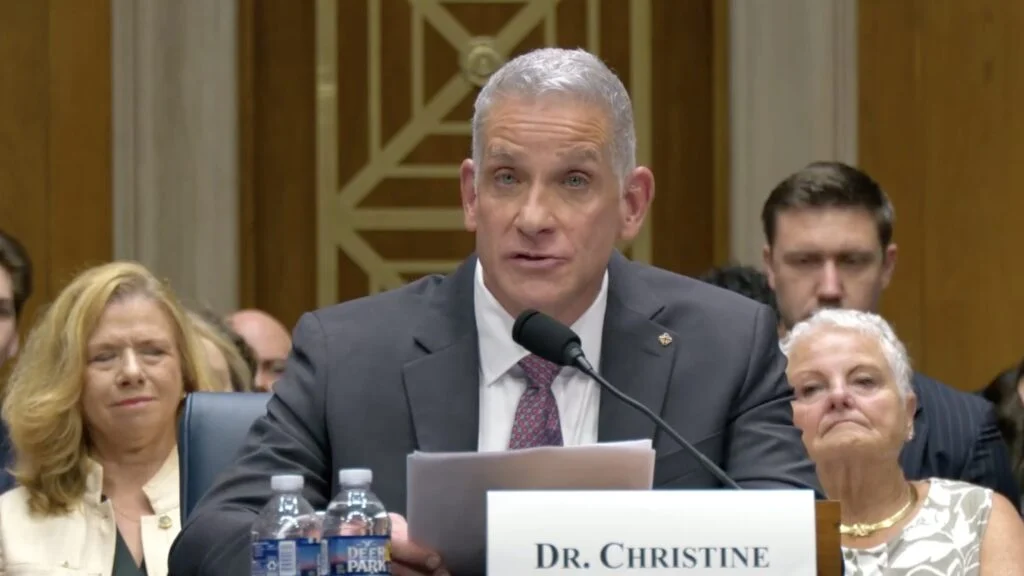
At the center of this movement is Admiral Brian Christine, a urologist appointed as Assistant Secretary for Health. During an FDA panel on testosterone therapy, Christine laid out a stark reality: men in the United States live, on average, seven years less than women. They suffer from higher mortality rates in 10 of the leading causes of death and account for the vast majority of suicide-related fatalities. For Christine and his allies, these are not just numbers; they represent a "men’s health crisis" that demands a coordinated, national strategy. Yet, as proponents push for the creation of a federal office to mirror the long-standing Office of Women’s Health, they have found themselves ensnared in a volatile political landscape where even non-partisan health initiatives are treated as partisan ammunition.
The Chronology: From Concept to Stagnation
The Impetus (Early 2025)
The momentum began with the appointment of Admiral Christine. Given his clinical background as a urologist, the men’s health community viewed his tenure as a historic opportunity to establish a "parallel track" for men within the HHS. This goal, supported by HHS Secretary Robert F. Kennedy Jr., aimed to replicate the success of the Office of Women’s Health, which has operated within the department since 1991.
The Legislative Spark (February 2025)
The "State of Men’s Health Act" was introduced in the House of Representatives by Rep. Troy A. Carter (D-La.) and co-sponsored by Rep. Gregory Murphy (R-N.C.). The bill was not the result of a long-term, multi-year lobbying campaign, but rather an organic, serendipitous collaboration. Following a conversation between AUA patient advocacy manager Melika Zand and Rep. Carter’s senior policy adviser Liz Beltran, the idea of reviving dormant legislative language gained traction. Beltran recognized that the political environment felt uniquely receptive to the initiative, and the bipartisan bill was drafted and introduced in quick succession.
The Current Impasse
Despite initial optimism, the path forward has slowed to a crawl. Experts now suggest that the establishment of a formal office—either through executive fiat or legislative codification—could take several sessions of Congress. As Mark Edney, chair of the American Urological Association’s (AUA) public policy committee, noted, "There’s no expectation this is going to be done in just a few months, but we’re dedicated to seeing this through."
Supporting Data: The Case for a Dedicated Office
The data underscoring the need for a federal office is overwhelming. Public health experts argue that current health infrastructure is ill-equipped to handle the specific physiological and psychological challenges facing the male population.
- Life Expectancy Gap: Men trail women by nearly seven years, a trend that has remained stubbornly persistent over the last two decades.
- Mortality Disparities: Of the 15 leading causes of death in the United States, men have higher mortality rates in 10, including heart disease, cancer, and unintentional injuries.
- The Mental Health Crisis: Suicide rates among men are disproportionately higher than those of women, often linked to lower rates of help-seeking behavior and societal stigmas surrounding male vulnerability.
- Fertility and Hormonal Health: With emerging research on declining testosterone levels and fertility rates, there is an urgent need for centralized data collection and policy guidance that current, fragmented systems fail to provide.
Advocates argue that a dedicated office would not only centralize research but also launch public health campaigns specifically designed to improve outcomes for men, similar to how the Office of Women’s Health has successfully increased awareness regarding breast cancer and maternal health.
Official Responses and Political Obstacles
The Vulnerability of Executive Action
One of the most complex challenges facing the initiative is the debate over how to create the office. Admiral Christine has the authority to establish such an office via executive action within the HHS. However, doing so creates a "political pawn" scenario.
Rep. Gregory Murphy, speaking at the Sexual Medicine Society of North America’s event, emphasized the fragility of such an approach: "The only problem is administrations change every four years… I’ve seen some initiatives that were great all of a sudden disappear with one administration."
The recent dissolution of offices focused on Long Covid, climate change, and health equity serves as a cautionary tale. Ian Simon, former director of the federal Office of Long COVID Research and Practice, noted that when an administration lacks political alignment with a specific office, they can effectively dismantle it with a single phone call. This "expendable" status has made proponents wary of relying solely on an executive mandate.
Partisan Wrangling
The bill itself has become a mirror of current political tensions. According to Mark Edney, negotiations between Democrats and Republicans have reached a delicate stalemate:
- The "Zero-Sum" Fear: Democrats have insisted on language guaranteeing that any new office for men would not siphon resources away from the Office of Women’s Health.
- The Cost Concern: Republicans have been wary of attaching a price tag to the legislation, though they have signaled support for authorizing the office in statute, provided a future funding mechanism can be negotiated.
Furthermore, with midterm elections on the horizon, many lawmakers are hesitant to champion a cause that could be misrepresented in a polarized political climate. Even with safeguards in place, the mere fear that a men’s health initiative might be perceived as a slight against women’s health programs is enough to chill legislative support.
Implications: The Future of Health Equity
The Decline of Administrative Continuity
The hesitation to create the office via executive action reflects a broader, troubling trend in the American administrative state. Historically, it was common practice for agencies to establish offices to address urgent needs, subsequently working through the slow legislative process to authorize them. Today, in an environment of extreme partisan volatility, this approach is viewed as a liability. Every new office is seen as a political target for the next administration.
The Long Game
Despite the hurdles, the men’s health community remains resilient. The strategy has shifted from seeking a "quick win" to a long-term legislative battle. Advocates are currently mobilizing, encouraging constituents to contact their representatives to ensure that the "State of Men’s Health Act" remains a priority despite the slow gears of Congress.
"I have great optimism about this," Rep. Murphy stated at the AUA annual meeting. "Don’t be disappointed if this doesn’t pass this year. Most bills take many years and many sessions to happen, but the process can work."
Conclusion: A Necessary Evolution
The struggle to create a federal Office of Men’s Health is more than just a bureaucratic debate; it is a fundamental question about how the United States approaches population-specific health. If the nation is to bridge the widening gap in mortality and life expectancy, it must move beyond viewing health policy as a zero-sum game.
Whether the office is created through a landmark piece of legislation or an executive order, the underlying message from the medical community is clear: the current trajectory is unsustainable. As Admiral Christine and his supporters continue their efforts, the success of their mission will serve as a bellwether for whether the American political system can prioritize long-term public health outcomes over short-term partisan tactical maneuvering. The lives of millions of men—and the stability of their families—hang in the balance.