In the rapidly evolving landscape of biotechnology, few missions are as ambitious—or as well-capitalized—as that of Retro Biosciences. The South San Francisco-based startup, which has garnered significant attention due to the high-profile backing of OpenAI CEO Sam Altman, recently announced a successful funding round that pegs the company’s valuation at a staggering $1.8 billion.
While the longevity sector has long been relegated to the fringes of speculative science, Retro Biosciences is positioning itself as a clinical-stage heavyweight. Its core objective is nothing short of transformative: to add 10 healthy years to the average human lifespan. By bridging the gap between cutting-edge computational biology and rigorous clinical research, Retro is signaling that the era of "longevity medicine" is transitioning from theory to therapeutic reality.
The Mission: Redefining Human Aging
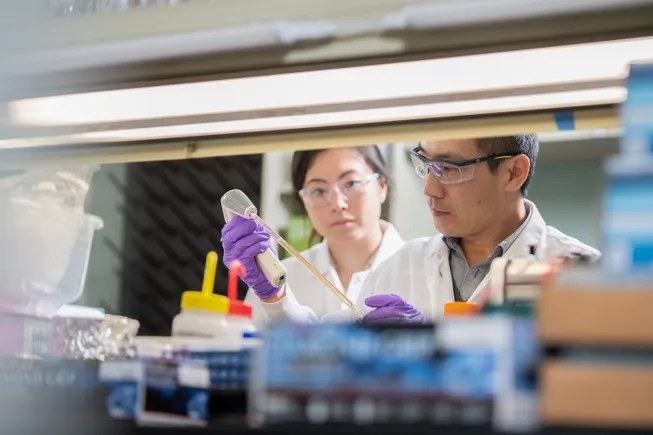
At its heart, Retro Biosciences operates on the premise that aging is not an immutable biological destiny, but rather a malleable process that can be managed, slowed, and potentially reversed. The company’s approach is multi-pronged, leveraging a "toolkit" of advanced technologies to address the cellular degradation that underpins age-related decline.
The startup’s methodology focuses on three primary pillars:
- In Vivo Gene Therapies: Utilizing viral vectors or lipid nanoparticles to modify gene expression within living tissues, effectively "reprogramming" cells to act with the vitality of younger tissue.
- Cell Replacement Therapies: Introducing rejuvenated or specialized cells to replace those that have become senescent or dysfunctional over time.
- Small-Molecule Therapeutics: Developing pills that target specific biological pathways involved in protein maintenance, autophagy, and inflammation.
By tackling these mechanisms simultaneously, Retro aims to create a systemic rejuvenation effect rather than merely treating individual symptoms of aging.
A Chronology of Growth and Scientific Progression
Retro Biosciences’ journey from a stealth-mode startup to a $1.8 billion powerhouse has been marked by rapid scientific milestones.
- 2021: Founded by Joe Betts-LaCroix, a polymath with a background in biophysics and a track record in the startup ecosystem. The company enters stealth mode with a clear vision: to unlock the "cellular reprogramming" potential discovered by researchers like Shinya Yamanaka.
- 2022: The company emerges into the public eye, revealing that it has secured substantial funding, most notably a $180 million injection led by Sam Altman. This capital allowed Retro to build out a robust lab infrastructure and recruit top-tier talent from major biotech and academic institutions.
- 2023–2024: The company transitions from discovery to development. Retro begins the grueling process of preclinical validation, focusing on how cellular rejuvenation can be applied to specific, high-need disease states.
- 2025: Retro initiates its first clinical trial. This milestone marks a critical pivot for the company, moving from theoretical biology to human patient data. The current trial investigates a small-molecule pill designed to enhance the body’s natural clearance mechanisms for protein aggregates—a major hallmark of neurodegenerative conditions like Alzheimer’s disease.
Supporting Data: Why Investors are Betting on Longevity
The $1.8 billion valuation reflects a broader market shift. Investors are increasingly viewing aging as the ultimate "unmet medical need." If a single company can successfully delay the onset of Alzheimer’s, heart disease, and sarcopenia, the market potential is effectively the entire global population.

Data from the company’s internal research suggests that the protein-clearing pathway they are targeting—autophagy—is a conserved biological process that tends to fail as humans age. By upregulating this process, Retro hopes to prevent the toxic buildup of proteins that cause cellular "clutter," leading to tissue death.
At STAT’s Breakthrough Summit West in December 2025, CEO Joe Betts-LaCroix provided a rare update on their clinical trial progress. He noted that the trial is proceeding "super good," with no reports of dose-limiting toxicities. This is a crucial data point, as many longevity therapies have historically struggled with safety profiles in early-stage trials. The company anticipates releasing preliminary data by August 2026, which will serve as a bellwether for the entire longevity industry.
Official Responses and Strategic Outlook
The role of Sam Altman in this endeavor cannot be overstated. His involvement has brought a level of Silicon Valley urgency to the world of biotech. While Altman has kept a relatively low profile regarding the day-to-day operations of Retro, his consistent financial support signals a deep-seated belief in the company’s technical strategy.
In his recent public remarks, Betts-LaCroix emphasized that Retro is not looking for a "fountain of youth" in the mythological sense, but rather a robust, repeatable medical science.
"We are not trying to play god," Betts-LaCroix said during the summit. "We are trying to play scientist. We are looking at the mechanics of biological decay and asking, ‘Can we intervene in a way that is safe, scalable, and clinically meaningful?’ The early data suggests that we can."
Industry analysts remain cautiously optimistic. While the $1.8 billion valuation is high, it is commensurate with the potential market for a therapy that could extend healthspan. Critics, however, point to the notorious difficulty of clinical trials for neurodegenerative diseases, where failure rates remain exceptionally high.
Implications: The Future of Healthspan
The success of Retro Biosciences carries profound implications for the future of healthcare. If the company succeeds in its goal of adding 10 healthy years to human life, the economic and social structures of the 21st century will undergo a seismic shift.

1. Healthcare Reform
Current medical models are built around the "sick-care" system, where resources are spent treating acute conditions in the final years of life. A breakthrough in longevity would prioritize preventative medicine, potentially saving trillions of dollars in end-of-life care costs and reducing the burden on healthcare systems globally.
2. The Socioeconomic Divide
There are valid concerns regarding the accessibility of these technologies. High-end longevity therapies could exacerbate existing health disparities if they are only available to the ultra-wealthy. Retro Biosciences and its investors face the challenge of proving that their therapies can be scaled and made affordable, ensuring that "healthspan extension" becomes a public health reality rather than a luxury good.
3. Regulatory Hurdles
The FDA does not currently classify "aging" as a disease. This presents a unique hurdle for longevity startups: they must prove their therapies treat specific, recognized conditions (like Alzheimer’s or heart disease) to get them approved. Retro’s current trial is a strategic masterclass in this regard, using a high-need condition to gain regulatory approval while simultaneously gathering data that could prove the drug’s broader anti-aging potential.
Conclusion: The Long Road Ahead
As the world waits for the data release in August, Retro Biosciences stands at a pivotal junction. The company has moved beyond the "hype" phase and into the "evidence" phase. Whether or not they can successfully translate their cellular rejuvenation techniques into a viable, market-ready therapeutic remains the defining question of the next decade.
If the results are positive, Retro will have proven that the biological clock is not a fixed measurement, but a variable that can be adjusted. For a world facing an aging population and rising rates of chronic disease, that would be the most important discovery of the century. For now, all eyes are on the lab, where a small team of researchers is attempting to rewrite the limits of human existence.