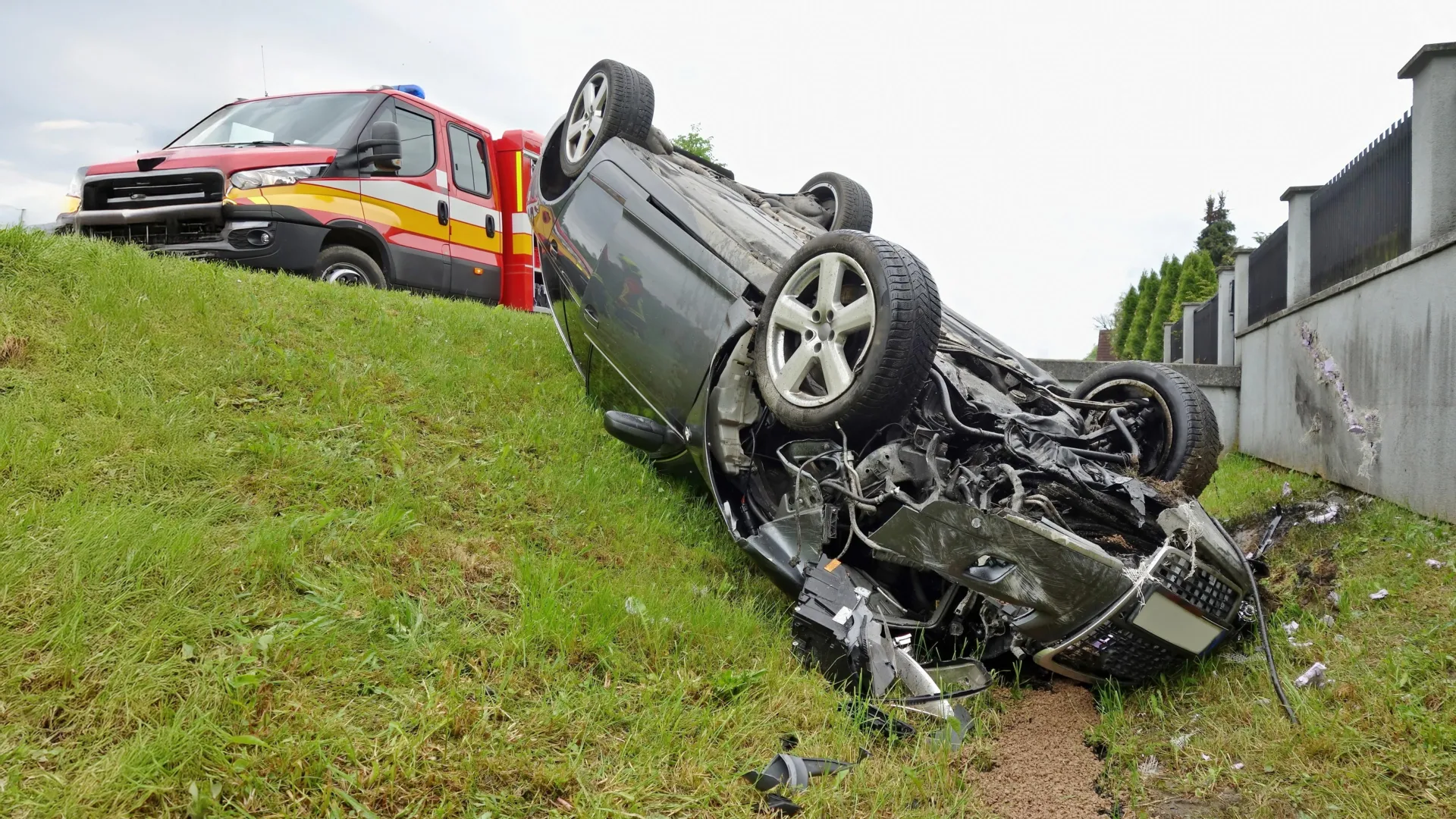
The evolving landscape of substance use in the United States has undergone a seismic shift as cannabis legalization spreads across the country. With this newfound accessibility, a dangerous behavioral trend has emerged: the co-use of cannabis, particularly in edible form, with alcohol. While the risks of driving under the influence of either substance are well-documented, a groundbreaking study from Johns Hopkins Medicine has unveiled a troubling reality—the two substances do not merely combine; they interact in a way that creates a synergistic effect, exponentially increasing the risk of severe driving impairment.
Published in JAMA Network, the study provides the first comprehensive, controlled analysis of how cannabis edibles and alcohol interact to affect human performance. The findings suggest that current legal standards for sobriety, such as the widely accepted 0.08% breath alcohol concentration (BrAC) limit, may be dangerously inadequate for detecting impairment when cannabis is involved.
The Study: A Rigorous Approach to Real-World Risks
To understand the scope of the problem, researchers at the Johns Hopkins University School of Medicine designed a meticulously controlled experimental environment. The study involved 30 healthy adults, aged 21 to 55, who were vetted through rigorous psychiatric and physical health evaluations to ensure they met specific criteria for cannabis and alcohol consumption. To control for the influence of long-term tolerance, participants were required to be infrequent cannabis users—defined as using the drug fewer than three times per week—while having at least some experience with both substances in the previous year.
The study protocol was extensive. Participants engaged in seven distinct experimental sessions, each separated by at least one week to ensure complete metabolic clearance of the substances. During these sessions, participants were administered either a cannabis brownie containing 10mg or 25mg of THC, or a placebo. This was followed by an alcohol-infused beverage (or a placebo) calibrated to achieve breath alcohol concentrations of 0.05% or 0.08%.
By employing a driving simulator and a battery of cognitive and psychomotor assessments, the research team was able to measure performance in real-time, tracking impairment for up to 7.5 hours following consumption. This longitudinal approach allowed the team to capture the onset, peak, and duration of impairment, providing a level of data depth that has been historically missing in cannabis-related research.
Chronology of Impairment: A Timeline of Diminished Capacity
The study’s methodology was structured to mirror the real-world sequence of events that might occur during a night out.
- Baseline Assessment: Before any substances were consumed, participants underwent baseline testing, including cognitive evaluations and blood sampling to measure THC metabolites, ensuring a clear "zero" point for all data.
- Controlled Dosing: Participants consumed their assigned cannabis brownie (or placebo) one hour after a standardized breakfast. Forty-five minutes later, they consumed the alcohol beverage over a 15-minute window.
- Repeated Performance Testing: Researchers administered a series of performance assessments at intervals throughout the day. This included a simulated driving task that required participants to navigate complex traffic scenarios, maintain lane position, and react to sudden hazards.
- Subjective Reporting: Alongside objective data, participants provided reports on their perceived level of intoxication, creating a comparative map between how impaired the subjects felt versus how they actually performed.
The resulting data demonstrated a rapid decline in driving performance once the substances were combined. The "synergistic" effect—meaning the impairment was greater than the sum of the individual parts—became apparent during the peak interaction period, which occurred as the THC from the edible reached maximum concentration in the bloodstream while the alcohol remained active in the system.
Supporting Data: Why Standard Tests Are Failing
Perhaps the most alarming takeaway from the Johns Hopkins study is the failure of traditional law enforcement tools to identify impaired drivers. Standardized Field Sobriety Tests (SFSTs)—which often involve physical maneuvers like walking in a straight line or standing on one leg—are the cornerstone of roadside policing.
However, the study revealed that these tests were largely ineffective at detecting impairment caused by cannabis, both when consumed alone and when combined with alcohol. In many cases, participants demonstrated significant performance deficits in the driving simulator while still appearing "sober" to the standards of the field tests.
"Our findings indicate that co-use of cannabis and alcohol produces significantly greater driving impairment and subjective intoxication than either substance alone," says Austin Zamarripa, Ph.D., the study’s lead author and an assistant professor of psychiatry and behavioral sciences at the Johns Hopkins University School of Medicine.
The data showed that only when the alcohol concentration reached the 0.08% threshold—the legal limit for driving in most of the U.S.—did the field tests begin to catch the impairment reliably. At lower alcohol levels, even when combined with high-potency cannabis edibles, the tests frequently missed dangerous deficits in reaction time and motor coordination.
Official Responses and Expert Commentary
The research team, led by Dr. Zamarripa and Principal Investigator Tory Spindle, Ph.D., emphasized that this study was a necessary departure from previous research. Historically, the vast majority of studies on cannabis and driving have focused exclusively on smoked cannabis.
"We designed this study because people are increasingly co-using alcohol with edible cannabis products, yet controlled research has largely focused on smoked cannabis," explains Dr. Spindle, an associate professor of psychiatry and behavioral sciences at Johns Hopkins. "Consuming typical retail doses of cannabis edibles alongside even low doses of alcohol can produce driving impairment comparable to—or greater than—alcohol alone at the legal limit."
The team included notable experts such as Ryan Vandrey, Ph.D., Elise Weerts, Ph.D., David Wolinsky, M.D., and Denis Antoine, M.D., all of whom have called for a reassessment of how society views the "legal" limits of intoxication. The consensus among these researchers is that the current legal framework is built on an outdated understanding of how single substances affect the brain, failing to account for the complex, compounding effects of multi-substance use.
Implications for Public Safety and Policy
The implications of this research are far-reaching, touching on everything from road safety legislation to public health messaging.
The Challenge of Legal Thresholds
The 0.08% BrAC standard, while useful for alcohol, is effectively "blind" to the added danger of THC. Because THC metabolizes differently than alcohol and affects the endocannabinoid system in ways that are not easily measured by a breathalyzer, the development of new, reliable biological and behavioral detection methods has become a public safety imperative.
The Need for Public Awareness
Most consumers are unaware that mixing these substances creates a synergy. Public health campaigns have long warned against "drinking and driving," but the integration of cannabis into social settings necessitates an updated message. The study suggests that even "low" doses of alcohol, when combined with an edible, can move a person from a state of mild intoxication to a state of profound driving impairment.
Future Research Directions
The researchers argue that the era of treating substances in isolation must come to an end. Policymakers are encouraged to support further studies that explore:
- Detection Technology: Can we develop mobile, non-invasive technology that detects THC impairment at the roadside as accurately as a breathalyzer detects alcohol?
- Educational Campaigns: How can we effectively communicate the "synergistic" nature of this risk to the public, particularly younger demographics who are most likely to experiment with co-use?
- Legal Reform: Should states consider lower alcohol thresholds for drivers who are known to have consumed cannabis?
Conclusion: A Call to Action
The Johns Hopkins Medicine study serves as a critical wake-up call for a society navigating the rapid normalization of cannabis. As edible products become more potent and more widely available, the risk of impaired driving is not just increasing—it is becoming more complex and harder to detect.
For the average consumer, the message is clear: the combination of cannabis edibles and alcohol is not a safe or controlled experience. It is a dangerous cocktail that significantly degrades the cognitive and motor skills required to operate a vehicle. For policymakers and law enforcement, the task is equally clear: the tools of the past are no longer sufficient to ensure public safety on the road. The science has advanced, and now, our legal and educational frameworks must catch up to the reality of 21st-century substance use.