








As the global population ages, the medical community faces an escalating challenge: how to treat injuries in skin that has lost its inherent vitality. Older skin is not merely thinner or more fragile; it is biologically "stuck," hampered by an accumulation of dysfunctional cells that actively impede the repair process. However, groundbreaking research published in Aging (Aging-US) has unveiled a potential solution that sounds like science fiction: a topical treatment designed to clear out these "zombie cells," effectively rejuvenating the skin’s ability to heal itself.
The Core Discovery: Targeting Senescence
The study, led by a team of researchers from the Boston University Aram V. Chobanian and Edward Avedisian School of Medicine—including Maria Shvedova, Rex Jeya Rajkumar Samdavid Thanapaul, and others—centered on the role of cellular senescence.
In a youthful body, cells that become damaged or reach the end of their lifespan typically undergo a process of controlled death, known as apoptosis. However, as we age, a portion of these damaged cells refuse to die. Instead, they enter a state of permanent growth arrest. These "senescent cells" become "zombie cells"—they are no longer performing their original functions, yet they remain metabolically active, secreting a toxic cocktail of inflammatory signals, cytokines, and enzymes.
This secretory phenotype, known as the Senescence-Associated Secretory Phenotype (SASP), creates a hostile microenvironment. It effectively suppresses the body’s natural regenerative pathways, causing chronic low-grade inflammation and stalling the complex, orchestrated process of wound closure. The research team hypothesized that by using ABT-263, a potent "senolytic" drug, they could selectively induce death in these zombie cells, thereby "resetting" the skin to a more youthful, responsive state.
Chronology of the Research and Emerging Evidence
The pursuit of senolytics—drugs that kill senescent cells—has moved rapidly from theoretical models to tangible medical applications.
- The Initial Breakthrough (2024): The study by Shvedova et al. demonstrated that a five-day topical application of ABT-263 on aged mice significantly reduced the burden of senescent cells. By day 24 of the experiment, 80% of the treated mice had achieved complete wound closure, compared to only 56% in the control group.
- The 2025 Validation: A review published in Ageing Research Reviews solidified the scientific consensus that cellular senescence is a primary driver of age-related dermatological decline, confirming that targeting these cells is a viable therapeutic frontier.
- The 2026 Expansion: Research published in 2026 pushed the boundaries further, moving into the realm of diabetic wound healing. Scientists developed a specialized wound dressing impregnated with ABT-263. The result was a dramatic improvement in healing rates for diabetic mice, with the added benefit of no systemic toxicity, suggesting that local delivery is the key to safety.
Supporting Data: Why "Inflammation" Can Be a Friend
One of the most counterintuitive findings of the 2024 study was the discovery that ABT-263 caused a brief, controlled surge in skin inflammation. In medical literature, chronic inflammation is almost universally viewed as a pathogen of aging. However, the researchers noted that this short-lived spike in inflammatory markers acted as a biological "starter pistol."
When the senescent cells were cleared, the skin’s dormant healing pathways—long suppressed by the zombie cell environment—suddenly reactivated. Gene expression analysis showed a significant upregulation in pathways governing collagen production, angiogenesis (the growth of new blood vessels), and tissue remodeling.
Essentially, the drug cleared the "biological debris" that was blocking the signal for repair. Once the debris was removed, the tissue’s innate intelligence took over, allowing the skin to close wounds with the speed and efficiency of younger, healthier tissue.
Official Perspectives and Scientific Nuance
While the results are promising, the scientific community is maintaining a stance of cautious optimism. The 2024 Frontiers in Immunology review provided essential context: senescence is not inherently evil. In a healthy, young body, senescent cells actually play a transient, helpful role in wound repair, signaling the body to begin the process.
The danger lies in persistence. When these cells refuse to leave the scene after their job is done, they transition from "helpers" to "hindrances." Consequently, the clinical challenge for future researchers is one of precision: how do we clear the harmful, stagnant cells without disrupting the necessary, temporary senescence required for initial healing?
Dr. Daniel S. Roh and his colleagues emphasize that this research is currently foundational. "Our study underscores the potential of topical senolytic treatments to enhance wound healing in aging skin, presenting a potentially promising strategy for preoperative care," the team noted in their publication. The goal is to move toward a model where patients at high risk—such as those with diabetes or the elderly awaiting surgery—could be "primed" with a topical treatment to ensure their skin is in optimal condition to heal before an incision is ever made.
Implications for Future Medicine
The implications of this work are vast, potentially altering the landscape of geriatric medicine and surgical recovery.
1. Preoperative Optimization
Currently, surgeons have few tools to "prepare" a patient’s skin for the stress of surgery. If a topical senolytic can be applied in the weeks leading up to a procedure, it could drastically reduce the rate of post-surgical wound dehiscence (reopening) and infection, particularly in populations where healing is notoriously slow.
2. Chronic Wound Management
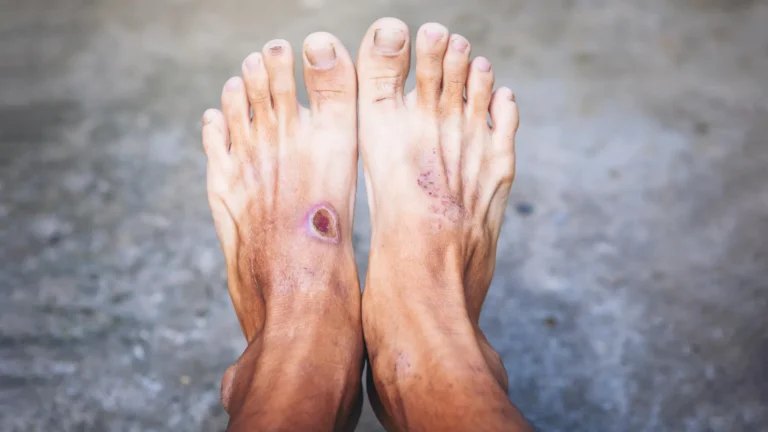
Chronic wounds—such as those seen in diabetic foot ulcers or venous stasis ulcers—cost healthcare systems billions annually and cause immense suffering. The 2026 development of an ABT-263-infused dressing represents a paradigm shift. Instead of passive bandages that merely protect the wound, we are looking at "active" dressings that treat the underlying biological dysfunction of the tissue.
3. Safety through Localization
The most significant hurdle for senolytics has historically been systemic toxicity. Because these drugs are potent, oral versions can affect healthy cells throughout the body. By focusing on topical delivery, the researchers are effectively isolating the treatment to the area of concern. This minimizes the risk of side effects, as the drug does not need to enter the bloodstream in high concentrations to achieve its effect on the skin.
The Path Forward: From Mice to Humans
Despite the excitement, the transition from mouse models to human clinical trials is a formidable journey. The scientific community is currently identifying several critical "Next Steps":
- Dosing Protocols: Determining the concentration and frequency of topical applications that maximize senescent cell clearance while minimizing local irritation.
- Long-term Safety: Investigating whether repeated use of senolytics on the skin could have unintended long-term consequences on skin barrier function or pigmentation.
- Clinical Trials: The most significant hurdle remains human testing. Scientists must establish a baseline for what "normal" senescent cell levels are in human skin at various ages before they can effectively measure the success of a treatment in a human trial.
Conclusion
The study of "zombie cells" represents one of the most exciting frontiers in longevity research. For decades, medicine focused on treating the symptoms of aging skin—dryness, thinning, and slow recovery. We are now entering an era where we can treat the cause of that decline.
By shifting our perspective on aging from an inevitable decay to a manageable accumulation of cellular dysfunction, we open the door to a future where age is no longer a disqualifying factor for rapid, successful healing. While the laboratory mice in Boston were the first to benefit, the implications for human health are profound. If we can successfully "clear the way" for our bodies to do what they were evolved to do—repair themselves—we may find that the secret to healing in old age was hidden inside our own aging skin all along.