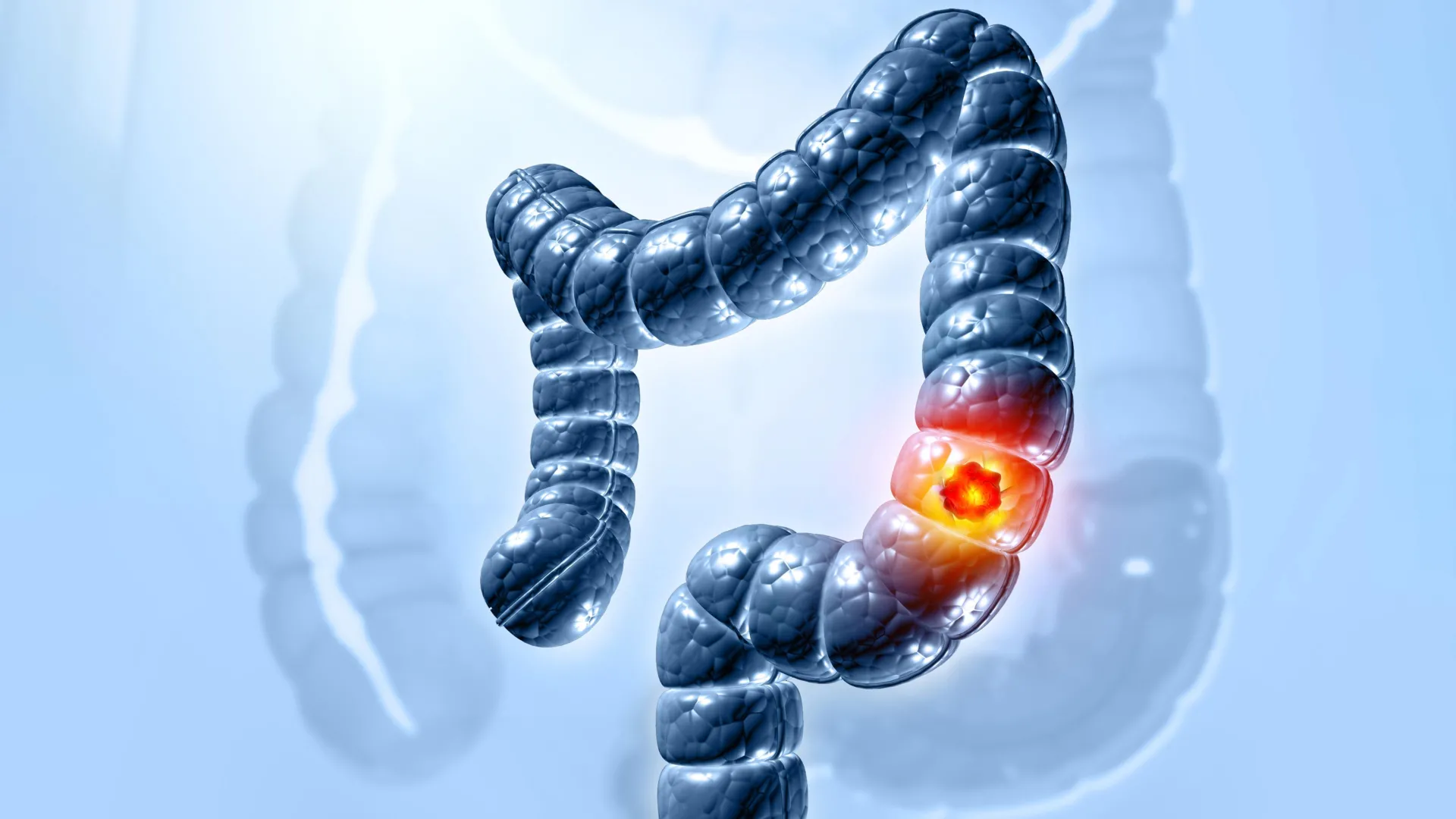
For over a decade and a half, the scientific community has been haunted by a biochemical puzzle: how does a specific toxin produced by a common gut bacterium bypass the body’s defenses to reach and damage the cells of the human colon? This question, central to understanding the genesis of certain colorectal cancers, has finally been answered.
In a landmark study published in the journal Nature, a multi-institutional team led by researchers at the Johns Hopkins Kimmel Cancer Center and the Bloomberg-Kimmel Institute for Cancer Immunotherapy has identified the "missing link"—a cellular receptor that acts as the entry point for the Bacteroides fragilis toxin (BFT). This discovery does more than resolve a long-standing academic mystery; it provides a concrete roadmap for developing therapeutic decoys to intercept the toxin before it can trigger the inflammatory cascade that leads to tumor formation.
The Main Facts: Deciphering the BFT Pathway
The human gut is home to a vast ecosystem of bacteria, most of which exist in a symbiotic relationship with their host. Among these is Bacteroides fragilis, a microbe found in the intestinal flora of approximately 20% of healthy individuals. While generally benign, specific "toxigenic" strains secrete BFT, a potent protein that has been definitively linked to chronic inflammation, diarrhea, and, most alarmingly, the promotion of colorectal cancer.
For years, researchers—most notably in the lab of Dr. Cynthia Sears at Johns Hopkins—have understood that BFT works by cleaving E-cadherin, a protein essential for maintaining the integrity of the colon’s protective barrier. However, the mechanism of this assault was incomplete. BFT does not bind directly to E-cadherin. It required a "gatekeeper" to gain access to the cell.
The study confirms that the gatekeeper is claudin-4, a protein typically associated with tight junctions in epithelial cells. The BFT toxin must first anchor itself to claudin-4 before it can exert its destructive effects on the colon wall. By mapping this interaction, researchers have effectively identified the "lock" that the bacterial "key" must turn to gain entry.
A Chronological Journey to Discovery
The path to this discovery was not a straight line, but rather a methodical, multi-year investigation that required the integration of genetics, structural biology, and animal modeling.
The Search for the Receptor
The investigation began in earnest when the team realized that the toxin’s interaction with E-cadherin was secondary. To find the primary receptor, the team turned to cutting-edge technology. Under the guidance of Maxwell White, an M.D./Ph.D. candidate in the Sears lab, the researchers conducted a genomewide CRISPR screen. By systematically "knocking out" or disabling individual genes in colon epithelial cells, they sought to identify which specific proteins were essential for BFT to function.
The Breakthrough
The CRISPR screen revealed a single, resounding candidate: claudin-4. When the gene encoding claudin-4 was deleted, BFT was rendered impotent; it could no longer attach to the cells, and the E-cadherin remained safely intact. This was a surprising revelation. Many scientists had hypothesized that the receptor would be a G-protein-coupled receptor (GPCR), a common class of signaling proteins. Instead, the toxin hijacked a structural protein, a behavior rarely seen in other protease toxins, which typically bind directly to their targets.
Structural Validation
Once the candidate was identified, the Hopkins team partnered with structural biologists F. Xavier Gomis-Rüth and Ulrich Eckhard at the Molecular Biology Institute of Barcelona. Through rigorous biophysical techniques, they were able to demonstrate that BFT and claudin-4 form a stable, one-to-one complex. This served as the definitive "smoking gun," providing the first direct physical evidence of the toxin-receptor pairing.
Testing in Living Systems
The final phase of the chronology involved translating these laboratory findings into a living model. Collaborating with the laboratory of Min Dong at Harvard Medical School, the team utilized mouse models to observe how the interaction played out in a biological environment. This confirmed that the mechanism observed in petri dishes was the same driver of damage in the complex ecosystem of a living organism.
Supporting Data and The "Molecular Decoy" Strategy
The most promising outcome of this research is the development of a "molecular decoy." Having identified that BFT must bind to claudin-4 to reach the cell, the researchers engineered a soluble version of the protein.
When introduced into the mouse models, these soluble claudin-4 molecules acted as a trap. The BFT toxin, "tricked" by the decoy, bound to the free-floating protein instead of the actual colon cells. The result was a dramatic reduction in damage to the colon’s protective barrier. This approach effectively neutralized the threat, preventing the inflammatory response that typically leads to tumor development.
"This approach could be iterated upon with small molecules or other biologics that have better pharmacological properties," says Maxwell White. The team is currently in the early stages of evaluating which pharmacological pathways might be most effective for future human clinical applications.
Official Responses and Scientific Perspective
Dr. Cynthia Sears, senior author of the study and the Bloomberg-Kimmel Professor of Cancer Immunotherapy, views this discovery as a turning point in gut health research.
"We’ve made several attempts over time to identify the receptor, so this is an exciting moment," Dr. Sears noted. "Understanding how bacterial toxins work can open doors to new approaches for detection and therapy for associated diseases, including diarrhea, colorectal cancer, and bloodstream infections."
The study has been met with significant enthusiasm within the oncology and gastroenterology communities. By identifying the exact receptor, researchers can now move away from broad-spectrum interventions and toward highly targeted therapies that block the toxin without disturbing the healthy gut microbiome.
Implications for Future Medicine
The identification of claudin-4 as the receptor for BFT has profound implications for the future of cancer prevention and treatment:
- Precision Therapeutics: The success of the molecular decoy in animal models provides a blueprint for new classes of drugs. These could be used prophylactically in high-risk patients or as an adjunct therapy for those already suffering from BFT-associated inflammation.
- Diagnostic Biomarkers: Understanding the toxin’s dependency on claudin-4 may lead to better diagnostic tools that can identify patients at higher risk for toxin-induced colorectal cancer.
- Broadening the Scope: The study suggests that other bacterial toxins may operate through similarly overlooked pathways. By utilizing the same CRISPR-based screening methods, researchers may be able to solve other mysteries related to how bacterial pathogens interact with the human body.
Remaining Challenges
Despite the breakthrough, the work is not yet complete. The researchers admit that they have not yet captured a high-resolution experimental structure showing exactly how the toxin and claudin-4 "dock" together at an atomic level. Current AI-driven modeling tools, including the revolutionary AlphaFold, have struggled to resolve the specific nuances of this interaction, suggesting that the interface is more complex than initially anticipated. Further high-resolution structural studies will be required to fully map this molecular handshake.
A Foundation for Progress
The research team, which includes an extensive roster of experts from Johns Hopkins and Harvard, acknowledges the support of major institutions, including the National Institutes of Health, Cancer Research UK, and the Howard Hughes Medical Institute. Their collective effort has turned a 15-year-old question mark into a potential lifeline for patients.
As the scientific community digests these findings, the focus will undoubtedly shift toward the pharmacological development of the decoy. While human trials remain on the horizon, the ability to intercept a cancer-promoting toxin before it makes its first strike represents a significant leap forward in the fight against colorectal cancer. In the landscape of modern medicine, this "missing link" has provided the missing key to a safer, more targeted future.