September 23, 2026 — As the federal fiscal year hurtles toward its September 30 deadline, the intersection of political maneuvering and public health policy has reached a fever pitch. From the redirection of minority health funds to cover executive security costs to controversial overhauls of the National Institutes of Health (NIH) grant process, the current administration is reshaping the landscape of American healthcare with unprecedented speed.
This weekly roundup examines the critical shifts in policy and the resulting friction between the executive branch, Congress, and the public health infrastructure.
I. Main Facts: A Convergence of Controversy and Policy Shifts
The current administration’s approach to public health has been marked by a series of aggressive reallocations and strategic shifts. Most notably, the Department of Health and Human Services (HHS) has moved $12 million from the Office of Minority Health to address the rising security costs associated with Health Secretary Robert F. Kennedy Jr. This decision has sparked immediate outcry among health equity advocates, who argue that the funding was critical for addressing systemic disparities in medical outcomes.
Simultaneously, the administration’s "Make America Healthy Again" (MAHA) movement is facing scrutiny for its reliance on corporate sponsorship. A high-profile Washington summit featuring speakers from the administration is being bankrolled by industry giants including Walmart and OpenAI. Critics suggest this raises significant conflict-of-interest questions, particularly as these corporations hold substantial stakes in the future of the digital health and retail pharmacy sectors.
Furthermore, operational delays have emerged at the Centers for Disease Control and Prevention (CDC), where the agency has failed to initiate the process for states to order COVID-19 vaccines through the Vaccines for Children (VFC) program. This bureaucratic bottleneck threatens to leave the nation’s most vulnerable populations without access to updated immunizations as we head into the fall.
II. Chronology: A Week of Regulatory and Legislative Turbulence
The past seven days have seen a rapid succession of events that define the current administrative priorities:
- September 19: The Washington Post reveals internal details of the administration’s "Most Favored Nation" drug pricing negotiations. Leaked documents indicate that the administration offered pharmaceutical companies protection from new tariffs in exchange for commitments to raise drug prices in overseas markets—a move intended to theoretically lower prices at home while creating complex international market dynamics.
- September 20: Politico reports that the MAHA summit will rely on corporate funding, triggering a debate over the role of private industry in shaping federal health messaging.
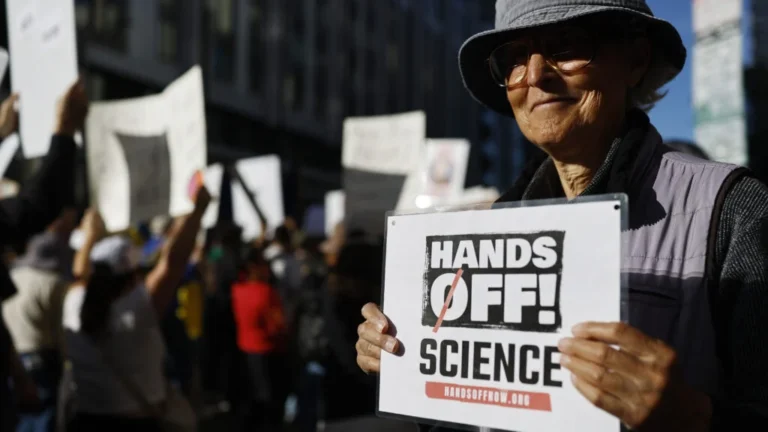
- September 21: STAT covers the growing congressional pushback against plans for a political panel to review and approve all NIH research grants, a move seen by the scientific community as a threat to institutional independence.
- September 22: The CMS announces a proposal to cut Medicare payments for laboratory services, arguing that the program currently overpays private providers by 16% relative to market rates.
- September 23: The Senate prepares for the confirmation hearing of Dr. Heidi Overton, the nominee for FDA Commissioner, amid ongoing legislative efforts to restrict the corporate practice of medicine.
III. Supporting Data: The Financial and Structural Realignment
The economic underpinning of these policy shifts is substantial. The diversion of $12 million from the Office of Minority Health is merely the latest in a series of budgetary "siphoning" events. Democratic senators, led by Appropriations Committee members, have expressed alarm that the Agency for Healthcare Research and Quality (AHRQ) is being systematically starved of its allotted funding as the fiscal year-end approaches.
Regarding drug pricing, the "Globe and Guard" demonstrations reveal a transactional approach to pharmaceutical regulation. CMS has confirmed it is exempting certain companies from pricing demonstrations provided they offer additional rebates to the Medicaid program. While these rebates may provide temporary budgetary relief, analysts are concerned that the administration is prioritizing short-term cost-sharing over systemic price reform.
Meanwhile, the laboratory sector is bracing for impact. The CMS proposal to slash reimbursement rates for clinical lab tests is based on an internal analysis claiming that current rates are significantly higher than those negotiated by private insurers. While the agency frames this as a win for taxpayers, trade groups warn that it could jeopardize the viability of independent labs, particularly in rural areas.
IV. Official Responses: The Battle for Oversight
The tension between the legislative and executive branches is at an all-time high. Senator Rand Paul (R-Ky.) has intensified his campaign to secure testimony from a former long-term assistant to Dr. Anthony Fauci. This move is viewed by many as a continuation of efforts to audit the internal operations of the National Institute of Allergy and Infectious Diseases (NIAID) during the height of the pandemic.
In the House and Senate, bipartisan concern is growing regarding the administration’s plan to install a political panel to oversee NIH grants. Scientists and lawmakers alike warn that replacing peer-review processes with political vetting could stifle innovation, particularly in areas of research that are politically sensitive but scientifically vital.
Regarding the nomination of Dr. Heidi Overton to lead the FDA, the upcoming hearing before the Senate HELP Committee will be a litmus test for the administration’s health agenda. Senators are expected to press the nominee on the drug pricing deals revealed by the Washington Post and the administration’s broader strategy for regulatory oversight.
V. Implications: The Long-Term Consequences for Public Health
The cumulative effect of these policies suggests a fundamental pivot in the role of federal health agencies. By moving toward a model that is increasingly reliant on corporate sponsorship and subject to direct political intervention, the administration is challenging the long-standing norms of scientific independence and equity-focused governance.
The Erosion of Independent Research
The proposed political vetting of NIH grants, if implemented, would represent the most significant shift in scientific funding policy in decades. By moving power away from the peer-review panels that have governed NIH grants since their inception, the administration risks introducing bias into scientific inquiry. If research agendas are dictated by political appointees rather than scientific merit, the global reputation of the American research enterprise could suffer, leading to a "brain drain" of top-tier talent.
The Corporate-Government Nexus
The dependence on corporate sponsors for administration-linked summits, combined with the "Most Favored Nation" drug pricing negotiations, signals a new era of "deal-based" governance. When federal agencies rely on industry partners for funding and tariff negotiations, the line between regulator and regulated becomes dangerously thin. This could lead to a regulatory environment where pharmaceutical companies and retail chains gain outsized influence over public health guidance.
Addressing the Healthcare Gap
The lack of urgency regarding the VFC program’s COVID-19 distribution process, coupled with the cuts to the Office of Minority Health, points to a potential de-prioritization of preventative health infrastructure. As the nation faces a shifting epidemiological landscape, these bureaucratic and financial hurdles may exacerbate existing health inequities, making it more difficult for marginalized communities to access essential care.
The Future of Medical Practice
The bipartisan bill introduced by a coalition of senators to ban the "corporate practice of medicine" highlights a growing legislative desire to reign in the influence of private equity and large corporations in clinical settings. This movement, while still in its infancy, could fundamentally alter how hospitals and medical practices are structured, potentially favoring independent, physician-led models over the current consolidated corporate model.
Conclusion
As the fiscal year draws to a close, the path forward remains uncertain. The administration is banking on a model of disruption—shifting funds, realigning research priorities, and negotiating aggressive trade-offs in drug pricing. However, as the legislative branch increases its scrutiny and the scientific community voices its opposition, the sustainability of this approach remains in question. Whether these changes lead to a more efficient, streamlined system or a degraded public health apparatus will depend on the strength of the institutions—and the regulators—that remain in the crosshairs.