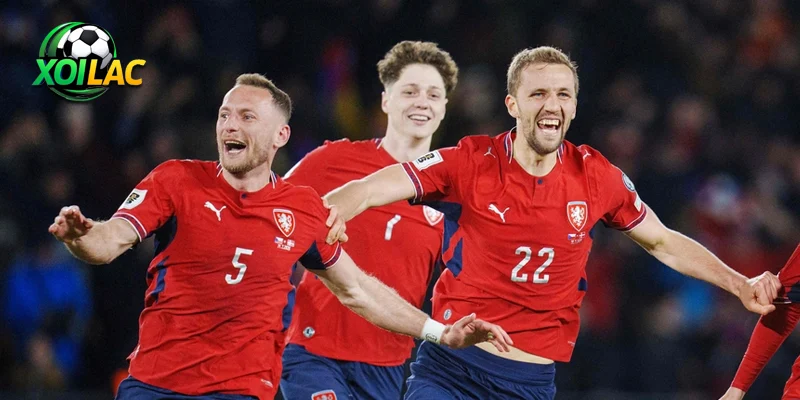
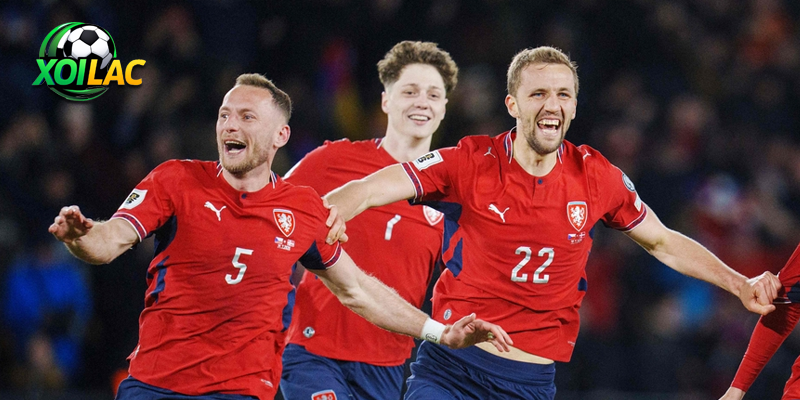
The global football community turns its gaze toward the Akron Stadium on June 12, 2026, as South Korea prepares to face the Czech Republic in a highly anticipated World Cup group stage encounter. With both nations boasting formidable rosters and distinct tactical philosophies, this opening fixture promises to be a masterclass in strategic maneuvering and individual brilliance.
As the tournament atmosphere reaches a fever pitch, fans are bracing for a duel that pits the explosive, high-octane transition game of the "Taegeuk Warriors" against the disciplined, physically robust, and set-piece-reliant system of the Czech side.
Main Facts: The Stakes of the Opening Encounter
The match, scheduled for 09:00 local time, represents more than just three points; it is a statement of intent. For South Korea, a victory would serve as a declaration of their status as a genuine dark horse in this tournament. For the Czech Republic, securing a result against an Asian powerhouse is essential to establishing momentum in a challenging group.
South Korea enters this tournament with arguably their strongest generation in history, headlined by global superstars who have reached the absolute peak of their professional careers. Conversely, the Czech Republic arrives with a reputation for being the "giant killers" of Europe, a team defined by their tactical rigidity, defensive cohesion, and a never-say-die attitude that has dismantled higher-ranked opponents in the past.
Chronology and Tactical Evolution
The Rise of the Taegeuk Warriors
Under the current tactical setup, South Korea has evolved from a team reliant solely on passion to a sophisticated outfit capable of controlling the tempo through intelligent positional play. Their game plan revolves around a core spine of players seasoned in the English Premier League and other top-tier European competitions.

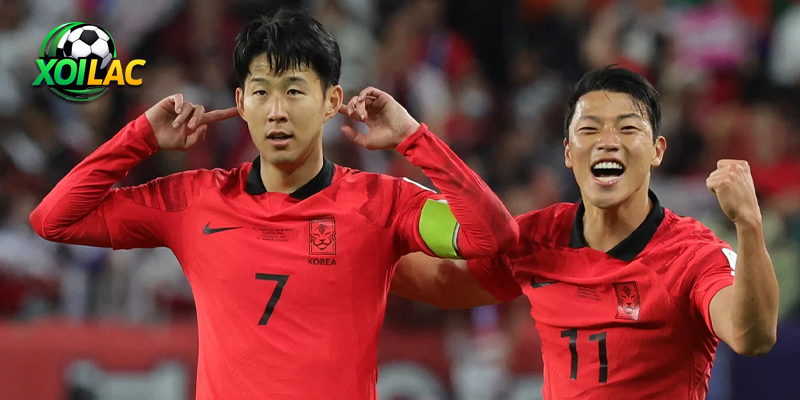
The squad is anchored by captain Son Heung-min, whose movement and clinical finishing remain the team’s primary offensive weapon. Supporting him is the tireless Hwang Hee-chan, whose ability to stretch defenses creates space for the creative genius of Lee Kang-in. In the defensive third, the presence of Kim Min-jae, a world-class center-back, allows the team to operate a high defensive line, knowing that he possesses the recovery speed to nullify counter-attacks.
The Czech Republic’s Blueprint
The Czech approach is a study in efficiency. They do not seek to dominate possession for the sake of aesthetics; rather, they aim to control the "dead zones" of the pitch. Under the leadership of Tomas Soucek, the Czech midfield operates as a physical barrier. Their strength lies in their ability to transition quickly from a low block into an aggressive aerial bombardment, often utilizing the prowess of Patrik Schick.
The Czechs are notoriously dangerous during set-pieces. Their coaching staff places immense emphasis on corner kicks and wide free-kicks, viewing these moments as the most efficient route to goal. By clogging the middle and forcing opponents wide, they turn matches into a war of attrition—a style that has historically frustrated technically gifted teams.
Supporting Data: Tactical Analysis and Team Lineups
To understand the magnitude of this clash, one must look at the projected tactical formations.
South Korea: The 4-2-3-1 Dynamo
South Korea is expected to deploy a 4-2-3-1, a formation that maximizes their wide attacking talent while maintaining a double-pivot in midfield to guard against transitions.
| Position | Player |
|---|---|
| Goalkeeper | Jo Hyeon-woo |
| Right Back | Seol Young-woo |
| Center Backs | Kim Min-jae & Kwon Kyung-won |
| Left Back | Kim Jin-su |
| Midfield | Hwang In-beom, Park Yong-woo |
| Right Wing | Lee Kang-in |
| Attacking Mid | Jae-sung Lee |
| Left Wing | Son Heung-min |
| Striker | Hwang Hee-chan |
Czech Republic: The 3-4-1-2 Fortress
The Czechs will likely look to clog the center with a 3-4-1-2, creating overloads in wide areas to prevent the South Korean fullbacks from pushing too far forward.
| Position | Player |
|---|---|
| Goalkeeper | Jindřich Staněk |
| Center Backs | Tomáš Holeš, Robin Hranáč, Ladislav Krejčí |
| Right Wing-Back | Vladimír Coufal |
| Left Wing-Back | David Douděra |
| Midfield | Tomáš Souček, Lukáš Provod |
| Attacking Mid | Pavel Šulc |
| Strikers | Jan Kuchta & Patrik Schick |
Official Responses and Managerial Outlooks
In the pre-match press conferences, both camps have remained tight-lipped regarding specific tactical shifts, yet the undertone is one of mutual respect.
South Korea’s management has emphasized the importance of "mental fortitude" and the need to break down the Czech wall through rapid ball circulation. They acknowledge the physical threat posed by the European side but insist that their speed and technical proficiency will be the deciding factor.
The Czech camp has been equally pragmatic. Their manager noted that "playing against a team with such individual brilliance requires absolute concentration for the full 90 minutes." They have identified the South Korean transition phase as the primary threat, suggesting that their game plan will revolve around "breaking the rhythm" of the game to prevent South Korea from finding their flow.
Implications: The Road Ahead
This match will set the tone for the remainder of Group A. A win for South Korea would put them in the driver’s seat, potentially forcing their future opponents to alter their defensive strategies to account for the pace of Son and Hwang.
For the Czech Republic, a draw would be considered a solid result, given the technical superiority of the South Korean starters. However, a loss would force them into a must-win scenario for their second match, significantly increasing the pressure on their aging but experienced core.
Strategic Predictions
Expert analysis suggests a clash of two very different timelines. South Korea will likely attempt to turn the game into a sprint, utilizing the flanks to bypass the congested Czech midfield. If they can score early, they may force the Czechs to abandon their low-block and open up, which would play directly into the hands of South Korea’s counter-attacking stars.
Conversely, if the Czech Republic can keep the score level for the first hour, the psychological pressure on South Korea will mount. The Czechs will look to exploit any lapses in concentration, particularly through set-piece opportunities where they hold a significant height and physical advantage.
Conclusion: A Tactical Chess Match
As the clock ticks toward 09:00 on June 12, the anticipation is palpable. Football is a game of fine margins, and this encounter between the flair of South Korea and the iron-willed discipline of the Czech Republic represents the very best of what the World Cup has to offer.
Whether it ends in a high-scoring thriller or a gritty, tactical stalemate, the match in Akron is destined to be a defining moment for both nations in their quest for glory. For the millions watching around the world, the message is clear: do not look away, as this is where the tournament’s narrative truly begins to take shape.