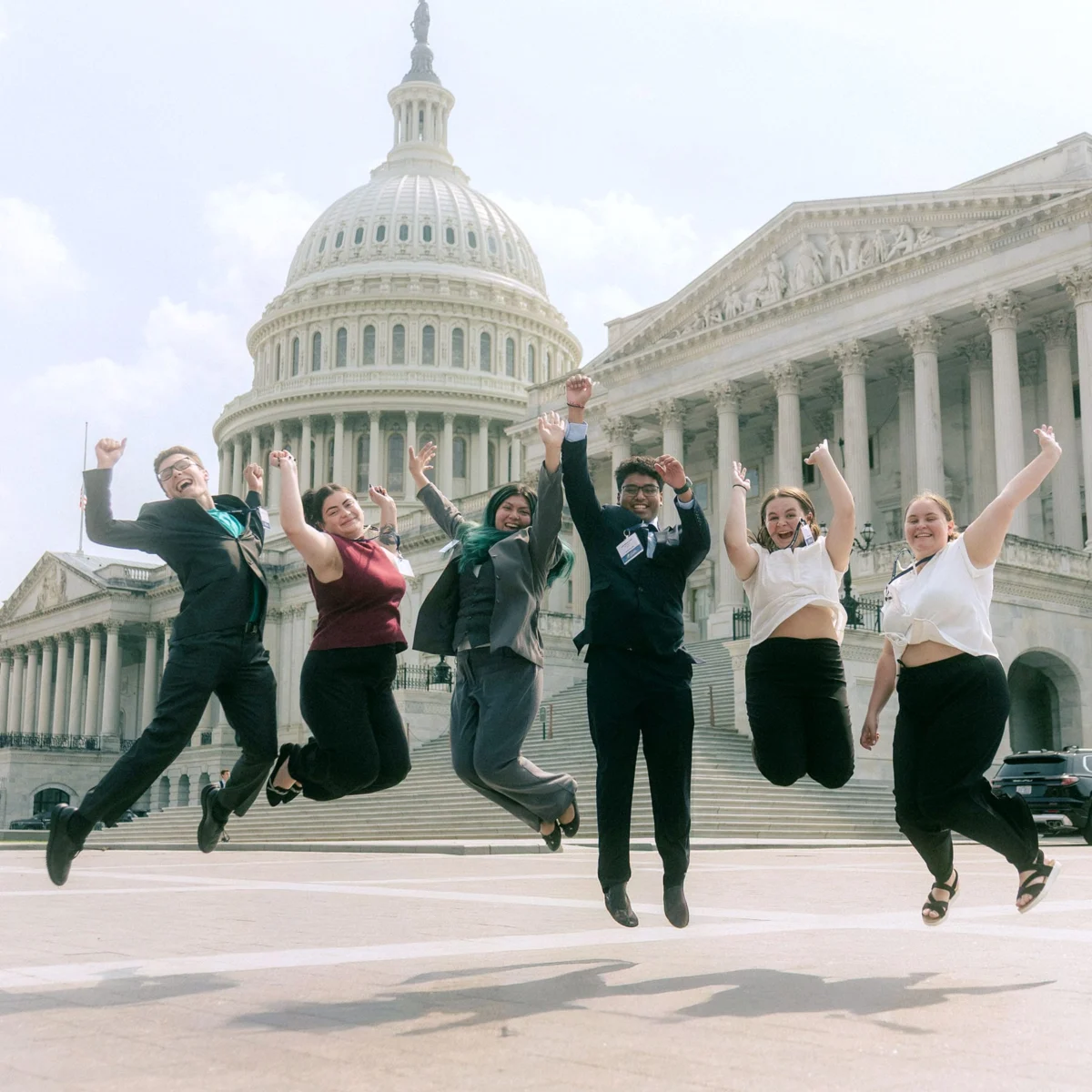
WASHINGTON, D.C. — On July 16, 2026, the architectural landscape of Capitol Hill was momentarily transformed by a wave of young leaders dressed in green, marking a pivotal shift in the American mental health movement. Active Minds, the nation’s premier nonprofit dedicated to mobilizing youth and young adults for mental health advocacy, hosted its inaugural "Hill Day + Mental Health Conference." The event brought together hundreds of advocates from across the country to demand that the federal government move beyond rhetoric and toward substantive policy reform.
For the first time in the organization’s 23-year history, Active Minds successfully bridged the gap between campus-level awareness and federal-level legislative action. The day was defined by a series of high-stakes meetings with congressional representatives, where young people—many still in college—leveraged their lived experiences to lobby for the expansion of crisis resources and suicide prevention funding.
Main Facts: A Landmark Mobilization for Mental Health
The Active Minds Hill Day was not merely a symbolic gathering; it was a structured legislative push. Representing a diverse cross-section of the American demographic, these young advocates targeted specific federal policies designed to strengthen the safety net for youth and young adults.
The primary objectives of the day centered on two major legislative and policy pillars:
- The 988 Suicide & Crisis Lifeline Visibility: Advocates urged lawmakers to mandate the inclusion of the 988 emergency number on all student identification cards for both high school and college students. This move aims to ensure that every student has immediate, 24/7 access to crisis support literally in their pocket.
- The Garrett Lee Smith Campus Suicide Prevention Grant Program: Leaders called for a significant increase in funding and the strengthening of this program. The goal is to expand student-led mental health outreach and early intervention efforts, moving the needle from reactive treatment to proactive, peer-supported prevention.
By the end of the day, the mobilization had resulted in 132 distinct meetings between youth advocates and congressional offices. This volume of engagement represents one of the most concentrated efforts of youth-led mental health lobbying in recent U.S. history.

Chronology: From Preparation to the Halls of Power
The success of the July 16 Hill Day was the culmination of months of intensive training and preparation. The schedule was designed to maximize both legislative impact and the professional development of the participants.
Phase I: Preparation and Training
Before descending on the Capitol, advocates underwent rigorous training. This involved learning the nuances of the "Campus Lifeline Act" and refining their "advocacy pitches." Unlike traditional lobbyists, these young people were trained to lead with their personal narratives—using their lived experiences with mental health challenges to humanize data points for legislators. Participants prepared "advocacy kits" that included talking points, business casual attire, and portable chargers, ensuring they were ready for the physical and mental demands of a day on the Hill.
Phase II: The Legislative Blitz
On the morning of July 16, coinciding with the anniversary of the launch of the 988 Suicide & Crisis Lifeline, the advocates dispersed across the House and Senate office buildings. The 132 meetings were conducted in small groups, ensuring that lawmakers heard from constituents from their own districts. These sessions focused on the necessity of federal funding for early intervention and the critical need for peer-to-peer support models, which Active Minds has championed for over two decades.
Phase III: The Mental Health Conference
Following the legislative meetings, the momentum shifted to the Active Minds Mental Health Conference. This gathering served as a debrief and a strategy session for the future. The conference featured a roster of national mental health luminaries, including:
- Sadie Sutton: Host of the She Persisted podcast, who spoke on the importance of youth-led media in destigmatizing mental health.
- Hailey Hardcastle: A renowned mental health advocate and TED speaker, who provided insights into how students can work with school boards and state legislatures.
- Be Steadwell: The evening concluded with a high-energy performance by the musician and storyteller, providing a space for joy and community after a day of intense advocacy.
Supporting Data: The Crisis and the Solution
The urgency of the Hill Day is underscored by sobering statistics regarding youth mental health in the United States. According to the Centers for Disease Control and Prevention (CDC), suicide remains a leading cause of death for individuals aged 10–24. Furthermore, recent surveys indicate that nearly 40% of college students report experiencing significant depression, yet many struggle to find accessible, culturally competent care.
The Power of 988
The 988 Suicide & Crisis Lifeline has been a cornerstone of the national strategy since its launch. However, awareness remains a hurdle. Active Minds’ push to put the number on student IDs is backed by data suggesting that immediate access to crisis lines can reduce the intensity of suicidal ideation and prevent emergency room visits. During the Hill Day, advocates pointed to the "988 anniversary" as a reminder that while the infrastructure exists, the "last mile" of connection—getting the number to the student in crisis—is still missing.
The Garrett Lee Smith Act Impact
Since its inception, the Garrett Lee Smith (GLS) Campus Suicide Prevention Grant Program has been a lifeline for institutions of higher education. Data from the Substance Abuse and Mental Health Services Administration (SAMHSA) shows that campuses with GLS grants see a measurable increase in mental health service utilization and a decrease in self-harm incidents. The advocates on the Hill argued that the current funding levels are insufficient to meet the skyrocketing demand, calling for a "historic reinvestment" in the program to allow for more student-led initiatives.
The Role of Peer Support
One of the most compelling data points shared during the conference was the effectiveness of peer-to-peer intervention. Active Minds has long maintained that students are often the first to notice when a peer is struggling. By training students in "Validate-Appreciate-Refer" (VAR) techniques, the organization creates a front-line defense that professional clinical services cannot replicate alone.
Official Responses: Voices of Leadership
The leadership of Active Minds emphasized that this Hill Day marks a transition for the organization from "raising awareness" to "demanding accountability."
Alison Malmon, Founder and Executive Director of Active Minds, who started the organization after the tragic loss of her brother to suicide, reflected on the day’s significance:

“Watching hundreds of young people walk the halls of Congress today reaffirmed what we’ve known for more than two decades: when youth lead, change follows. They brought the stories of their communities into the rooms where decisions are made, reminding policymakers that mental health isn’t a political issue—it’s a human one. This inaugural Hill Day is more than a milestone for Active Minds; it’s a testament to the growing movement of young people who are ensuring mental health is valued, prioritized, and supported for every generation to come.”
Anika Rahman, Director of Policy at Active Minds, highlighted the strategic importance of the 132 congressional meetings:
“It was an honor to host our Mental Health Hill Day on the anniversary of the launch of 988, a milestone that reminds us how far we’ve come, and how much work remains. Today’s conversations reinforced my belief that young people should be the narrators of their own stories. Their lived experiences, backed by real data and youth-driven solutions, are the most powerful force for shaping the future of mental health policy. By bringing their voices directly to Capitol Hill, our youth and young adults had a total of 132 meetings. That is the power of mobilizing.”
Implications: A Shifting Cultural and Policy Landscape
The inaugural Active Minds Hill Day suggests several long-term implications for the future of mental health in America.
1. The Professionalization of Youth Advocacy
The event demonstrated that young people are no longer content with being the "subjects" of mental health studies; they are becoming the architects of the systems that serve them. The level of sophistication shown in the 132 congressional meetings indicates a new generation of "policy-literate" advocates who understand how to navigate the federal budget and legislative committees.

2. Mental Health as a Non-Partisan Priority
By framing mental health as a "human issue" rather than a partisan one, Active Minds is successfully building a broad coalition. The focus on the 988 lifeline and the Garrett Lee Smith Act—programs that have historically enjoyed some level of bipartisan support—allows for a pragmatic path forward in a divided Congress.
3. Holistic Integration: From Policy to Self-Care
The inclusion of workshops on journaling and emotional disclosure at the conference (as seen in the "Words as Foundation" sessions) highlights a holistic approach. The organization is teaching that while federal policy is essential, individual resilience and community-level tools like journaling are equally important. As noted in the conference sessions, "emotional disclosure" can strengthen the immune system and reduce stress, providing a "low-cost, high-reward" model for mental health management that complements large-scale policy changes.
4. The "Campus Lifeline" Standard
The push for 988 on student IDs is likely to set a new national standard. As more states and institutions adopt this practice, it creates a "safety floor" for all students, regardless of their school’s individual budget for mental health services.
Conclusion
The Active Minds Hill Day + Mental Health Conference of 2026 will likely be remembered as the moment the "Mental Health Generation" took its seat at the table of federal power. By combining the raw power of lived experience with the strategic precision of professional lobbying, these young advocates have sent a clear message to Washington: mental health support is not a luxury—it is a fundamental right that requires federal protection and funding.
As the hundreds of advocates returned to their campuses and communities, they did so not just as students, but as veteran changemakers. The 132 meetings held on July 16 are just the beginning of a sustained effort to ensure that no young person has to struggle alone, and that the "culture of silence" is permanently replaced by a culture of support, policy, and action.