











Every January, millions of people ring in the New Year with a sense of optimism, fueled by champagne and the promise of a fresh start. We make grand declarations: we will run marathons, overhaul our diets, or achieve financial perfection. However, the data tells a sobering story. By mid-February, roughly 80% of these well-intended resolutions have been abandoned. In fact, the phenomenon is so widespread that there is an official "Ditch Your New Year’s Resolution Day" on January 17th.
For the 65 million Americans acting as family caregivers—a significant portion of whom belong to the "Sandwich Generation," balancing the needs of aging parents and their own children—these rigid, high-pressure goals are often a recipe for failure. Life’s unpredictable challenges do not pause for the calendar year, and for those managing the daily crises of caregiving, the traditional New Year’s Resolution (NYR) model is often fundamentally incompatible with their reality.
Instead of setting ourselves up for defeat, a new movement is encouraging caregivers to abandon the "all or nothing" mentality in favor of a more sustainable, holistic approach: Me Time Monday (MTM).
The Anatomy of a Failed Resolution
The failure of most New Year’s resolutions is rooted in the "all-or-nothing" psychological trap. When we set a resolution, we are often attempting to radically change a habit without accounting for the friction of daily life. For a caregiver, whose time is largely controlled by the needs of others—a state known as an "external locus of control"—adding a high-pressure goal creates what experts call "time poverty."

When a caregiver fails to hit a rigid target, they don’t just miss a goal; they internalize a sense of failure. This leads to burnout, a state where the individual feels they have no agency over their own life. The MTM program, developed by wellness expert Sherri Snelling, seeks to flip this dynamic, shifting the focus from "time poverty" to "time affluence" by encouraging small, consistent investments in oneself.
Chronology of a Shift: From Rigid Goals to Micro-Habits
The transition from the traditional New Year’s Resolution to the Me Time Monday philosophy follows a deliberate, three-step evolution designed to build momentum rather than burnout.
Step 1: Defining the "Me"
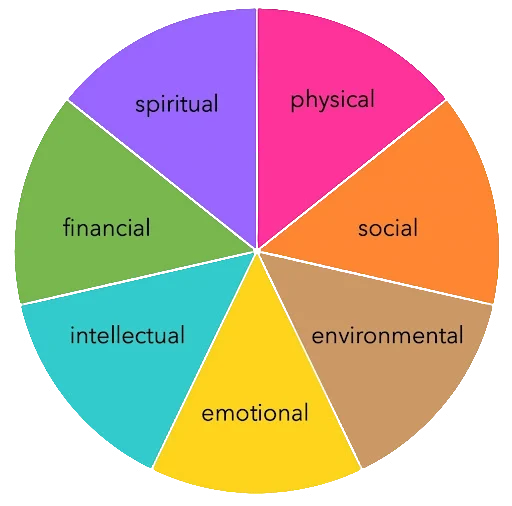
The first step of the MTM program involves a deep dive into self-awareness. It asks participants to identify what brings them genuine fulfillment across seven core elements of wellness:
- Physical: Sleep, nutrition, and movement.
- Emotional: Stress management and mental health.
- Social: Connection with friends and support groups.
- Intellectual: Continuous learning and mental stimulation.
- Environmental: Curating a space that fosters peace.
- Financial: Planning for long-term security.
- Spiritual: Finding awe, wonder, and purpose.
This step is grounded in the concept of ikigai, a Japanese philosophy that translates to "a reason for being." By aligning your actions with your core values, self-care stops being an "extra" task and becomes a central pillar of your existence.

Step 2: Mastering the "Time" (The Power of 7)
The second step addresses the logistical hurdle of time. The MTM program introduces the "Power of 7": seven days in a week, seven minutes of daily self-care, and seven wellness elements.
The strategy relies on "Microflows"—baby steps that are so small they are difficult to fail. If seven minutes a day feels daunting, the program encourages starting with just seven minutes a week. This lowers the barrier to entry, allowing caregivers to achieve "quick wins."
A critical technique here is habit-stacking. Unlike multitasking—which asks the brain to juggle two high-cognition tasks and contributes to burnout—habit-stacking anchors a new, healthy behavior to an existing, robotic one. For example, practicing gratitude while showering, or doing lunges while waiting for the coffee to brew. These actions require no extra time but provide a compound interest of self-care.
Step 3: The "Monday" Reset
The final step is the most strategic. Monday is culturally recognized as the start of the week, a "new beginning." Johns Hopkins research supports this, showing that individuals are statistically more likely to maintain healthy habits if they start on a Monday.

However, the brilliance of MTM is not just in the start, but in the reset. With 52 Mondays in a year, you have 52 opportunities to recalibrate. If you miss a goal during the week, you don’t wait until next January; you simply refresh your intentions on the following Monday.
Supporting Data: Why Small Steps Outperform Big Leaps
The efficacy of the Me Time Monday approach is backed by behavioral science. Research from the Healthy Monday Campaigns indicates that 64% of people who start their week with a positive frame of mind are more likely to maintain that positivity throughout the following days.
By shifting from an "external locus of control" (where caregiving duties dictate your mood) to an "internal locus of control" (where you intentionally schedule your seven minutes of wellness), you reclaim your autonomy. This is not selfish; it is "self-full." You cannot pour from an empty cup, and by taking these micro-breaks, you are effectively "depositing" minutes into your own wellness account, preventing the depletion that leads to caregiver exhaustion.
Expert Perspective: The "Joyconomy"
Sherri Snelling, the architect of the Me Time Monday program, describes this process as creating a "personal joyconomy."

"When you invest in your wellness, you are creating your own personal joyconomy," Snelling notes. She likens the program to "mixology"—the art of a bartender combining basic ingredients to create something new and exciting. A caregiver might choose physical wellness on Monday, social connection on Wednesday, and spiritual reflection on Saturday. By "cross-training" across the seven wellness elements, the process remains engaging, preventing the boredom that often causes people to quit standard resolutions.
Implications for the Modern Caregiver
The implications of adopting the MTM framework are significant. For the Sandwich Generation, the primary risk is not just physical fatigue but emotional and financial erosion. By viewing wellness as a perpetual journey rather than a series of deadlines, caregivers can maintain their own health while continuing to provide care for their loved ones.
Furthermore, this approach challenges the "hustle culture" that dominates modern goal-setting. It validates the idea that even in the midst of high-stress caregiving, one can carve out pockets of peace. The goal is not to reach a destination of "perfect wellness," but to build a sustainable, resilient life.
Conclusion: The Path Forward
The transition from New Year’s Resolution to Me Time Monday is more than a branding shift; it is a fundamental change in how we perceive success.

As we look toward the year ahead, consider the "routines beat resolutions" mantra. When you feel the pressure of the new year, remember that you do not need a grand, sweeping transformation to change your life. You need seven minutes, a willingness to stack your habits, and the grace to reset every Monday.
By embracing the MTM program, you aren’t just trying to improve your body or your bank account—you are fostering a more meaningful, joyful, and sustainable existence. You are reclaiming your time, one seven-minute block at a time, ensuring that your own needs are met with the same dedication you offer those in your care.
Start small. Start simple. Start this Monday.