









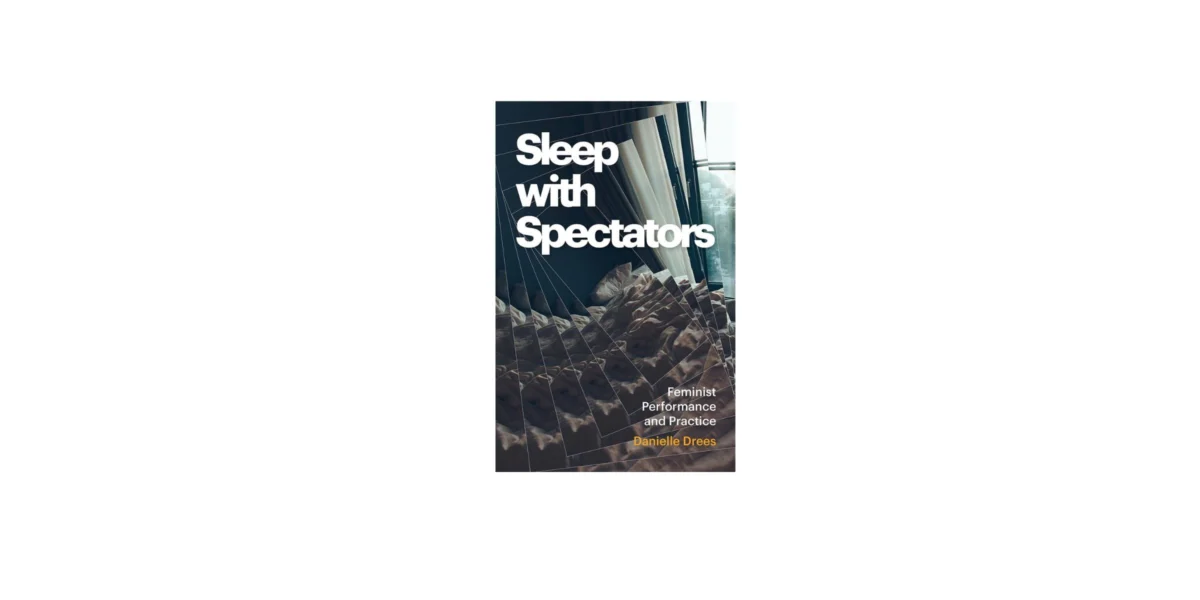
In a culture that increasingly equates productivity with moral worth, the act of falling asleep has become, for many, an act of defiance. This radical reclamation of rest sits at the heart of Sleep with Spectators: Feminist Performance and Practice, a forthcoming scholarly work by Danielle Drees. Set for release on September 8, 2026, by the University of Minnesota Press, the book offers a transformative lens through which to view the intersection of performance art, the unconscious mind, and the structural inequalities that define modern life.
By positioning sleep and sleeplessness not merely as biological necessities but as "embodiments of core feminist concerns," Drees challenges readers to rethink the politics of the bed, the stage, and the body.
The Core Thesis: Sleep as Radical Counter-History
At its most fundamental level, Sleep with Spectators argues that the exhaustion experienced by marginalized populations is not a personal failing, but a systemic consequence of inequality. Drees posits that sleep serves as a "radical counter" to the pervasive burnout inherent in contemporary capitalism.
The book reconstructs a counter-history of feminism, one that moves away from the traditional focus on active political mobilization and toward the restorative potential of rest. In this framework, sleep is not the absence of action; it is a profound political statement—a declaration of the right to care, to be interdependent, and to exist outside the relentless demands of the production cycle.
Chronology of Inquiry: From Theory to Performance
Drees’ work is deeply rooted in the history of performance art, utilizing the stage as a laboratory to examine the private, unconscious realms of daily existence. The scope of the research is vast, spanning decades of avant-garde theater, opera, and experimental performance.
The book traces how artists have utilized the "liminal space" of sleep to articulate themes that are often silenced in more rigid political discourses. By analyzing specific works, Drees creates a trajectory of performance that highlights how the body—when dormant—remains a site of intense socio-political friction.
Key Case Studies in the Text:
- Sarah Kane’s 4.48 Psychosis: Drees explores Kane’s searing free-verse text to examine how the mental health crisis and the experience of insomnia function as a protest against a society that demands continuous, coherent performance.
- María Irene Fornés’ Enter THE NIGHT: Through this queer drama, the book investigates the intimacy of the domestic space and the ways in which nocturnal existence serves as a refuge for identities marginalized by heteronormative structures.
- Regina José Galindo’s America’s Family Prison: Perhaps the most visceral example in the collection, this performance saw the artist, her partner, and their infant daughter spend 24 hours in a "family-sized" cell rented from a private prison corporation. Drees uses this to interrogate the commodification of the body and the terrifying intersection of domestic life and carceral systems.
Supporting Data and Interdisciplinary Frameworks
Sleep with Spectators does not exist in a vacuum. Drees employs a rigorous, multi-faceted analytical approach, synthesizing disparate schools of thought to provide a comprehensive critique of modern power structures.
The book utilizes:
- Marxist Feminism: To analyze how the exhaustion of the laborer is weaponized to maintain existing class hierarchies.
- Trans and Queer Studies: To examine how the "normal" hours of sleep and wakefulness are policed and how queer subjects often exist in the "after-hours" of society.
- Disability Studies: To highlight the systemic ableism embedded in the demand for a standardized "productive" sleep cycle.
By integrating international archival materials, Drees demonstrates that the politics of sleep is a global phenomenon. Whether in a high-art opera house or a rented prison cell, the act of resting—or the inability to do so—reveals the fault lines of race, gender, class, and ability that underpin global inequality.
Official Responses and Academic Reception
The scholarly community has already begun to recognize the significance of Drees’ intervention. Jean E. Howard, a distinguished faculty member at Columbia University, has lauded the book’s ability to bridge the gap between abstract performance theory and tangible cultural criticism.
"In her brilliant new book, Danielle Drees illuminates the various ways that sleep permeates the world of contemporary theater and performance," Howard noted in a press release. "Sleep and sleeplessness, she argues, reveal the stress points of culture, limning fault lines of precarity."
The academic community views this text as a seminal contribution to the field of performance studies, specifically for its willingness to treat the unconscious and the resting body as legitimate, and necessary, sites of political inquiry.
The Author: A Curatorial Perspective
Danielle Drees brings a unique perspective to this discourse. Currently serving as a marsted curatorial fellow at the Wadsworth Atheneum Museum of Art in Hartford, Connecticut, Drees blends the analytical rigor of a theorist with the keen eye of a curator.
Her transition from museum curation to the printed page allows for a narrative that is both academic and deeply visual. Drees has previously established her expertise through contributions to prestigious publications such as the Journal of Dramatic Theory and Criticism, Signs, Frontiers, Performance Research, Theatre Journal, and TDR: The Drama Review. Her career trajectory reflects a commitment to understanding how performance—whether in a gallery or a theater—functions as a mirror to societal anxieties.
Implications: The Future of Feminist Rest
The release of Sleep with Spectators comes at a time when "rest as resistance" has become a popular, albeit often superficial, mantra on social media. Drees’ work provides the necessary depth and historical grounding to elevate this conversation from a lifestyle trend to a substantive political movement.
Challenging the Productivity Mandate
The primary implication of the book is that we must move toward a society that values "interdependence" over "independence." If sleep is a feminist concern, then the structures that prevent women, trans individuals, and the disabled from achieving restorative rest are inherently oppressive. By exposing how institutions (like the carceral state explored by Galindo) intrude upon the most private moments of life, Drees demands a re-evaluation of what constitutes a "human right" in the 21st century.
Impact on Performance Theory
For practitioners and scholars of theater, the book serves as a call to action. It suggests that the stage should not merely be a place where characters "act," but a space where the complexities of the human condition—including the silence of sleep and the torment of sleeplessness—can be confronted.
A Call for Systematic Change
Ultimately, Sleep with Spectators is not a guide to better sleep hygiene. It is a critique of a world that makes rest an unattainable luxury for the many. By tracing the history of performance, Drees shows that while sleep can be a form of survival, it can also be a form of protest. The book challenges the reader to imagine a world where the right to rest is not a privilege to be earned, but a foundational element of a just and equitable society.
As the release date of September 8, 2026, approaches, Sleep with Spectators promises to be a foundational text for anyone interested in the intersection of art, politics, and the human body. It is a work that insists on the power of the unconscious, reminding us that even in our darkest, quietest hours, we are performing a role that is deeply entangled with the world around us.
Whether through the lens of a prison cell or a stage-lit bedroom, Drees successfully proves that the most radical thing one can do in a world of constant demand is to simply—and purposefully—rest.