











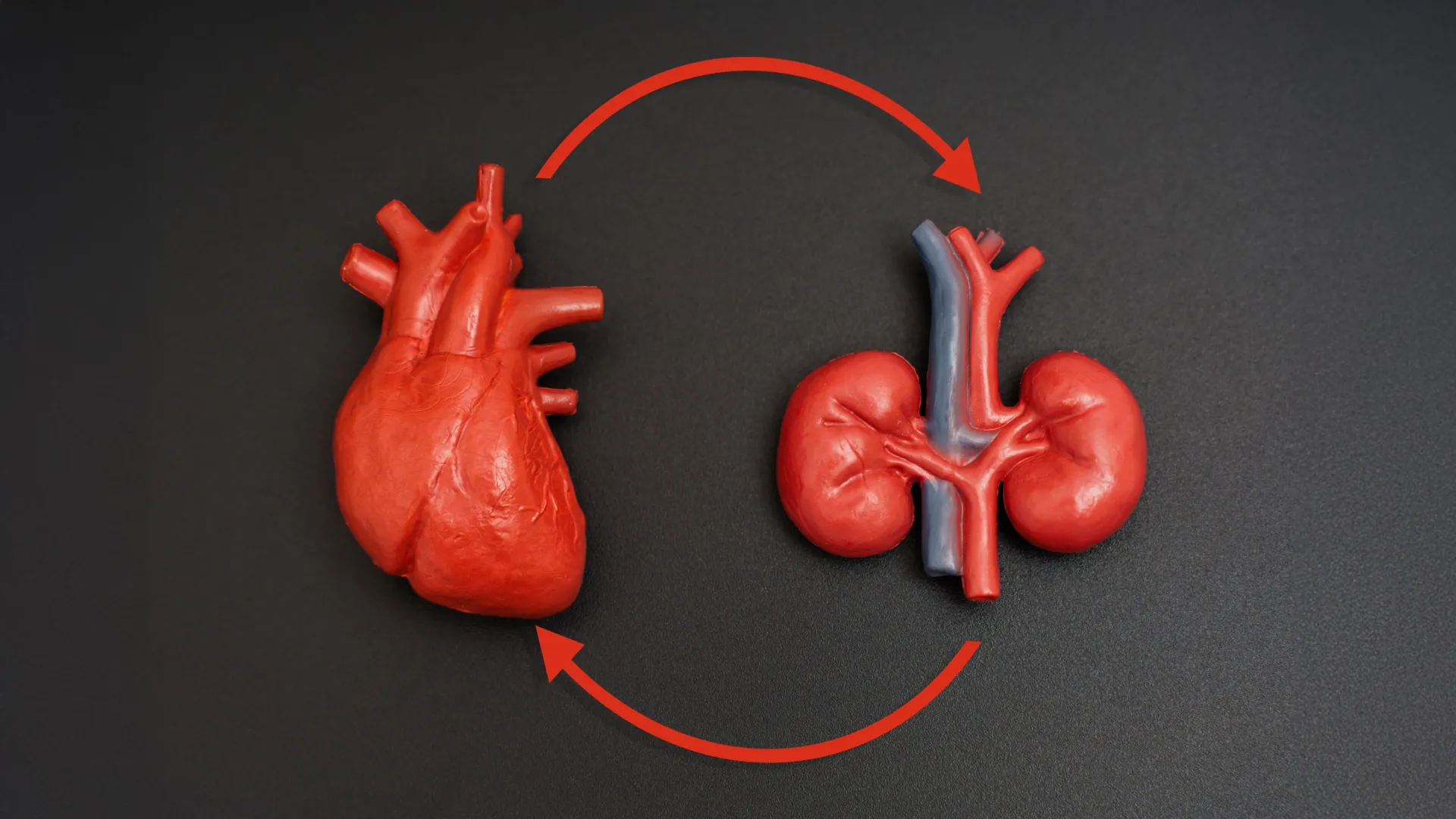
Despite affecting nearly 90% of the U.S. adult population, a newly categorized health crisis remains almost entirely unrecognized by the public. Cardiovascular-Kidney-Metabolic (CKM) syndrome—a condition that bridges the gap between heart disease, kidney disease, diabetes, and obesity—is currently the most prevalent, yet least understood, health challenge facing the nation.
A recent survey commissioned by the American Heart Association (AHA) and conducted by The Harris Poll reveals a stark disconnect between clinical reality and public awareness. While millions of Americans live with the underlying risk factors that define CKM syndrome, the term itself is largely absent from the common medical lexicon. As the medical community prepares for a paradigm shift in how these interconnected conditions are treated, the race is on to educate the public before the cumulative impact of these "silent" health threats leads to a surge in preventable heart attacks, strokes, and heart failure.
The Anatomy of CKM Syndrome: A Holistic Approach to Chronic Disease
To understand CKM syndrome, one must first abandon the traditional, siloed approach to medicine. For decades, cardiology, nephrology, and endocrinology have operated as distinct specialties. However, the human body does not function in isolated compartments.
CKM syndrome is defined by the coexistence of one or more of the following risk factors: high blood pressure, abnormal cholesterol, elevated blood glucose, excess weight, and diminished kidney function. When these conditions occur in tandem, they do not simply add to one another’s danger—they multiply it. The "syndrome" aspect of CKM refers to the dangerous feedback loop created when the heart, kidneys, and metabolic systems begin to fail in concert.
The Interconnected Engine
The heart acts as the pump, the kidneys as the filtration system, and the metabolic system as the energy manager. When the metabolic system struggles—often due to insulin resistance or obesity—it places undue stress on the kidneys. Impaired kidneys, in turn, struggle to regulate blood pressure, which forces the heart to work harder, eventually leading to cardiac damage. This "vicious cycle" creates a systemic instability that significantly increases the risk of catastrophic health events.
"The heart, kidney, and metabolic systems are connected and, as such, should be treated in a coordinated way," explains Eduardo Sanchez, M.D., FAHA, the American Heart Association’s chief medical officer for prevention. "These results reveal the need to emphasize those connections and help patients understand the importance of collaborative care."
Chronology of the CKM Movement: From Discovery to Clinical Guidelines
The formal recognition of CKM syndrome as a clinical entity represents a significant evolution in medical science. The following timeline tracks the emergence of this critical health framework:
- Early 2020s: Medical researchers increasingly identify the "crossover" effect where patients with Type 2 diabetes were significantly more likely to present with chronic kidney disease (CKD) and heart failure.
- 2023–2024: The American Heart Association begins formalizing the definition of CKM syndrome, acknowledging that the vast majority of chronic disease in the U.S. is not a single-organ issue but a multi-system failure.
- August 2025: The Harris Poll conducts a comprehensive national survey of 4,007 U.S. adults to measure public awareness. The results confirm that while the syndrome is rampant, public knowledge is nearly non-existent.
- Late 2025: The AHA launches the CKM Health Initiative, a nationwide campaign to harmonize interdisciplinary care and provide patients with the tools necessary to reverse the progression of the syndrome.
- Early 2026 (Forthcoming): The American Heart Association is scheduled to release its first-ever set of official clinical guidelines specifically focused on the diagnosis and management of CKM syndrome, signaling a mandatory change in how doctors practice primary care.
Supporting Data: The Scale of the Crisis
The data provided by the 2025 survey serves as a wake-up call for public health officials. With nearly 90% of U.S. adults possessing at least one risk factor, CKM syndrome is not a niche condition—it is the baseline state of health for the American population.
Key Survey Insights
- The Awareness Gap: An overwhelming majority of respondents were unable to identify CKM syndrome, confirming that current communication strategies regarding chronic health are failing to reach the general public.
- The Desire for Knowledge: Despite the lack of name recognition, nearly three-quarters of survey respondents expressed a strong desire to learn more once the "CKM connection" was explained to them. This suggests that the barrier is not apathy, but a lack of accessible information.
- The Prevalence Factor: The 90% statistic includes individuals with mild hypertension or moderate weight issues. By categorizing these individuals under the CKM umbrella, clinicians hope to intervene years, or even decades, before a patient suffers a stroke or heart failure.
The survey, which utilized a rigorous Bayesian credible interval to ensure a 95% confidence level, underscores that the demographic spread of these risk factors is wide, crossing all lines of income, geography, and education.
Official Responses: Shifting the Paradigm of Care
The American Heart Association is spearheading a move toward "collaborative care." This model seeks to break down the walls between specialists, ensuring that a patient’s endocrinologist, cardiologist, and nephrologist are working from a shared clinical playbook.
"We want people to know that it’s really common to have heart, kidney, and metabolic risk factors at the same time," says Dr. Sanchez. "It is reassuring that once the CKM connection was defined, nearly three-quarters of those responding understood that it was important and wanted to learn more."
The organization’s strategy is two-fold:
- Patient Empowerment: Through the new CKM Health Initiative, the AHA is deploying educational videos and online hubs to help individuals visualize their health as a "full circle." By monitoring blood pressure, cholesterol, weight, blood sugar, and kidney function, patients can see how these numbers relate to one another.
- Professional Collaboration: By providing healthcare teams with the resources to coordinate care, the AHA aims to reduce the "fragmentation" of medicine. This ensures that a patient treated for high blood sugar is also being screened for the secondary renal and cardiac implications of that condition.
Implications: The Potential for Reversal
Perhaps the most significant takeaway from the emerging research on CKM syndrome is the concept of reversibility. Unlike some chronic conditions that can only be managed, many stages of CKM syndrome are responsive to lifestyle interventions and timely medical therapy.
The Power of Prevention
The syndrome is not a death sentence; it is a warning light on the dashboard of the human body. Because CKM syndrome is rooted in metabolic function, it is highly sensitive to changes in:
- Nutritional Habits: Shifting toward diets that stabilize blood glucose levels.
- Physical Activity: Regular movement that improves both cardiovascular endurance and metabolic efficiency.
- Pharmacological Intervention: Utilizing modern medications that address multiple CKM risk factors simultaneously, such as newer classes of drugs that protect both the kidneys and the heart.
By identifying the syndrome early, clinicians can help patients "step back" from the brink of organ failure. The shift in 2026 toward formal clinical guidelines will provide physicians with a roadmap for this early intervention, potentially saving hundreds of thousands of lives annually.
Conclusion: A New Era of Holistic Health
The arrival of CKM syndrome into the public consciousness marks the end of an era where heart disease was viewed solely as a "heart problem" and diabetes as a "blood sugar problem." We are entering an era of integrated physiology, where the interconnectedness of our vital systems is the primary focus of medical practice.
For the American public, the message is clear: your health is a circle. By understanding that your heart, kidneys, and metabolism are working in concert, you can take control of your health trajectory. As the American Heart Association continues to roll out its educational tools at heart.org/CKMtools, the hope is that 90% of the population will move from being at risk to being in control.
The upcoming 2026 clinical guidelines will provide the professional framework, but the true success of this initiative will depend on the public’s willingness to embrace a new way of viewing their own bodies—not as a collection of parts, but as a singular, interconnected system that requires holistic, proactive care.
Methodological Note: The research was conducted online by The Harris Poll on behalf of the American Heart Association among 4,007 U.S. adults aged 18+ between August 6 and August 22, 2025. Data were weighted to reflect population proportions across key demographics, including education, race/ethnicity, and household income.