In the complex world of transfusion medicine, the compatibility of blood types has long been governed by the ABO and Rh systems. However, a groundbreaking study published in JAMA Internal Medicine has uncovered a previously overlooked variable: the impact of Alpha-gal syndrome (AGS)—a tick-borne allergy—on patient safety during blood transfusions. The findings suggest that for individuals with Type O blood living in regions where AGS is prevalent, receiving B or AB blood products may carry a significantly elevated risk of allergic reactions, potentially necessitating a fundamental shift in how hospitals manage blood inventories.
The Alpha-Gal Connection: A New Frontier in Hematology
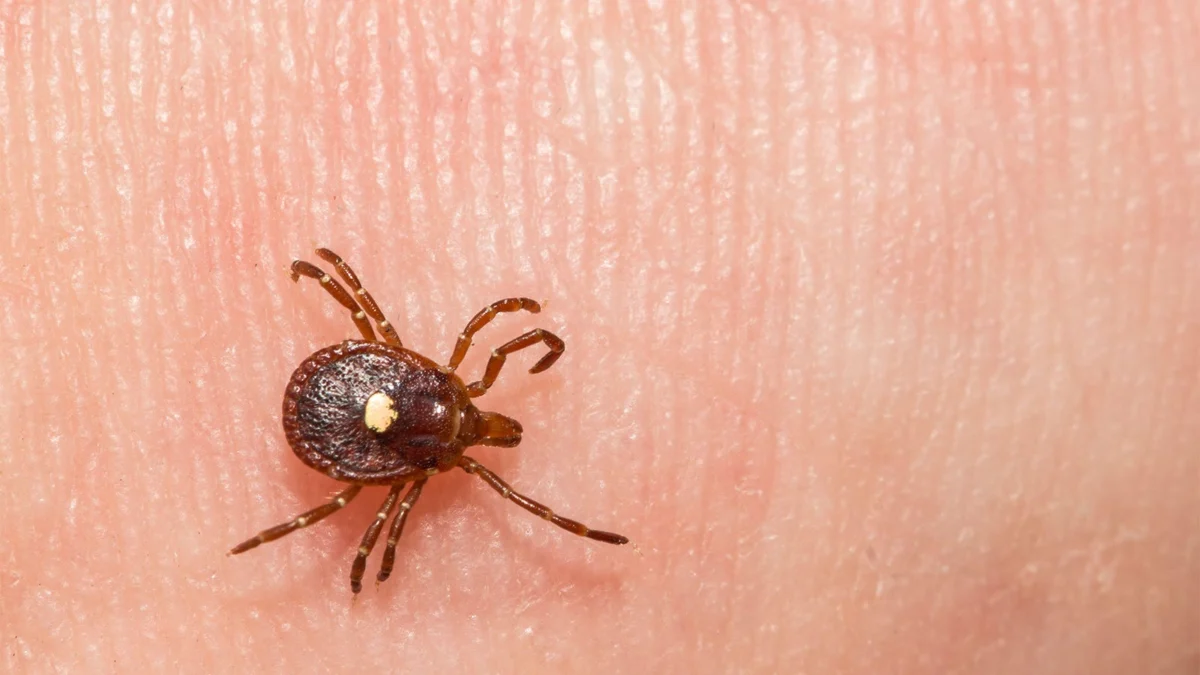
Alpha-gal syndrome is a unique, life-altering food allergy characterized by a hypersensitivity to galactose-α-1,3-galactose (alpha-gal), a carbohydrate molecule found in the cells of most non-primate mammals. In the United States, the primary culprit behind the sensitization of humans to this carbohydrate is the lone star tick (Amblyomma americanum).
When a tick bites a human, it can introduce alpha-gal into the bloodstream, prompting the immune system to produce immunoglobulin E (IgE) antibodies against the sugar. Once sensitized, the patient may suffer severe allergic reactions—ranging from hives and gastrointestinal distress to life-threatening anaphylaxis—within two to six hours of consuming mammalian meat or products containing the allergen.
The recent study, led by Dr. Richard Kaufman of Dartmouth Hitchcock Medical Center, highlights a chilling convergence: the molecular structure of alpha-gal bears a striking resemblance to the B antigen found on human red blood cells, platelets, and epithelium. This structural mimicry suggests that patients who have developed alpha-gal antibodies due to tick exposure may inadvertently experience a cross-reactive immune response when exposed to B-antigen-positive blood products during a transfusion.
Chronology of the Research: From Observation to Evidence
The investigation, conducted under the auspices of the Biomedical Excellence for Safer Transfusion (BEST) Collaborative, spanned 40 clinical sites across the United States, Australia, France, Germany, and Japan. The researchers analyzed 558,823 transfusion episodes to determine whether the geographic prevalence of AGS correlated with the incidence of allergic reactions in specific blood-type pairings.
The Phases of Discovery:
- Initial Observations: Clinicians in AGS-endemic regions, particularly in the U.S. Northeast, Southeast, and Midwest, began noticing a pattern of allergic reactions that did not conform to standard ABO incompatibility models.
- Data Collection: The team compiled massive datasets from hospital transfusion services, categorizing regions as either "high-prevalence" or "low-prevalence" for AGS based on public health data.
- Statistical Analysis: By isolating Type O patients—who are the "universal donors" for red blood cells but the most vulnerable recipients when receiving plasma—researchers compared the rates of allergic reactions when these patients received Type B or AB units versus Type O units.
- The Findings: In high-prevalence AGS regions, Type O patients who received B or AB platelets or plasma were nearly four times more likely to experience an allergic reaction compared to those who received Type O units (Risk Ratio [RR] 3.93).
- Verification: Conversely, Type O patients living in regions with low AGS prevalence showed no statistically significant increase in risk when receiving B or AB blood, effectively serving as a control group that reinforced the geographic link to the tick-borne syndrome.
Supporting Data: Dissecting the Risk
The data presented by Dr. Kaufman’s team offers a compelling, if sobering, look at transfusion safety. Among the over half-million transfusions reviewed, 1,744 allergic reactions were reported, representing an overall rate of 0.3%. While this frequency is low, the stratification of the data revealed a disturbing trend for specific subgroups.
High-Risk Subgroups
The most striking statistic emerged when researchers narrowed the focus to moderate-to-severe allergic reactions. In AGS high-prevalence sites, Type O patients receiving B-type units saw their risk ratio for these severe reactions jump to 9.14 compared to those receiving O-type units. In contrast, this risk was significantly lower (RR 2.15) in low-prevalence regions.
Interestingly, the study found that receiving Type A units did not significantly increase the risk for Type O patients in high-prevalence regions (RR 1.60), likely because Type A antigens do not share the same structural homology with alpha-gal as Type B antigens do.
International Variations
The study also highlighted significant differences in transfusion practices and risk profiles globally. Outside the United States, patients were generally five times less likely to receive B or AB units. In a surprising finding at one high-prevalence site in Japan, Type O patients who received B or AB units actually showed a lower risk of allergic reactions, suggesting that environmental, dietary, or genetic factors beyond simple geography may influence the clinical manifestation of alpha-gal sensitivity.
Official Responses and Medical Commentary
The medical community has received these findings with a mixture of professional concern and scientific caution. In an accompanying editorial, Dr. Marie Hollenhorst of Brigham and Women’s Hospital and Harvard Medical School described the study as the "strongest evidence yet" for the existence of Transfusion-Related Alpha-Gal Syndrome (TRAGS).
The Cautious Perspective
While the statistical evidence is strong, Dr. Hollenhorst emphasized that the absolute risk remains "negligible" for the average patient, as allergic reactions are already rare events in the blood banking system. She pointed out that because the study could not test individual patients for alpha-gal IgE antibodies or verify their prior history of AGS, the results are currently observational rather than definitive proof of causality.
"Physicians should be aware of TRAGS as a potential newly identified allergic transfusion reaction," Hollenhorst noted. She advised that for patients who have both Type O blood and a known history of prior allergic transfusion reactions, testing for alpha-gal IgE antibodies before future transfusions would be a prudent, evidence-based approach.
The Author’s Stance
Dr. Kaufman and his colleagues remain firm in their interpretation. "We anticipate that this will change transfusion practices in the U.S., at least in AGS high-prevalence regions," Kaufman stated in a press release. The authors argue that the data is "provocative" enough to warrant a proactive shift in how high-risk patients are managed, particularly in emergencies where blood supply management is often dictated by the need to avoid wasting B or AB units.
Clinical and Public Health Implications
The implications of this research are far-reaching, touching upon clinical protocols, public health surveillance, and the broader context of climate change.
Changing Transfusion Protocols
Currently, hospitals often utilize B or AB plasma or platelets for Type O patients to optimize inventory. If the risk of TRAGS is validated through further study, hospitals in regions like the Southeast and Midwest may need to transition toward a "Type-O-first" policy for these patients. This could strain blood supplies, as Type O products are already in high demand.
A Climate-Driven Health Crisis
As noted by co-author Dr. Nancy Dunbar, the proliferation of the lone star tick is inextricably linked to changing climate patterns. As winters become milder, tick populations expand into new territories, bringing with them a host of pathogens and, in this case, a peculiar allergen that alters the human immune system. This study serves as a sentinel event, highlighting how environmental shifts are creating "real-time" medical challenges that require clinicians to remain adaptable and informed.
Future Research Directions
The path forward requires a more granular approach. Future studies must incorporate direct testing for alpha-gal IgE to definitively link the patient’s serological status to their transfusion outcomes. Furthermore, researchers must determine whether the "vanishingly small" absolute risk warrants a universal change in practice or if the risk can be managed through targeted screening of patients with a history of unexplained allergic reactions.
Conclusion: A New Standard of Vigilance
The identification of TRAGS represents a significant step forward in our understanding of transfusion safety. While the risk of a severe allergic reaction due to alpha-gal remains statistically low, the findings published in JAMA Internal Medicine provide a clear warning: the environment is changing, and our medical practices must evolve to match it.
For now, the medical community has been handed a new diagnostic lens. By acknowledging the interplay between tick-borne allergies and blood compatibility, clinicians can better serve their patients, particularly in the regions most impacted by the spread of the lone star tick. As the field moves toward more personalized medicine, the consideration of a patient’s geographic history and potential for alpha-gal sensitization may soon become a standard component of transfusion safety, ensuring that the gift of life remains as safe as possible for all recipients.