Pancreatic ductal adenocarcinoma (PDAC) remains one of the most formidable adversaries in modern oncology. Characterized by its late-stage diagnosis and aggressive metastatic potential, it continues to claim lives with alarming frequency. However, a groundbreaking study published in the journal Oncotarget has unveiled a potential shift in the therapeutic landscape. Researchers from the Florida A&M University College of Pharmacy and Pharmaceutical Sciences, Institute of Public Health, have identified a novel class of compounds that may dismantle the very mechanisms that make pancreatic cancer so lethal.
Led by first author Kweku Ofosu-Asante and corresponding author Nazarius S. Lamango, the research team has shed light on "polyisoprenylated cysteinyl amide inhibitors" (PCAIs)—a group of experimental compounds that challenge the traditional paradigm of cancer treatment by turning a tumor’s own signaling pathways against itself.
The KRAS Dilemma: Why Conventional Treatments Fail
To understand the significance of this discovery, one must first appreciate the biological fortress that is pancreatic cancer. The primary driver behind the malignancy of PDAC is the mutation of the KRAS gene. KRAS is a signaling protein that acts like an on/off switch for cell growth; when mutated, it becomes permanently "stuck" in the "on" position, driving cells to divide uncontrollably.
For decades, the KRAS mutation was considered "undruggable." While recent breakthroughs have produced therapies targeting specific variants—most notably the KRASG12C mutation—these drugs are limited in scope. Most pancreatic cancer patients possess a variety of different KRAS mutations, rendering mutation-specific inhibitors largely ineffective for the broader patient population. Consequently, the medical community has been in a desperate race to find therapies that work across the diverse spectrum of KRAS-driven cancers. This is where the work of Dr. Lamango’s team offers a glimmer of hope: a universal approach that bypasses the need to target individual mutations.
Chronology of the Discovery
The path to this discovery was not instantaneous. It began with the systematic design of PCAIs, compounds engineered specifically to interfere with abnormal KRAS signaling. Unlike traditional drugs that aim to block a protein’s active site, the researchers sought to interfere with the post-translational modifications—the "lipid tags"—that allow KRAS and other G-proteins to anchor themselves to the cell membrane.
Phase 1: Identifying the Lead Compound
The investigation began by screening various PCAI candidates against pancreatic cancer cell lines known for their aggressive behavior and KRAS mutations. The researchers meticulously monitored cell viability, motility, and invasive capacity. Through a series of rigorous assays, two specific compounds emerged as superior candidates. The team eventually zeroed in on the compound NSL-YHJ-2-27, which demonstrated the most potent inhibitory effects.
Phase 2: Disrupting Cellular Architecture
With the lead compound identified, the team transitioned to mechanistic studies. They observed that as NSL-YHJ-2-27 entered the cells, it triggered a collapse of the actin cytoskeleton—the internal "scaffolding" that gives cells their shape and movement capabilities. Under the microscope, treated cancer cells appeared to round up and lose their ability to crawl or invade healthy tissues.
Phase 3: The Paradox of Hyperactivation
Perhaps the most counterintuitive finding in the study involved the MAPK and PI3K/AKT signaling pathways. These pathways are the "engines" of cancer growth; traditionally, oncologists try to inhibit them to stop tumor progression. However, the PCAIs did the opposite. They forced these pathways into a state of hyperactivation. The researchers realized that by pushing these pathways beyond their operational limits, they were essentially causing a "system overload" within the cancer cell, leading to oxidative stress and eventual programmed cell death (apoptosis).
Supporting Data: From Cell Cultures to 3D Models
The strength of the study lies in its multi-layered verification process. The researchers did not rely solely on flat, two-dimensional petri dish cultures, which are notorious for failing to mimic the complexity of human tumors.
The Power of 1 µM
In migration assays, the potency of NSL-YHJ-2-27 was staggering. At a concentration of just 1 µM, the compound blocked more than 90% of cancer cell migration. This suggests that the drug could be a potent tool in preventing metastasis, the process responsible for the vast majority of cancer-related deaths.
Transcriptomic Shifts
By analyzing the gene expression profiles of treated cells, the researchers identified a fundamental shift in the tumor’s "instruction manual." Genes that facilitate invasion and metastasis were downregulated, while tumor-suppressing genes—which are typically silenced in cancer—were reactivated. This suggests that the treatment doesn’t just kill cells; it attempts to "re-program" the cellular environment to be less conducive to cancer growth.
The 3D Spheroid Advantage
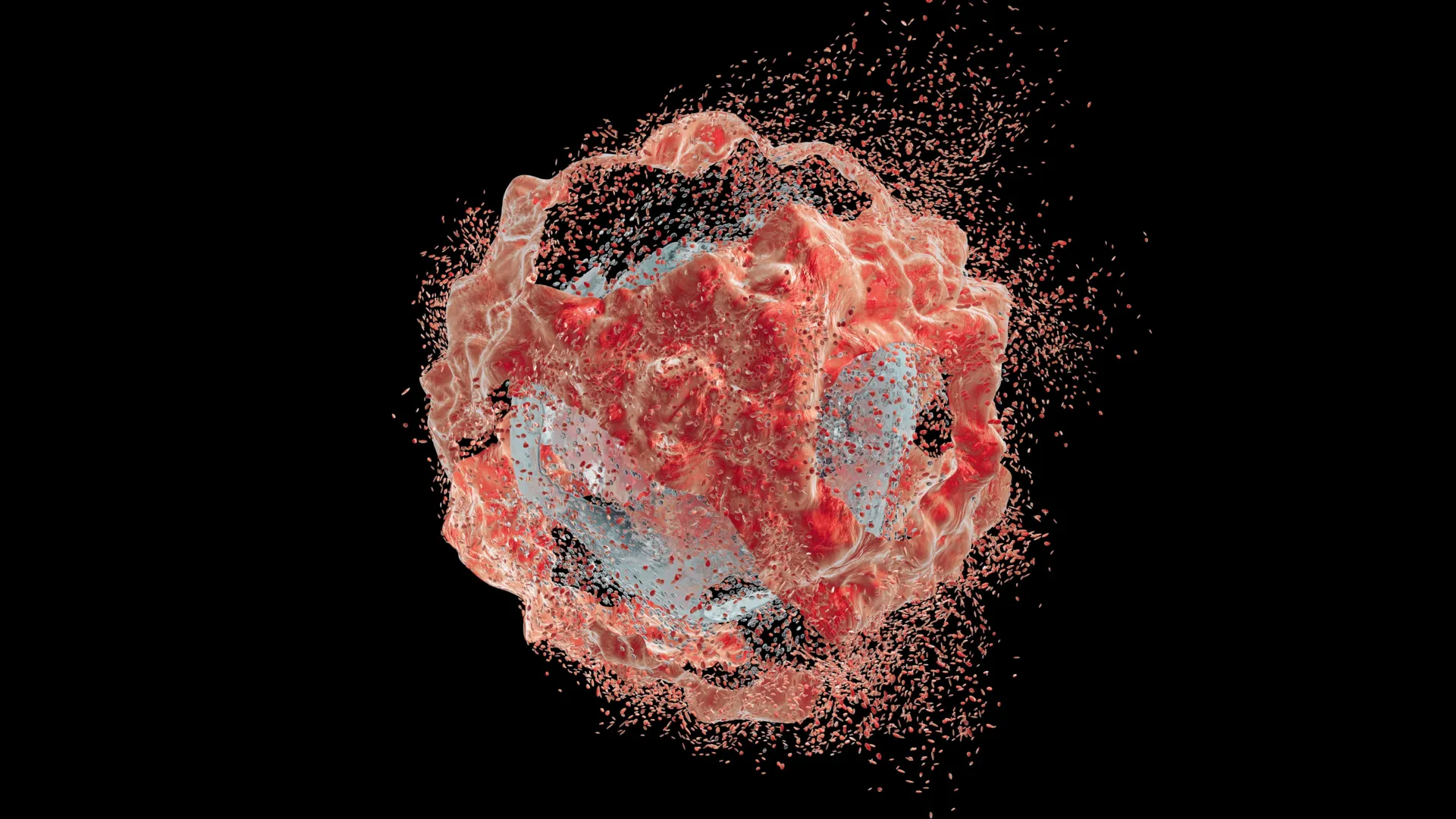
To further validate their findings, the team employed three-dimensional tumor spheroids. These models mimic the dense, nutrient-deprived environment of a real pancreatic tumor. When treated with PCAIs, these spheroids began to disintegrate. The treatment effectively breached the protective barriers of the spheroid, reducing its ability to invade surrounding tissue matrices and triggering a massive surge in apoptotic activity.
Official Perspective and Theoretical Implications
The study highlights a crucial shift in oncological philosophy. As the researchers noted, "One class of such promising agents is the PCAIs that were designed to target oncogenic G-proteins in a manner that is different from the KRASG12C-targeting drugs."
By moving away from the "lock-and-key" approach of mutation-specific inhibitors, the Florida A&M team is championing a "systems-based" approach. By targeting the G-proteins themselves—the proteins that KRAS relies on to function—the PCAIs offer a broader-spectrum solution. This is particularly vital for pancreatic cancer, where the tumor microenvironment is notoriously difficult to penetrate and the genetic landscape is highly heterogeneous.
Implications for Future Cancer Therapy
The implications of this research are far-reaching. If these results can be replicated in clinical trials, PCAIs could serve as a foundational treatment for a wide range of solid tumors, not just pancreatic cancer.
Overcoming Resistance
One of the most significant hurdles in cancer treatment is the development of drug resistance. Because PCAIs cause a catastrophic failure of cellular signaling pathways—rather than just blocking one single pathway—it is much harder for the cancer cell to evolve a way around the treatment. This "multi-pronged" assault may be the key to overcoming the adaptive resistance that plagues current chemotherapy and targeted therapy regimens.
A New Standard for Quality of Life
The researchers also emphasize that the ultimate goal of such therapy is to reduce the burden of disease while minimizing the side effects associated with systemic chemotherapy. Because PCAIs target mechanisms specific to the lipid-dependent anchoring of mutated proteins, there is a theoretical potential for greater specificity, potentially sparing healthy cells from the collateral damage associated with traditional cytotoxic agents.
Conclusion: A Road Map Ahead
While the transition from in vitro success to human clinical application is complex and fraught with challenges, the work of Ofosu-Asante, Lamango, and their colleagues provides a robust framework for the next generation of cancer therapeutics. The ability to induce apoptosis by "overloading" the cancer’s own growth signals is an elegant and powerful strategy.
As the scientific community continues to digest these findings, the focus will likely shift to pharmacokinetic studies, toxicity testing in animal models, and eventually, human trials. For patients and families currently battling the grim statistics of pancreatic cancer, the development of PCAIs represents more than just a successful experiment—it represents a tangible, scientifically sound step toward a future where pancreatic cancer is no longer a death sentence, but a manageable condition.
The study in Oncotarget serves as a stark reminder that sometimes the most effective way to solve a complex problem is to stop fighting the symptoms and start disrupting the fundamental architecture of the disease itself.