







For decades, the concept of a "tailored" cancer treatment—a vaccine engineered specifically to teach a patient’s immune system how to hunt down their unique malignancy—was relegated to the realm of high-stakes, theoretical medicine. Today, that vision has shifted from a scientific aspiration to a clinical reality.
Merck and Moderna recently announced a landmark breakthrough: their Phase 3 clinical trial, INTerpath-001, has yielded positive topline results. The trial evaluated intismeran autogene, an individualized, mRNA-based cancer vaccine, in tandem with the immune checkpoint inhibitor pembrolizumab (Keytruda®). For patients battling high-risk melanoma who have already undergone surgery to remove their tumors, this combination represents a potentially transformative leap forward in recurrence prevention.
The Core Breakthrough: Precision Immunology
The INTerpath-001 trial marks the first time an individualized neoantigen therapy and an mRNA-based cancer vaccine have succeeded in a Phase 3 study. By demonstrating that this combination significantly extends both recurrence-free survival (RFS) and distant metastasis-free survival (DMFS), the researchers have validated a decades-long pursuit in the field of immuno-oncology.
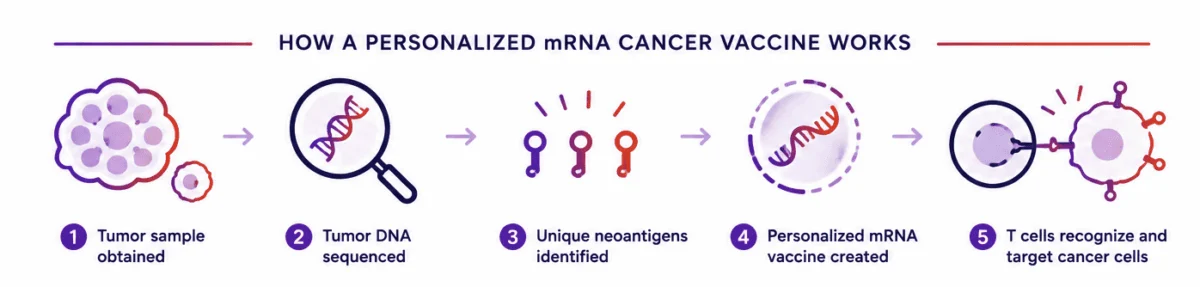
Unlike traditional vaccines that prime the body to prevent an infection, intismeran is a therapeutic vaccine designed to treat an existing disease. It operates on a principle of hyper-personalization. Scientists first analyze the genetic landscape of a patient’s tumor to identify "neoantigens"—unique markers created by specific genetic mutations that exist solely on cancer cells and are absent from healthy tissue. Once these targets are identified, they are encoded into mRNA. When administered, this mRNA acts as a molecular "wanted poster," instructing the immune system to recognize and eliminate cells displaying those specific markers.
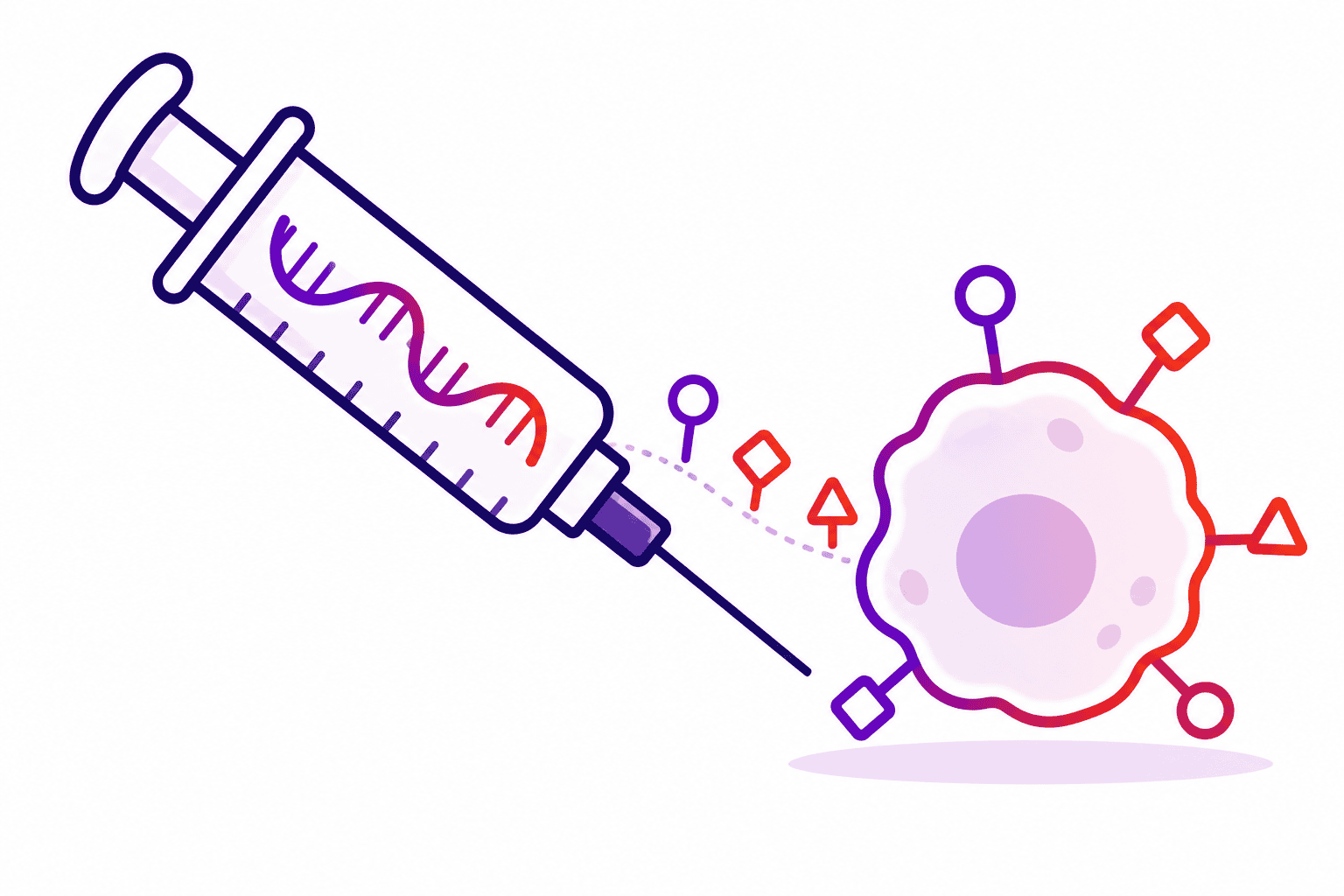
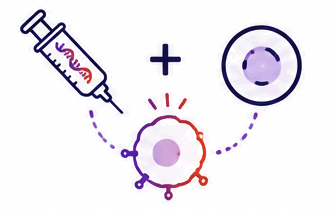
However, recognizing the enemy is only half the battle. Cancer cells are masters of disguise, often exploiting the body’s "immune checkpoints"—natural regulatory mechanisms that prevent the immune system from overreacting—to suppress T cells. By administering Keytruda, which blocks the PD-1 checkpoint, the treatment ensures that the immune system’s T cells remain active and focused on the targets identified by the vaccine. It is a dual-action strategy: the vaccine acts as the guide, and the checkpoint inhibitor acts as the persistent catalyst.
A Chronology of Discovery: From Theory to Therapy
The success of INTerpath-001 did not happen in a vacuum. It is the culmination of seventy years of rigorous scientific exploration, much of which was fostered by the Cancer Research Institute (CRI).
The Mid-20th Century: Laying the Foundation
In the 1950s, the field of cancer immunology was in its infancy. Dr. Lloyd J. Old, the founding scientific and medical director of the CRI, pioneered the idea that the immune system could be harnessed to fight tumors. His early work with the tuberculosis vaccine Bacillus Calmette-Guérin (BCG) proved that immune stimulation could suppress tumor growth in animal models. BCG eventually became the first FDA-approved active immunotherapy for cancer, setting a precedent that tumors were indeed susceptible to immune-mediated destruction.
The Turn of the Millennium: The Collaborative Era
By the early 2000s, the focus shifted to identifying the specific targets that make cancer cells vulnerable. In 2001, the CRI and the Ludwig Institute for Cancer Research established the Cancer Vaccine Collaborative (CVC). This global network served as a catalyst for nearly 60 early-phase trials, shifting the research culture from isolated experimentation to a coordinated, global effort to decode how to generate durable immune responses.
The Checkpoint Revolution
Parallel to the vaccine research, the field was revolutionized by the discovery of "brakes" on the immune system. Research funded by the CRI in the lab of Dr. James P. Allison in 1992 revealed that blocking immune checkpoints could unleash the full power of T cells. Dr. Allison’s work, which culminated in the 2018 Nobel Prize in Physiology or Medicine, provided the essential "second half" of the equation that researchers are using today.
The mRNA Paradigm Shift
Finally, the technology required to make "personalized" vaccines arrived with the perfection of mRNA platforms. In 2021, the CRI honored Katalin Karikó, Drew Weissman, Uğur Şahin, and Özlem Türeci with the William B. Coley Award for their pivotal roles in developing mRNA technology. The subsequent global success of mRNA vaccines against COVID-19 accelerated the refinement of these platforms for oncology, bringing the science to the precipice of the current breakthrough.
Supporting Data: The Power of the INTerpath-001 Trial
The scale of the INTerpath-001 trial underscores the clinical confidence in this approach. The study enrolled 1,137 patients across the globe, all diagnosed with stage IIB–IV cutaneous melanoma. All participants had their tumors surgically resected, leaving them at high risk for recurrence.
While the precise magnitude of the benefit for the Phase 3 cohort has not yet been publicly disclosed, the preliminary results have been described by investigators as "statistically significant and clinically meaningful." This follows highly promising data from the smaller Phase 2b trial, which saw the combination of the mRNA vaccine and Keytruda reduce the risk of recurrence or death by 49%, and the risk of distant metastasis or death by 59%, when compared to Keytruda alone. These figures represent a profound improvement in outcomes for patients who previously had few options beyond standard-of-care immunotherapy.
Official Perspectives and Implications
The scientific community has reacted with cautious optimism. Dr. Lloyd Old’s vision of a vaccine that is uniquely tailored to a patient’s cancer is no longer a "what if"—it is an active area of clinical development.
However, stakeholders are quick to temper excitement with pragmatism. "While these findings are undeniably historic, we must remain focused on the practical hurdles ahead," noted a spokesperson close to the research.
The Infrastructure Challenge
The primary challenge lies in logistics. Because intismeran is an individualized therapy, the manufacturing process is inherently complex. It requires:
- Biopsy and Sequencing: Every patient’s tumor must be genetically sequenced to identify unique neoantigens.
- Custom Manufacturing: A vaccine must be synthesized based on that specific patient’s genetic profile.
- Logistical Speed: This process must be accomplished quickly enough to treat the patient before the cancer potentially progresses.
Building the infrastructure to support this at scale—and ensuring equitable access—will be one of the most significant challenges for health systems in the coming decade.

Expanding the Scope
Melanoma is only the starting point. Researchers are already pivoting to investigate the utility of mRNA vaccines in other tumor types. The flexibility of the mRNA platform allows scientists to swap out neoantigen targets with relative ease, raising the possibility that this technology could eventually be applied to a wide array of cancers that have historically proven resistant to standard immunotherapy.
The Future: A New Chapter in Oncology
The success of INTerpath-001 serves as a definitive validation of the "personalized medicine" hypothesis. It proves that we have the tools to read the genetic code of a tumor and the immunological knowledge to teach the body how to destroy it.
As the industry waits for the full, detailed results of the Phase 3 trial—including data on overall survival—the medical community is preparing for a paradigm shift. We are moving away from the "one-size-fits-all" approach to cancer treatment and toward an era of bespoke, patient-specific immunotherapies.
The story of the cancer vaccine, which began in the laboratories of the 1950s, has reached a point of convergence. The long-term support for foundational science by institutions like the CRI, the breakthroughs in checkpoint inhibition, and the evolution of mRNA technology have finally aligned. The results of this trial are not merely a clinical milestone; they are the opening of an entirely new chapter in the history of medicine, offering renewed hope to patients who were once told there were no options left.