










By Global Security Desk
September 15, 2026
The geopolitical temperature in the Middle East has reached a boiling point following a high-stakes confrontation in the Strait of Hormuz, the world’s most critical maritime oil chokepoint. On Monday, September 14, U.S. Central Command (CENTCOM) issued a sharp rebuttal to Iranian reports concerning the fate of the Panamanian-flagged oil tanker El Gaia. The incident, which has left at least one crew member missing and the vessel crippled, has sparked a diplomatic and information war between Washington and Tehran, underscoring the volatility of the region’s shipping lanes.
The Conflicting Narratives
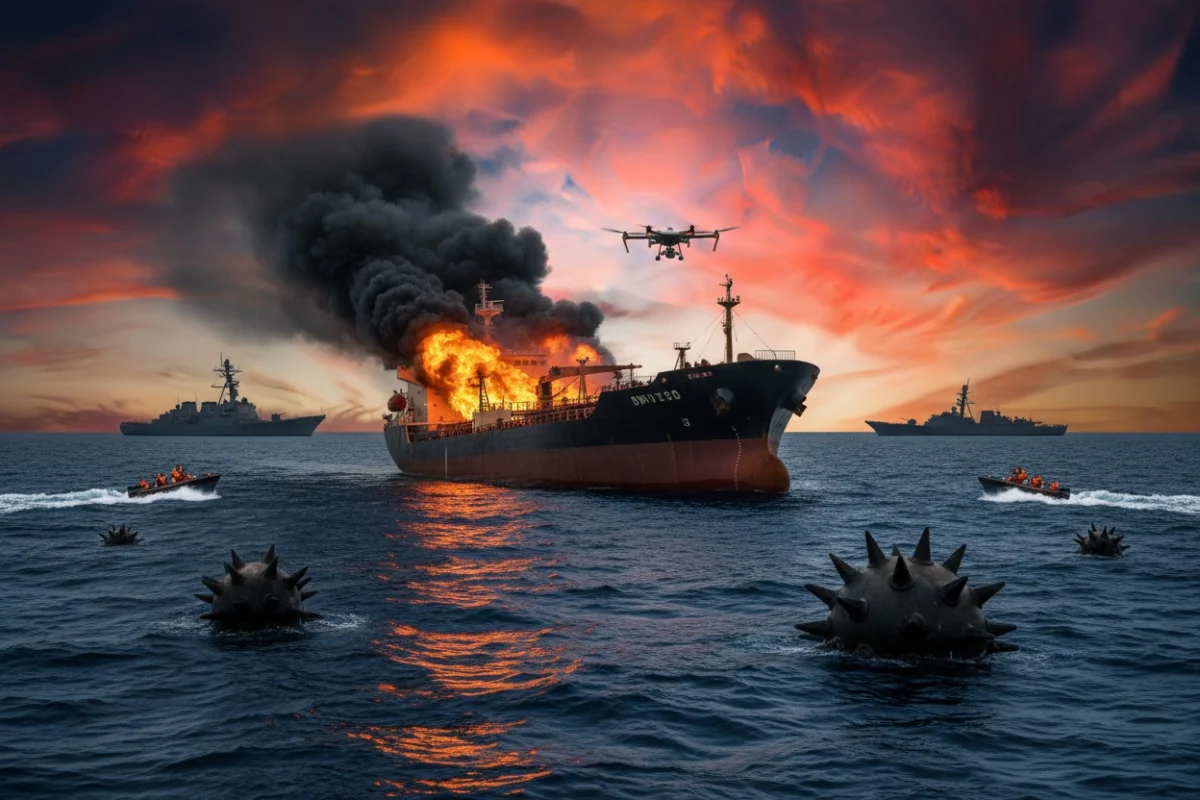
The core of the dispute lies in the cause of the damage to the El Gaia. According to Iran’s Fars News Agency, which cited sources within the Islamic Revolutionary Guard Corps (IRGC), the vessel suffered an explosion and subsequent fire after striking naval mines within the strait. This narrative suggests an accidental maritime hazard rather than a targeted military strike.
However, CENTCOM has vehemently rejected this account, characterizing it as a calculated fabrication. In an official statement posted to the social media platform X, U.S. military authorities alleged that the El Gaia was not the victim of a rogue mine, but rather the target of a deliberate, two-pronged military assault. According to CENTCOM, the tanker was struck by an Iranian missile last month and was hit again by an Iranian-launched drone in a recent, follow-up attack.
"The IRGC’s false claim is yet another example of their lies and intimidation attempts while they try to impede commercial vessels in the strait," CENTCOM stated, dismissing the Iranian version of events as a psychological operation designed to mask the IRGC’s ongoing campaign to disrupt international commerce.
Chronology of the Incident and Rescue Operations
The plight of the El Gaia first gained international attention on Sunday, September 13. While the exact timeline of the strikes remains a point of contention, the human toll is becoming increasingly clear.
The Indian Ministry of External Affairs (MEA) confirmed that the vessel carried a crew of 14 Indian nationals. Following the attack, an urgent search and rescue operation was launched. As of Monday, 13 crew members have been successfully recovered, while one individual remains missing. The Indian Embassy in Oman is currently coordinating with regional authorities to manage the logistics of the rescue and to provide support to the survivors.
"Our Embassy in Oman is closely monitoring the situation and proactively coordinating with the Omani authorities," an MEA spokesperson said. The incident highlights the precarious position of regional partners and third-party nations whose citizens are often caught in the crossfire of the U.S.-Iran maritime standoff.
Official Responses and Strategic Discrepancies
The contradiction between Tehran and Washington is not an isolated event but rather the latest chapter in a long-standing pattern of information warfare. Since the onset of the current maritime tensions, both sides have utilized their media apparatuses to shape global perception.
The U.S. Position
CENTCOM has maintained that the El Gaia is currently being towed by a regional partner to a safe location. The U.S. military emphasizes that these incidents are part of a broader strategy by the IRGC to assert dominance over the Strait of Hormuz, a narrow passage through which approximately 20% of the world’s daily oil supply travels.
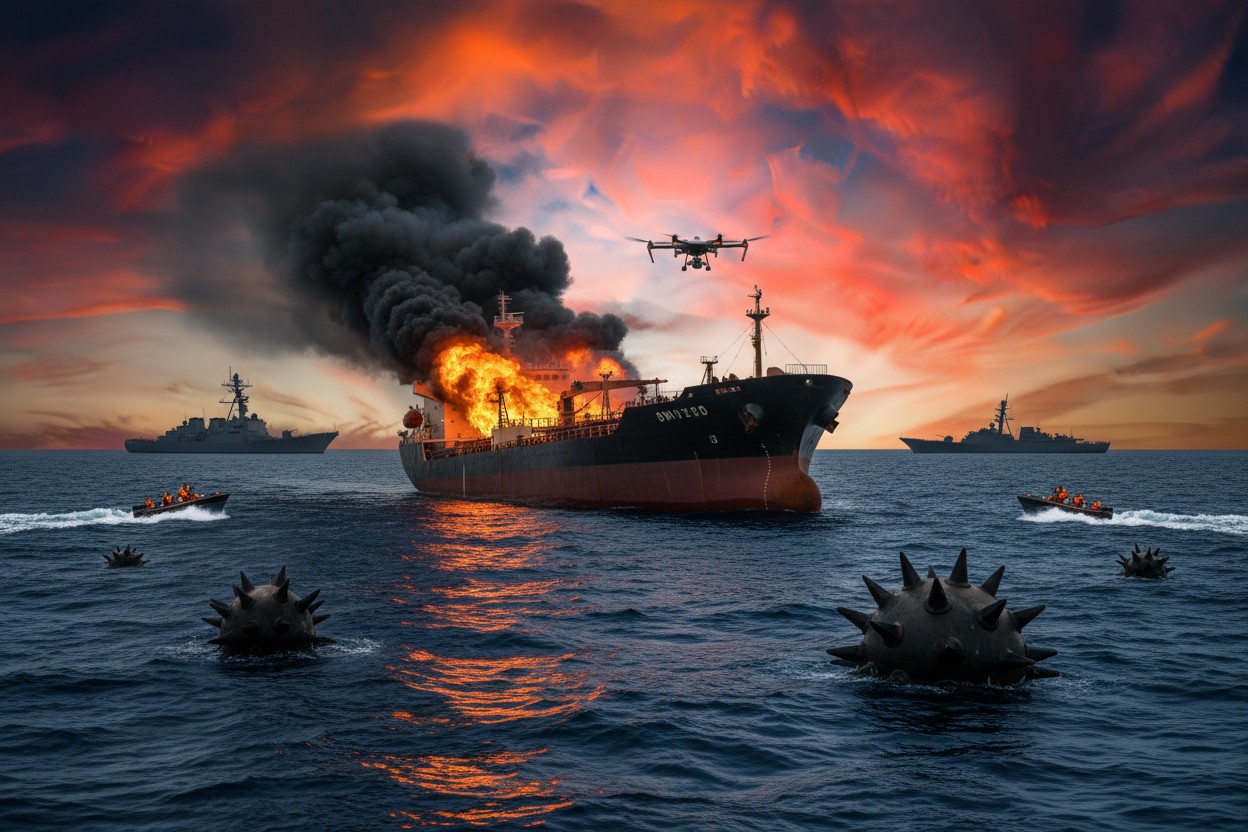
The U.S. position is further complicated by recent declarations from the White House. Just weeks prior to this incident, President Donald Trump publicly announced that all naval mines in the international waters of the Strait of Hormuz had been identified, removed, or neutralized. By citing a missile and drone strike, the U.S. is effectively pointing out that the Iranian "mine" narrative is not only false but physically impossible under the current security environment established by U.S. forces.
The Iranian Position
Conversely, the IRGC has consistently sought to maintain the narrative that the waterway is a mine-strewn zone under their influence. In August 2026, an IRGC spokesperson publicly challenged U.S. claims of security control, asserting that additional naval mines had been deployed south of the strait. This rhetoric serves two purposes: it creates a deterrent against foreign naval vessels and provides a "plausible deniability" shield for the IRGC when commercial tankers are attacked by their own kinetic assets.
Implications for Global Energy Markets
The Strait of Hormuz is not merely a geographic chokepoint; it is the jugular vein of the global energy economy. With roughly $600 billion worth of oil passing through the passage annually, any instability has immediate, ripple-effect consequences for energy prices worldwide.
The ongoing dispute over the El Gaia occurs against a backdrop of severe economic strain. Since July 14, 2026, U.S. forces have been enforcing a strict naval blockade against Iran. The impact has been significant: CENTCOM reported that in the two months leading up to this incident, they had successfully redirected 100 commercial vessels to avoid Iranian-controlled areas.
For nations like India, which has historically maintained energy ties with Iran despite Western sanctions, the situation is increasingly untenable. Once a major importer of Iranian crude—at times purchasing up to 300,000 barrels per day—New Delhi is now forced to navigate the diplomatic minefield of a maritime theater where energy security is inextricably linked to military confrontation.
A Growing Pattern of Hostility
This incident is part of a wider, rapidly escalating conflict. On September 9, just days before the El Gaia attack, CENTCOM denied reports from Iranian state media that their forces had successfully struck U.S. warships. In that same briefing, the U.S. military countered by revealing that they had destroyed 10 Iranian tankers linked to the IRGC over the previous week.
The Iranian military, in turn, has issued stern warnings, vowing a "sharply escalated" response to any U.S. strikes. This cycle of denial, accusation, and retaliatory force suggests that the "gray zone" conflict in the Persian Gulf is transitioning into a more overt and dangerous phase.
Conclusion: The Danger of Miscalculation
The incident involving the El Gaia is a microcosm of the wider U.S.-Iran standoff. While the world watches the search for the missing crew member, the broader implications remain sobering. Without a mechanism for de-escalation, the conflicting narratives regarding the causes of tanker attacks—whether they be mines, drones, or missiles—only serve to increase the likelihood of a major miscalculation.
As CENTCOM continues to challenge the IRGC’s assertions, and as Tehran continues to test the boundaries of U.S. enforcement in the Strait of Hormuz, the risk to global shipping, international personnel, and the stability of global energy markets remains at an all-time high. The coming days will likely determine whether this incident remains a localized tragedy or becomes a catalyst for further regional escalation.
Quick Reference Data: The Strait of Hormuz
- Global Oil Traffic: ~20% of global oil trade passes through this chokepoint.
- Annual Economic Value: Approximately $600 billion.
- Current Security Status: Heightened alert due to ongoing U.S.-led naval blockade (effective since July 14, 2026).
- Primary Conflict Points: Divergent accounts of maritime sabotage, use of Iranian drones/missiles, and the status of naval mining operations.