







For decades, the narrative of pediatric oncology has been one of hard-won victory. Advances in chemotherapy, radiation, and surgery have transformed childhood cancer from a near-certain terminal diagnosis into a condition where the majority of patients survive. Yet, behind these heartening statistics lies a sobering reality: many childhood cancers remain notoriously difficult to treat, and the intensive therapies required to save lives often impose a heavy burden of long-term, chronic health effects on survivors.
As we observe Childhood Cancer Awareness Month, the limitations of current medical progress are becoming increasingly clear. The era of "trickle-down oncology"—where therapies developed for adult patients are adapted for pediatric use—is reaching its functional limit. To truly move the needle, researchers are shifting toward a more specialized paradigm: one that respects the unique biological signatures of childhood disease.
Leading this charge is Dr. Robbie Majzner, a pediatric oncologist and physician-scientist supported by the Cancer Research Institute (CRI). As a CRI Lloyd J. Old STAR, Dr. Majzner is spearheading a research program that moves beyond conventional approaches, seeking to harness the power of the immune system to tackle the most stubborn pediatric malignancies.
The Biological Disconnect: Why Children Are Not "Small Adults"
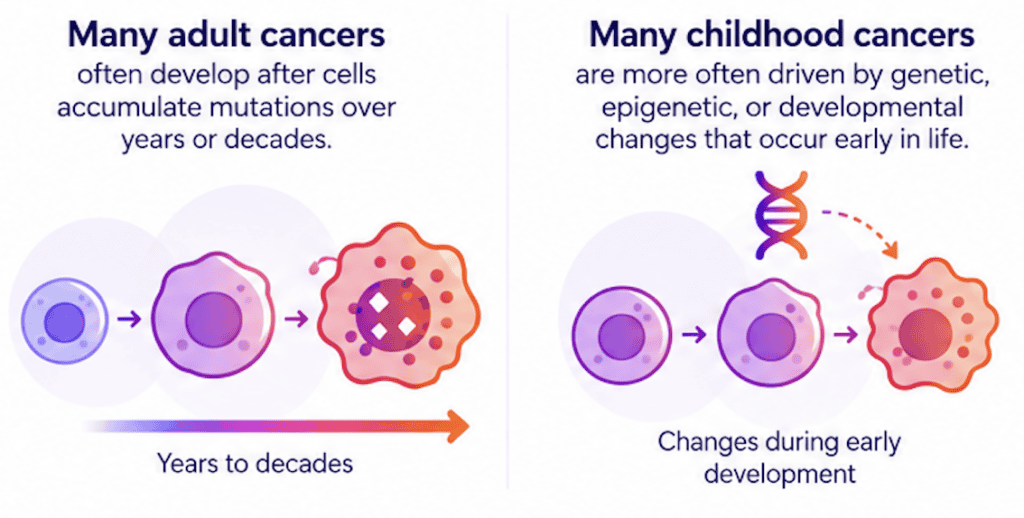
To understand why traditional cancer treatments often fall short for children, one must first recognize the fundamental difference in how these diseases arise. In adult oncology, cancer is frequently the cumulative result of decades of cellular damage, environmental exposures, and the slow accumulation of genetic mutations.
Childhood cancer follows an entirely different trajectory. According to Dr. Majzner, these cancers are often "a product of aberrant development." They are not the result of a lifetime of wear and tear, but rather the consequence of errors occurring during the rapid, complex process of early human development. When cells are meant to differentiate and mature, a genetic or epigenetic "glitch" can arrest that development, trapping cells in a malignant, immature state.
This biological distinction creates a massive hurdle for standard immunotherapies, particularly immune checkpoint inhibitors. These drugs, which have revolutionized treatment for adult cancers like melanoma and lung cancer, function by releasing the "brakes" on the immune system, allowing T cells to recognize and attack tumors. However, this mechanism relies on the presence of high mutational loads—"flags" that the immune system can easily identify. Many pediatric cancers, by contrast, are "cold" tumors; they possess few mutations and offer little for the immune system to see. Simply releasing the brakes is ineffective if the T cells were never engaged in the first place.
Chronology of Innovation: From Basic Science to Clinical Hope
The evolution of pediatric immunotherapy has been a painstaking journey, marked by both profound breakthroughs and necessary pivot points.
- The Early Era (1970s–1990s): Pediatric oncology focused heavily on cytotoxic chemotherapy. While survival rates climbed, the toxicity of these treatments became a major concern for long-term survivorship.
- The Rise of Targeted Therapy (2000s): Researchers began identifying specific genetic drivers of pediatric tumors, leading to the development of precision inhibitors.
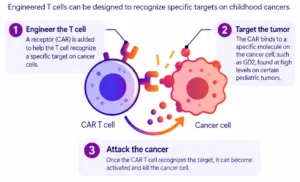
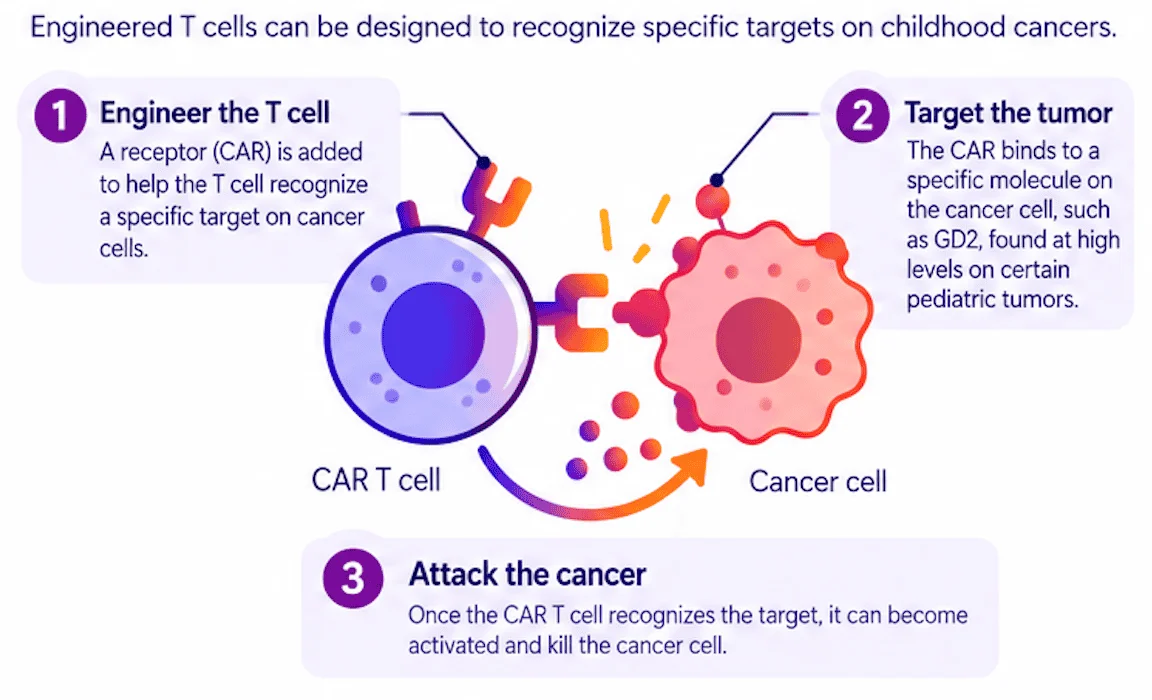
- The CAR T-Cell Breakthrough (2010s): The emergence of Chimeric Antigen Receptor (CAR) T-cell therapy changed the landscape for pediatric leukemia. By engineering a patient’s own T cells to hunt specific antigens, scientists successfully created a "synthetic immune response."
- The Current Frontier (2020s): The focus has expanded to solid tumors. Researchers like Dr. Majzner are now applying the lessons learned from leukemia to aggressive pediatric brain tumors and sarcomas, moving from general therapies to highly specific, engineered cellular interventions.
Supporting Data: The Case for Targeted Engineering
The efficacy of the "synthetic immune response" is best exemplified by the work surrounding GD2, a molecule expressed at high levels on the surface of certain pediatric solid tumors.
In collaboration with teams at Stanford University, Dr. Majzner demonstrated that the biology of diffuse midline glioma (DMG)—a devastating pediatric brain tumor—directly drives the expression of GD2. This finding was a critical turning point; it provided a logical target for CAR T-cell therapy.
Clinical data from these early trials have been encouraging. Patients have shown significant neurological improvement and, in some cases, durable, long-term responses that were previously thought impossible. These results provide empirical evidence that when the immune system is "guided" to the correct target, it can successfully navigate the complexities of the pediatric tumor microenvironment.
Official Perspectives: The Philosophy of High-Risk Research
The ability to pursue these high-risk, high-reward avenues is largely dependent on institutional support that prioritizes long-term vision over short-term metrics. As a CRI Lloyd J. Old STAR, Dr. Majzner benefits from flexible funding that allows him to delve into the fundamental mechanics of T-cell signaling.
"If you just shut down all high-risk ideas, we will never get new technologies," Dr. Majzner remarked during a recent interview with the Cancer Research Institute. He emphasizes that the cutting-edge receptors his lab develops today are built upon decades-old, foundational research into T-cell signaling—work that was conducted long before its life-saving applications were even imagined.
This philosophy is essential for the future of the field. By funding basic, discovery-oriented research, organizations like the CRI ensure that the next generation of therapies has a deep scientific foundation.
Implications: The Future of Pediatric Oncology
The trajectory of pediatric cancer research is now firmly pointed toward personalization and precision. As we look toward the future, several key trends are beginning to emerge:
1. Beyond the Lab: In Vivo Engineering
One of the most ambitious goals in current immunotherapy is the development of in vivo CAR T-cell therapy. Currently, CAR T-cell manufacturing is an expensive, time-consuming process involving the removal, modification, and re-infusion of a patient’s cells. Researchers are now exploring ways to engineer these cells directly inside the body, which could make these therapies more accessible, faster to deploy, and significantly less burdensome for young patients.
2. The Quest for "Healthy Survivorship"
The next chapter of pediatric cancer care is not merely about extending life; it is about extending the quality of life. By developing immunotherapies that are more targeted and less systemic than traditional chemotherapy, scientists hope to reduce the lifelong complications that currently plague survivors, such as secondary cancers, organ damage, and cognitive delays.
3. A Multi-Modal Approach
Future treatment plans will likely integrate multiple modalities. Antibody-drug conjugates (ADCs) and novel checkpoint inhibitors are being tested in combination with cell therapies to create a "pincer movement" against resistant tumors. This multi-pronged approach aims to prevent tumor escape—the process by which cancer cells adapt to evade a single type of therapy.
Conclusion: A New Standard of Care
The progress made in pediatric oncology over the last half-century is a testament to the power of dedicated scientific inquiry. Yet, as Dr. Majzner and his colleagues remind us, the work is far from finished. We are moving away from the era of borrowing adult protocols and into an era of bespoke, biologically driven design.
For the children currently facing these diagnoses, and for the families who navigate the long, uncertain road of survivorship, this shift offers a new kind of hope. It is a future where the treatments themselves are as sophisticated as the diseases they aim to eradicate, and where the goal is not just survival, but a long, healthy life beyond the clinic walls.
As the scientific community continues to unravel the unique immunobiology of childhood, one thing is certain: the next breakthrough will not be a trickle-down success, but a hard-earned, tailor-made victory for the next generation.