









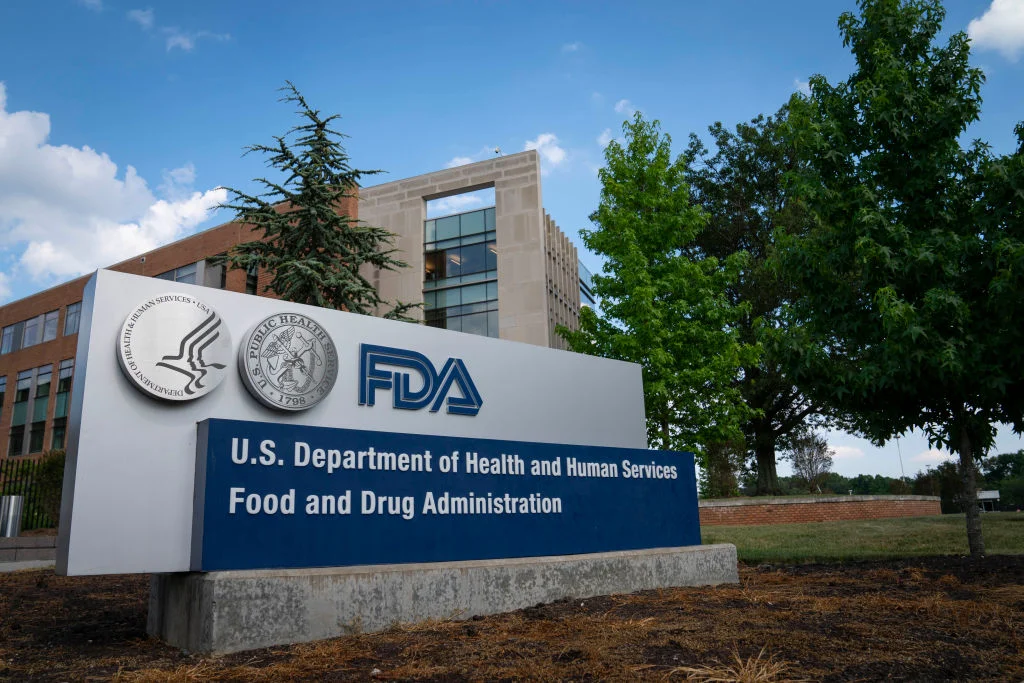
For over four decades, the U.S. Food and Drug Administration (FDA) has operated under a rigid, siloed structure designed in a different era of medicine. Today, as the agency faces a period of unprecedented administrative upheaval, internal friction, and external scrutiny, former leaders are stepping forward to argue that the FDA’s foundational architecture is not just showing its age—it is hindering the future of public health.
In a recent panel discussion hosted by STAT on the sidelines of the American Society of Clinical Oncology (ASCO) annual meeting in Chicago, three former high-ranking FDA officials offered a scathing critique of the current state of the agency. Their collective message was clear: the FDA requires more than a temporary fix; it demands a fundamental, modernizing structural redesign to survive, let alone thrive, in an era of complex biologics and political volatility.
The Main Facts: An Agency at a Crossroads
The debate centers on the FDA’s primary regulatory bodies: the Center for Drug Evaluation and Research (CDER), which oversees small molecule drugs, and the Center for Biologics Evaluation and Research (CBER), which governs biologics.
Rick Pazdur, the legendary former director of the FDA’s Oncology Center of Excellence (OCE) and a 26-year veteran of the agency, contends that this binary division is an anachronism. In an era where the lines between chemistry and biology are increasingly blurred by cell and gene therapies, Pazdur argues that the FDA should move toward a more specialized, disease-centric model. His proposal? Dismantle the current center-based hierarchy in favor of specialized units dedicated to specific therapeutic areas—such as oncology, neurology, cardiovascular health, infectious disease, and manufacturing—each operating with the agility required for modern science.
However, this call for reform comes at a time when the agency is struggling with existential challenges. Following the departure of numerous veteran leaders and a transition under the current administration that prioritized top-down efficiency over consensus-building, the FDA’s reputation for scientific independence is being tested.
Chronology: The Erosion of Stability
The current crisis did not emerge overnight. It is the culmination of years of structural inertia and recent aggressive administrative changes.
- Late 20th Century: The FDA establishes its current structure, with CDER and CBER as the primary gatekeepers for medical product regulation.
- 2017–2024: Rick Pazdur successfully leads the Oncology Center of Excellence, creating a template for cross-agency collaboration that some hope will become the agency-wide standard.
- December 2024: Rick Pazdur concludes his 26-year tenure at the FDA, following a brief stint as acting director of CDER.
- Early 2025: The current administration initiates a series of layoffs and leadership shifts, citing goals of efficiency and bureaucracy reduction. Observers note that these changes appear to be imposed from the top down, bypassing traditional FDA consensus-building mechanisms.
- May 2025: Nicole Gormley, the division director for hematologic malignancies, resigns. She cites a shift in the agency’s culture, specifically noting that the firewall between political influence and scientific review—a bedrock of the FDA’s credibility—has been compromised.
- June 2025: During the STAT event at ASCO, Pazdur, Gormley, and former oncology division director Harpreet Singh discuss the state of the agency, painting a picture of an institution under "extreme pressure."
Supporting Data: The Cost of "Infeasible" Regulation
The panel discussion highlighted the gap between regulatory theory and industrial reality. Harpreet Singh, who left her post as division director for oncology in 2024, provided a rare, candid look at the burden placed on both regulators and the private sector.
During her time at the FDA, Singh admitted that many of the requirements she was tasked with imposing on drug developers were "close to infeasible or very challenging." This realization, she noted, only deepened after she transitioned out of the agency and gained a broader view of the clinical trial landscape.
The data suggests that the FDA’s current workload is unsustainable. With acting leaders filling key roles—including the Acting Commissioner, Kyle Diamontas—the agency lacks the long-term vision needed to refine these regulatory expectations. The panel noted that the agency currently has acting directors for both CDER and CBER, with little expectation of permanent appointments until after the November midterm elections.
Official Responses and Political Friction
The atmosphere within the FDA is characterized by a palpable sense of apprehension. When asked about the changes implemented by the current administration, Pazdur was careful to avoid simple partisanship while remaining firm on principle.
"This is a golden opportunity for us, not to criticize and bemoan the agency, but to really step up to the plate and swing the bat," Pazdur said. However, he warned that the recent trend of political appointees overriding scientific decisions is a dangerous precedent. The "firewall" that historically shielded the FDA’s review process from political interference is, according to these former leaders, under active attack.
Nicole Gormley echoed this sentiment, noting that her decision to leave was driven by the erosion of the agency’s core principles. "The core principles that undergird the agency were under challenge," she stated. For Gormley, the path forward is not found in a specific political ideology but in the restoration of a culture that prioritizes science above all else.
Implications: A Roadmap for Recovery
If the FDA is to regain its status as the world’s gold standard for regulatory science, the panelists believe three major shifts are required:
1. Structural Reorganization
The "center-based" model must evolve. By decentralizing into therapeutic-area units, the agency could reduce the bottleneck effect that currently plagues CDER and CBER. This would allow for more focused expertise and faster, more nuanced regulatory pathways.
2. A "Revolving Door" of Academic Expertise
Pazdur suggested a formalized program to bring academic experts into the FDA on a temporary, rotating basis. This would not only provide the agency with cutting-edge scientific knowledge but would also help alleviate the severe staffing shortages that have plagued the agency since the recent rounds of departures.
3. Restoring Institutional Autonomy
The most significant implication of the recent exodus is the loss of institutional memory. To recruit top-tier talent back to the agency, the FDA must demonstrate that it is a safe harbor for science. As Gormley noted, "We need to have an independent agency that can just focus on the science. If you have that, then I think you’ll attract good candidates."
4. The Need for Stability
The absence of a permanent commissioner is a signal of instability that ripples throughout the entire pharmaceutical and biotech industry. Without a permanent, senate-confirmed leader, the agency is effectively in a "holding pattern," unable to implement the long-term structural changes Pazdur advocates for.
Conclusion: The Question of Leadership
As the moderator, Matt Herper, posed the question on everyone’s mind—whether Rick Pazdur would consider returning as FDA Commissioner—the room fell silent. Pazdur, a man who has dedicated his entire professional life to the halls of the agency, did not dismiss the idea outright, but he offered a modest response: "I have lived my life at the FDA. It has been my life. I want the place to succeed, and I will leave it at that."
The future of the FDA remains uncertain. Whether the agency can pivot from its current, politically fraught state toward a modernized, scientific-first model depends on a bipartisan recognition of its value. As these former leaders have demonstrated, the agency is not just a government building in Silver Spring; it is a vital pillar of the global medical ecosystem that requires constant, principled defense to function. The challenge for the coming year is to ensure that the FDA remains an institution that serves patients, not politics.