By International News Desk
The World Health Organization (WHO) has offered a glimmer of cautious optimism this week, stating that the international and domestic response to the Ebola virus outbreak in the Democratic Republic of the Congo (DRC) is finally "catching up" with the pathogen’s rapid transmission. However, as medical teams gain ground, health officials warn that the crisis is far from resolved. With over 340 confirmed cases and the virus now breaching international borders, the situation remains a precarious intersection of a public health emergency and a complex humanitarian disaster.
For the residents of the DRC’s northeast, the arrival of Ebola is not merely a biological threat; it is a compounding tragedy in a region already defined by decades of systemic instability, displacement, and chronic violence.
Main Facts: The Current State of the Outbreak
The current Ebola outbreak, which has escalated rapidly since it was officially declared on May 15, has now permeated more than 20 distinct health zones. The epicenter, located in the Ituri province—a region situated roughly 950 miles from the capital, Kinshasa—has become the focal point of a massive logistical and medical mobilization.
As of the latest reporting, the confirmed death toll stands at 60, with at least 344 individuals suffering from the highly contagious viral hemorrhagic fever. The scale of the outbreak has overwhelmed local medical facilities, many of which lack the basic infrastructure, bed capacity, and specialized isolation units required to manage an Ebola crisis. In recent weeks, the surge of patients forced hospitals to turn away the sick, prompting an urgent international call for aid.
The response has seen millions of dollars in emergency funding funneled into the region, facilitating the airlift of critical medical supplies and the rapid construction of specialized treatment centers. Despite these efforts, the virus continues to outpace containment measures, threatening to destabilize the broader Great Lakes region of Africa.
Chronology of a Crisis: From May 15 to the Present
The trajectory of this outbreak reflects the difficulty of identifying and isolating cases in a landscape of fragmented governance.
- May 15: The outbreak is formally declared. Initial data suggests the transmission is localized to three primary areas: Rwampara, Mongbwalu, and the provincial capital of Bunia.
- Late May to Early June: The virus spreads rapidly beyond initial containment zones. Surveillance teams note a shift in transmission patterns as the disease moves into more remote and conflict-ridden areas.
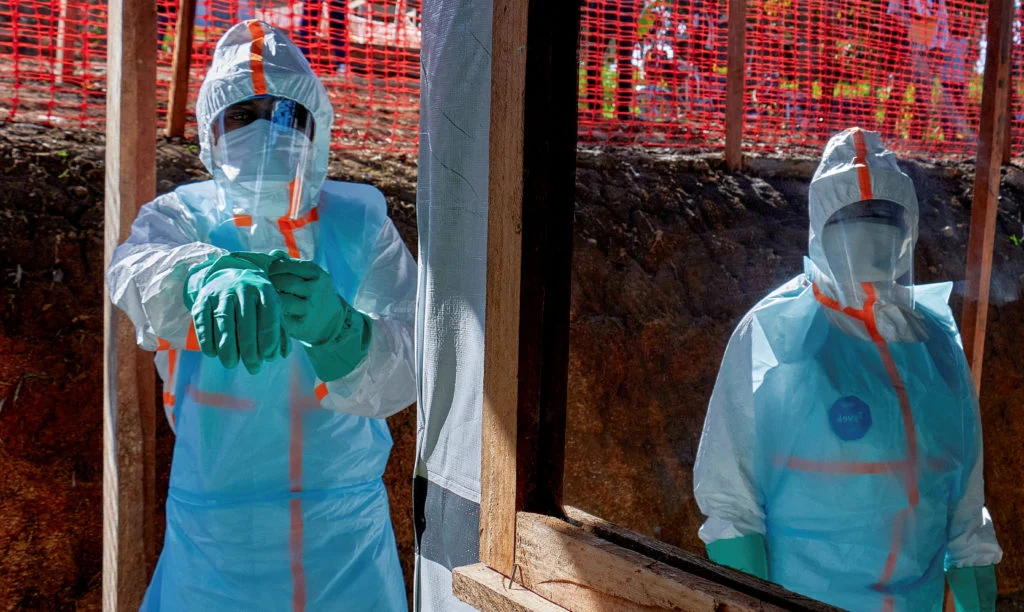
- Mid-June: The surge in suspected cases overwhelms local health facilities. Images from the frontlines show medical staff operating without adequate resources, leading to the first major international appeals for equipment and specialized personnel.
- Late June: The WHO reports that while the response is "catching up," the geographic spread has reached 20 health zones. Critically, the virus crosses into neighboring Uganda, raising the alarm for regional health authorities.
- July: International aid, including medical kits, vaccines, and logistics support, reaches Ituri province. However, security concerns remain the primary obstacle to ongoing surveillance and contact tracing.
Supporting Data: The Logistics of a High-Stakes Response
The sheer geography of the DRC presents an almost insurmountable challenge. Kinshasa, the administrative center of the country, is nearly 1,000 miles from the epicenter in Ituri. To put this in perspective for an international audience, that distance is roughly equivalent to the span between Jackson, Mississippi, and Washington, D.C.
The logistical burden of moving personnel, PPE, vaccines, and refrigeration units across such a vast, underdeveloped landscape cannot be overstated. Health workers face a "race against time" to identify contacts before they become symptomatic. Contact tracing—the process of tracking every individual who has crossed paths with an infected person—is the backbone of Ebola containment. In the DRC, however, this task is hampered by the lack of infrastructure, making rapid movement between remote villages and treatment centers nearly impossible without robust air support.
The Intersection of Conflict and Contagion
Perhaps the most significant barrier to eradicating this outbreak is the presence of active, militant rebel groups within the Ituri region. The humanitarian landscape is crowded with armed factions, including the CODECO militia, the Allied Democratic Forces (ADF), and various groups under the banner of "Zaire."
The "Fertile Ground" for Disease
Violence in the northeast has displaced thousands of civilians, forcing them into overcrowded camps. These camps are the antithesis of what is required for infection control. In conditions where social distancing is a luxury of the impossible, the virus thrives. Health workers report that the lack of space and the constant movement of people fleeing conflict create a "fertile area" for the rapid spread of the pathogen.
Security as a Medical Prerequisite
For contact tracing to work, health workers must be able to move freely and safely between communities. When rebel groups control entire swathes of territory—as is the case with M23 in parts of eastern DRC—the health apparatus is effectively paralyzed. The DRC government and international partners have issued repeated pleas to warring parties for ceasefires, arguing that the virus does not distinguish between combatant and civilian. Without a period of relative peace, the transmission chains will continue to regenerate, rendering even the most sophisticated treatment centers insufficient.
Implications: Economic and Regional Fallout
The Ebola crisis is far more than a medical emergency; it is an economic catastrophe for the populations it touches. The Ituri province is a border region, and for many residents, survival depends on petty trade between the DRC, Uganda, and South Sudan.
Border Closures and Livelihoods
In response to the outbreak, Uganda has taken the sovereign decision to shut its border with the DRC. While intended to prevent the cross-border transmission of the virus, the move has effectively severed the economic lifeline for thousands of families. Residents who rely on daily cross-border commerce have seen their income evaporate overnight.
The World Health Organization has consistently advocated against such measures, warning that closing borders often forces traders to use "unofficial" crossings, which are entirely unmonitored and actually increase the risk of disease spread. The WHO argues that the priority should be "stepping up screening and surveillance" at official border points rather than total shutdowns, which exacerbate the misery of local populations without providing a guaranteed medical barrier.
A Warning for Neighboring Nations
South Sudan remains on high alert, closely monitoring the developments in the DRC. The threat of the virus spilling over into more densely populated regions or areas with even weaker health systems remains a persistent fear for the international community.
Official Responses and the Path Forward
As of this week, the strategy is shifting toward a more aggressive, localized approach. With millions of dollars now flowing into the response, the focus is on two fronts:
- Scaling up Treatment: Building more, better-equipped treatment centers in the heart of the affected zones to ensure that no patient is turned away.
- Negotiated Access: Increasing diplomatic pressure on local militias to allow humanitarian corridors. The health of the entire region depends on the ability of doctors to reach those in the most volatile zones.
"We are in a race against time," noted one health official on the ground. The, as of yet, uncontained nature of this outbreak serves as a grim reminder that in a globalized world, a health crisis in one corner of the Congo has immediate, life-altering consequences for its neighbors and the global community at large.
The coming weeks will be critical. If the current momentum can be sustained, and if security can be guaranteed for the brave health workers navigating the conflict zones, there is a path to containment. If not, the current 340-case count could easily serve as a prelude to a much larger, and far more devastating, public health catastrophe.