








While the medical community has long championed aerobic exercise—the brisk walks, cycling sessions, and swimming laps—as the bedrock of longevity, a groundbreaking new study suggests that we may have been overlooking a vital component of the healthy aging puzzle: raw muscular strength.
New research led by the University at Buffalo (UB) has revealed that for women over the age of 60, physical strength is not merely a marker of vitality; it is a critical, independent predictor of survival. The study, published in JAMA Network Open, posits that even when accounting for cardiovascular fitness, physical activity levels, and systemic inflammation, women who possess greater muscle strength experience a significantly lower risk of death.
The Core Findings: Strength as a Longevity Marker
The research, which stands as the largest of its kind to date, followed more than 5,000 women between the ages of 63 and 99 over an eight-year period. By utilizing two standard, easily reproducible clinical assessments—grip strength and a sit-to-stand chair test—researchers were able to quantify the life-extending benefits of maintaining muscular power in later life.
The data revealed a clear, dose-dependent relationship between muscle function and mortality. For every 7-kilogram increase in grip strength, participants showed an average 12% reduction in their risk of death. Similarly, performance on the sit-to-stand test—a functional measure of lower-body power—proved to be a strong indicator of health outcomes. Women who demonstrated faster times in rising from a seated position five times without assistance saw a 4% lower mortality rate for every 6-second improvement in their performance.
What makes these findings particularly compelling is the rigor with which the researchers isolated muscle strength from other health variables. By adjusting for accelerometer-verified physical activity, gait speed, and levels of C-reactive protein (a blood marker associated with inflammation and muscle wasting), the team confirmed that strength provides a unique protective benefit that cannot be entirely explained by aerobic health alone.
A Chronology of Research: Filling the Data Gap
For decades, public health messaging has prioritized aerobic exercise, largely due to the abundance of data linking heart health to reduced mortality. However, older studies often suffered from a "blind spot" regarding muscle health, failing to adequately account for the nuances of physical activity, inflammation, and body composition.
This study, a collaborative effort involving experts from the National Cancer Institute, the University of California San Diego, Texas A&M, Brown University, Stanford, and the Fred Hutch Cancer Center, sought to fill that gap.
The research trajectory began by identifying a cohort of older women and tracking their physical baseline through objective tests rather than self-reported data. Over the eight-year follow-up period, the researchers meticulously monitored health outcomes, ensuring that factors such as body size, lean muscle mass, and sedentary behavior were normalized. The conclusion was consistent across all demographics: whether the researchers scaled strength measures to total body weight or lean body mass, the link between high strength and low mortality remained statistically significant.
Why Strength Matters: The Mechanics of Mobility
To understand why muscle strength is so fundamental to survival, one must look at the mechanics of daily existence. Dr. Michael LaMonte, the study’s lead author and a research professor of epidemiology and environmental health at UB’s School of Public Health and Health Professions, emphasizes that strength is the prerequisite for all other forms of physical movement.
"If you don’t have enough muscle strength to get up, it is going to be hard to do aerobic activities, such as walking, which is the most commonly reported recreational activity in U.S. adults ages 65 and older," Dr. LaMonte explains. "Muscular strength, in many ways, enables one to move their body from one point to another, particularly when moving against gravity."
The implications are cyclical: when an individual loses the strength to perform basic functional movements—like rising from a chair—they become less mobile. This leads to a decline in aerobic activity, which further degrades cardiovascular health and muscle mass. As Dr. LaMonte notes, "When we no longer can get out of the chair and move around, we are in trouble."
Challenging the Status Quo: Beyond Current Guidelines
Perhaps the most provocative aspect of the UB study is its challenge to current public health recommendations. Current guidelines suggest that older adults should aim for at least 150 minutes of moderate-intensity aerobic activity each week. While these guidelines are effective, the study found that women who failed to meet this threshold still enjoyed the survival benefits of muscle strength.
This suggests that for many older adults, the current "cardio-first" advice may be missing the forest for the trees. By placing a greater emphasis on muscle-strengthening activities, public health officials could potentially improve health outcomes for populations who find high-intensity aerobic exercise daunting or physically impossible.
"Because women ages 80 and older are the fastest-growing U.S. age group, the importance of monitoring and maintaining muscular strength will have huge public health implications in the coming decades," Dr. LaMonte states. He argues that muscle training should be elevated from a "supplemental" activity to a central pillar of geriatric care.
Practical Implications: How to Build Strength at Any Age
A common misconception is that building muscle requires a high-end gym membership or the ability to lift heavy Olympic plates. The researchers are keen to dispel this myth. Strength training is a spectrum, and for the aging population, it is about maintaining functional capacity through consistent, low-impact stimulus.
Simple Strategies for Home-Based Strength Training:
- Bodyweight Exercises: Movements such as modified push-ups (against a wall or counter), knee bends (squats), and lunges provide effective resistance that builds muscle while improving balance and coordination.
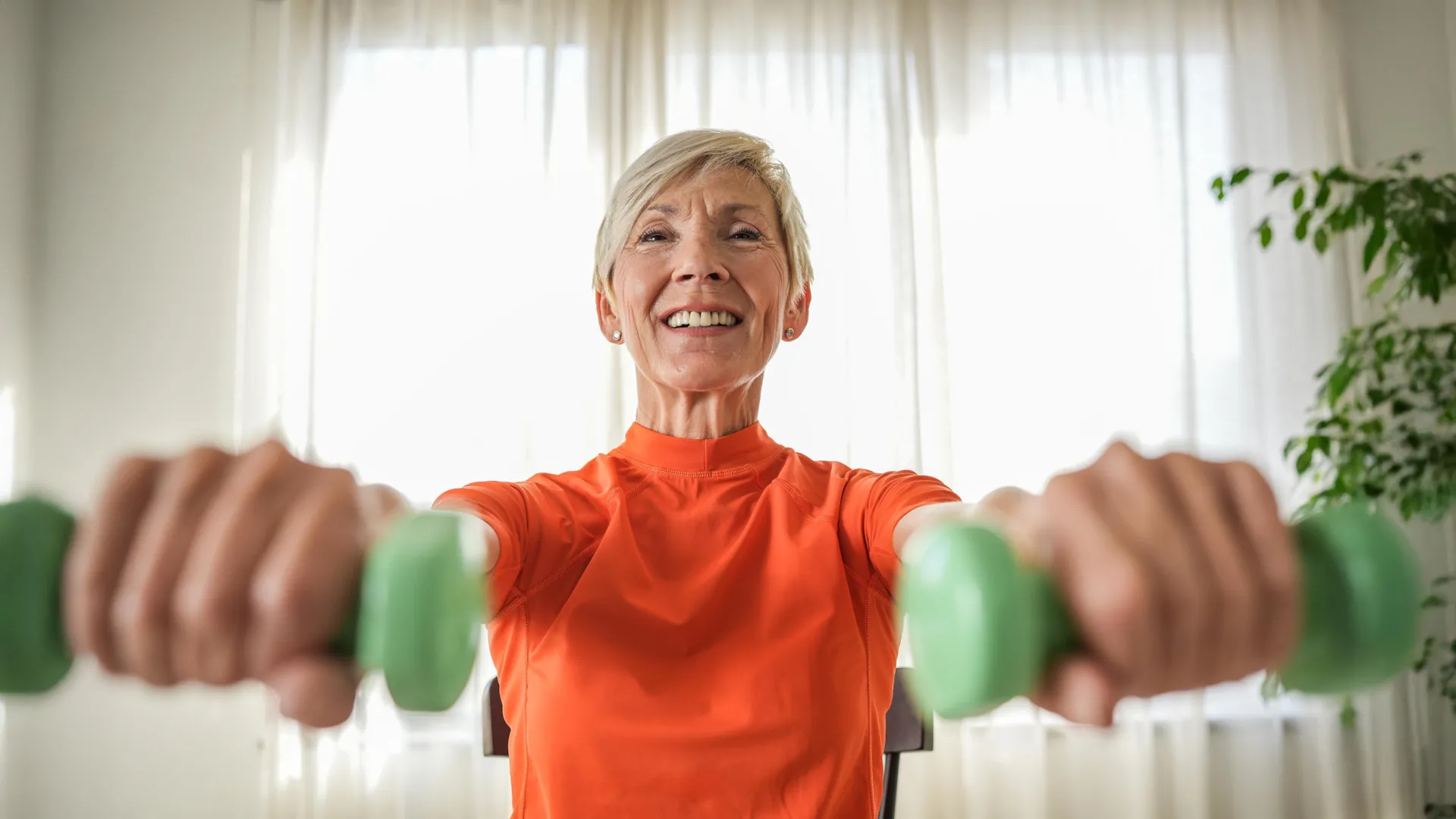
- Everyday Resistance: Household objects are often overlooked as training tools. Dr. LaMonte notes that soup cans, water bottles, or even heavy books can serve as effective dumbbells for bicep curls or shoulder presses.
- Resistance Bands: These are inexpensive, low-risk, and highly versatile, allowing for a wide range of motion without the potential joint strain associated with heavy metal weights.
- Consistency Over Intensity: The goal is not to train for a powerlifting competition but to provide a regular stimulus to skeletal muscles to prevent atrophy.
A Note on Safety
While the benefits are clear, the researchers emphasize that any new exercise regimen should begin with a consultation with a healthcare provider. For those who are nervous about beginning a strength program, seeking the guidance of a physical therapist or a certified exercise specialist can ensure that movements are performed safely, with proper form, and at a pace that is appropriate for the individual’s current fitness level.
Looking Ahead: The Future of Geriatric Public Health
The findings from this large-scale study serve as a clarion call for a shift in how we approach aging. We are currently witnessing a "silver tsunami," with the population of octogenarians and nonagenarians growing faster than any other age bracket. As life expectancy increases, the primary medical goal must shift from simply "adding years to life" to "adding life to years."
By focusing on muscle strength, medical professionals can offer their patients a tangible, measurable, and achievable path toward independence and longevity. The study proves that we are not necessarily prisoners of our biology as we age. With the right focus on maintaining the physical power to navigate the world—to stand from a chair, to carry groceries, to walk with confidence—we can significantly reduce the risk of early mortality.
In the final analysis, strength is not just about the appearance of fitness; it is the fundamental machinery of life. As Dr. LaMonte suggests, "Healthy aging probably is best pursued through adequate amounts of both aerobic and muscle-strengthening physical activities." For older women, the message is clear: the ability to move with strength is the ultimate hedge against the decline of age, and it is never too late to begin building that foundation.