






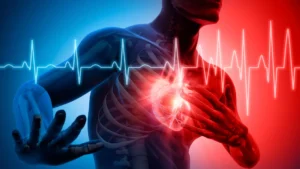



Heart disease remains the most formidable adversary to global human health, claiming approximately 17.9 million lives annually according to World Health Organization (WHO) data. For decades, the medical community has operated under the fundamental paradigm that cardiovascular health is primarily a battle against "bad cholesterol"—specifically, low-density lipoprotein (LDL). While lowering LDL levels has undoubtedly saved millions of lives, clinicians have long been haunted by the "residual risk" phenomenon: patients who achieve optimal LDL levels but continue to suffer from heart attacks and strokes.
New research from the Chalmers University of Technology in Sweden has now provided a compelling biological explanation for this clinical mystery. By utilizing advanced proteomics, researchers have uncovered that heart disease is not merely a problem of cholesterol accumulation, but a complex interaction involving immune system activation and inflammation driven by specific fat-carrying particles.
The Foundation of Cardiovascular Risk: The LDL Paradigm
To understand the significance of this breakthrough, one must first understand the current standard of care. Coronary heart disease (CHD) is essentially an inflammatory and structural failure of the arteries. As fatty deposits—plaques—build up within the arterial walls, they narrow the passageways, restricting blood flow to the heart. When these plaques rupture, they trigger the formation of blood clots, which can result in a myocardial infarction (heart attack) or stroke.
Because cholesterol is hydrophobic, it cannot circulate through the bloodstream unaided. It requires "ferries" known as lipoproteins. These particles contain a structural protein called apolipoprotein B (apoB). For years, medical science has focused on the quantity of cholesterol transported by these particles. However, the Chalmers study suggests that the nature of the particles themselves—and the proteins they carry—may be just as critical as the cholesterol content they transport.
Chronology: A New Scientific Trajectory
The investigation into residual cardiovascular risk has evolved through several distinct phases, culminating in the recent findings published in the European Heart Journal.
- The Early Focus (Pre-2010s): Medical science primarily focused on serum LDL cholesterol levels as the gold standard for predicting risk.
- The Particle Count Shift: Research by the Chalmers group and others previously identified that counting the total number of harmful lipoprotein particles (apoB-containing particles) was a more accurate predictor of future cardiac events than measuring cholesterol mass alone.
- The Proteomic Breakthrough (Present Study): The team moved beyond simple counting, employing "proteomics analysis" to catalog nearly 3,000 proteins in the blood. This allowed researchers to observe not just the presence of lipoproteins, but the biological "cargo" and inflammatory signals associated with three distinct types: LDL, triglyceride-rich lipoproteins (TRL), and lipoprotein(a) (Lp(a)).
Supporting Data: Dissecting the Three Pathways
The researchers analyzed the biological footprints of three distinct lipoprotein classes, revealing that they do not all contribute to cardiovascular disease in the same way.
1. The Role of LDL: The Cholesterol Accumulator
The study confirmed that LDL is primarily associated with the passive accumulation of cholesterol within arterial walls. Its protein signature is focused on the mechanisms of cholesterol transport and deposition. While critical to address, the research suggests that targeting LDL is only one piece of a much larger, more nuanced puzzle.
2. The TRL and Lp(a) Factor: The Inflammatory Drivers
Perhaps the most striking discovery involved the "hidden" dangers of TRL and Lp(a). When researchers mapped the proteins associated with these particles, they found a significant overlap. Unlike the "clean" cholesterol-depositing nature of LDL, TRL and Lp(a) particles were found to carry proteins that actively recruit immune cells.
This suggests that TRL and Lp(a) do not just clog arteries; they "inflame" them. By attracting immune cells to the arterial wall, these particles potentially accelerate the development of unstable, rupture-prone plaques. This biological activity provides a clear mechanism for why patients with "normal" LDL levels remain at risk: if the underlying inflammatory process is being driven by TRL or Lp(a), lowering LDL alone will not silence the immune response.
3. Understanding Proteomics as a Diagnostic Lens
The power of this research lies in its methodology. While genomics provides a static map of an individual’s DNA, proteomics provides a dynamic snapshot of the body’s physiological state at any given moment. Proteins respond to lifestyle, diet, stress, and medication. By analyzing 3,000 proteins simultaneously, the Chalmers team created a "molecular map" that links specific lipoprotein particles to specific disease processes—such as inflammation—rather than just observing the end-stage result of arterial blockage.
Official Perspectives: Translating Findings to the Clinic
The lead authors of the study, Dr. Jakub Morze and Assistant Professor Clemens Wittenbecher, emphasize that this research is not a call to abandon current treatment guidelines, but rather a blueprint for the future of precision medicine.
"Lowering LDL cholesterol remains a cornerstone of prevention," says Dr. Wittenbecher, who serves as Assistant Professor of Precision Medicine and Diagnostics at Chalmers. "Our findings point to biological processes that may help explain some of the risk that remains beyond LDL. The next step is to establish whether measuring or targeting these processes can improve prevention alongside existing treatments."
Dr. Morze highlights the importance of the TRL and Lp(a) connection, noting that the shared protein patterns between these two particles suggest a common therapeutic target. "The overlap for TRL and Lp(a) is one of the most interesting findings," Morze explains. "It suggests that these particles may affect some of the same inflammatory and vascular processes. This could help identify targets for more precisely directed prevention in the future."
Implications: The Future of Heart Disease Prevention
The implications of this study are twofold: diagnostic and therapeutic.
Diagnostic Evolution
If these protein patterns can be verified in larger, diverse populations, clinicians may eventually move toward "protein profiling" as part of a routine cardiovascular risk assessment. Instead of relying solely on a cholesterol panel, a patient’s risk profile could be refined by assessing their individual TRL and Lp(a) inflammatory activity. This would allow for a more personalized "risk score" that identifies which patients need more aggressive intervention, even if their LDL is already within the recommended range.
Therapeutic Innovation
Currently, many drugs target the liver to increase the clearance of cholesterol. The discovery that TRL and Lp(a) drive inflammation suggests that future therapies might need to target the immune response associated with these particles. By inhibiting the specific proteins that attract immune cells to the arterial wall, researchers might be able to stabilize plaques or prevent their formation entirely, effectively "cooling" the inflammation that leads to heart attacks.
A New Era of Precision Cardiology
The research conducted at the Chalmers University of Technology, in collaboration with an international network of institutions including Harvard Medical School and the University of Gothenburg, marks a turning point in cardiology. It transitions the field away from a "one-size-fits-all" approach to cholesterol management toward a granular understanding of how fat-carrying particles interact with the body’s immune system.
While the study does not immediately introduce a new clinical test or a new drug, it provides the "missing link" that has eluded scientists for years. By identifying that the risk beyond LDL is driven by inflammatory processes linked to TRL and Lp(a), the medical community now has a clear path forward. The challenge for the coming decade will be to translate these molecular insights into clinical tools that can finally close the gap in heart disease prevention, offering hope to the millions of patients who are currently doing "everything right" yet remain at risk.
As science moves closer to deciphering the complexities of human blood chemistry, one thing is clear: the future of heart health will be written not just in the cholesterol numbers we measure today, but in the proteins that dictate how our bodies respond to the fats that circulate within us.