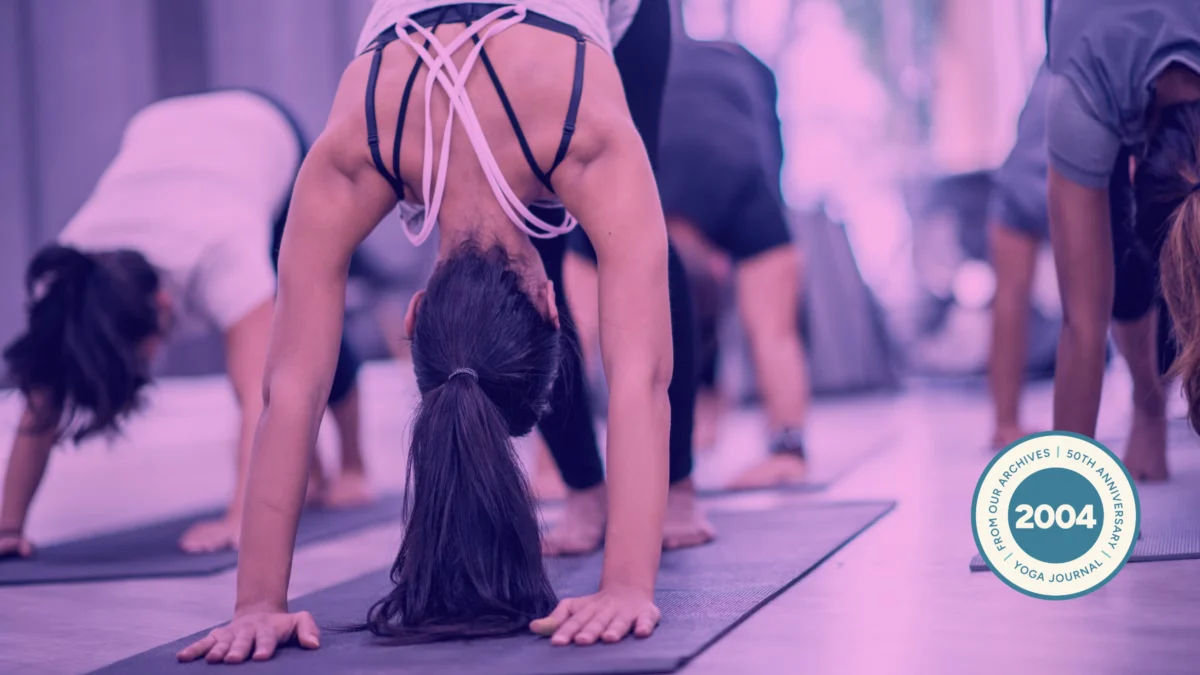
Originally published in the May-June 2004 issue of Yoga Journal, this archival feature remains a cornerstone for practitioners looking to integrate functional fitness into their daily practice. Updated May 27, 2026.
Whether you are navigating the mundane physical demands of daily life—hauling heavy grocery bags, hoisting a toddler into a car seat, or maneuvering a cumbersome suitcase through a busy airport—the utility of strong, resilient arms cannot be overstated. While traditional strength training is often the first solution that comes to mind, a growing body of evidence and instructor consensus suggests that yoga is a highly effective, multifaceted modality for sculpting the upper body.
"Strong arms make the rest of your life easier," says yoga instructor Leigh Crews. By leveraging body weight against the force of gravity, yogis can achieve significant hypertrophy and muscular endurance, often without the need for external resistance equipment.
The Anatomy of Arm Strength: A Biological Overview
To effectively build strength, one must understand the biomechanics of the upper body. Everyday activities rely on a complex interplay between the biceps, triceps, and deltoids.
- The Biceps: Located along the anterior (front) of the upper arm, these muscles are primarily responsible for elbow flexion.
- The Triceps: Positioned along the posterior (back) of the upper arm, these muscles facilitate the extension of the elbow, essential for pushing movements.
- The Deltoids: These form the cap of the shoulder. They are the primary movers for lifting the arms to the side, front, or back, and are crucial for rotational stability.
Yoga’s approach to these muscle groups differs fundamentally from the mechanical nature of weightlifting. In traditional weight training, a biceps curl represents a "concentric contraction," where the muscle shortens under load. Conversely, "eccentric contraction" occurs when the muscle works while lengthening, such as when lowering a weight with control. Yoga practice integrates both, but uniquely emphasizes "isometric contraction"—a state where the muscle is activated but its length remains constant. This is the hallmark of holding a pose, such as Warrior II or Plank, and it is precisely what builds the endurance required for long-term physical labor.
Chronology of Strength: From Foundation to Mastery
The journey toward functional arm strength in yoga is not an overnight transformation; it is a progressive, cumulative process. For beginners, the focus must remain on establishing a solid foundation.
Phase 1: Building the Base (0–3 Months)
In the initial stages, the goal is to familiarize the body with bearing weight on the hands. During this period, static holds in Downward-Facing Dog and simple variations of Plank are essential. The focus should be on proper alignment—ensuring the wrists are beneath the shoulders and the shoulder blades are stabilized against the ribcage to prevent impingement.
Phase 2: Introducing Dynamic Movement (3–6 Months)
Once the joints are conditioned, the practitioner begins to integrate movement. This is the era of the Sun Salutation (Surya Namaskar). By cycling through Plank, Chaturanga, and Upward-Facing Dog, the practitioner moves from static isometric holds into the dynamic, concentric-eccentric cycle. This phase builds the explosive power necessary for more demanding transitions.
Phase 3: Advanced Stabilization (6+ Months)
With a base of strength established, the practitioner can move toward advanced inversions. Handstand (Adho Mukha Vrksasana) and Headstand (Sirsasana) represent the pinnacle of arm and shoulder conditioning. However, these require not just strength, but an acute awareness of core engagement and spinal alignment. As instructors emphasize, safety is paramount—advanced inversions should only be practiced under the guidance of an experienced teacher who can monitor neck and shoulder safety.
Supporting Data: The Synergy of Yoga and Weight Training
While yoga is a standalone strength modality, experts suggest that combining it with targeted weight training can create a "synergistic effect." Lauren Eirk, a national fitness and yoga educator, suggests that weight training provides the isolated muscular development that yoga occasionally misses.
"Free-weight training is highly complementary to the practice of yoga," Eirk explains. "Yoga lengthens the muscles, which provides the range of motion necessary for deeper, more effective weightlifting. Conversely, lifting helps build the raw power required for challenging yoga arm balances."
The 48-Hour Recovery Rule
Regardless of the methodology, physiological recovery remains a constant. Muscles undergo microscopic tears during high-intensity training; the actual strengthening occurs during the 24 to 48 hours of recovery that follow. Over-training the arms and shoulders daily is a common pitfall that leads to tendonitis and chronic injury. Practitioners are encouraged to sequence their workouts so that the upper body is not taxed on consecutive days, allowing the tissues to repair and adapt.
Official Perspectives: Inclusivity in Strength Training
Strength is not the exclusive domain of the young or the athletic. In her specialized classes for seniors, Leigh Crews has observed that age is rarely a barrier to building muscle.
"I remember a woman who was nearly 70 years old," Crews recalls. "When she first started, she couldn’t hold a standard Plank. But through modified variations and consistent, incremental progress, she eventually mastered the full Side Plank. Her sense of accomplishment was profound, but more importantly, her functional independence in daily life improved significantly."
This highlights a critical implication of yoga-based strength training: it is scalable. Whether it is using a wall for support in Handstand or dropping the knees during Chaturanga, the practice can be adjusted to meet any fitness level, provided there is consistency and attention to form.
Implications for Daily Life and Long-Term Health
The integration of arm-strengthening asanas into a yoga practice has implications that extend far beyond the yoga studio.
- Increased Bone Density: Weight-bearing exercises, including those performed on the hands, stimulate bone remodeling, which is vital for preventing osteoporosis as we age.
- Postural Correction: Strengthening the shoulder girdle helps counteract the "tech-neck" and rounded-shoulder syndrome common in the modern workforce.
- Enhanced Body Awareness: By moving slowly and with intention, practitioners develop a deeper connection to their muscular system, leading to better balance and injury prevention in everyday tasks.
Practical Tips for Immediate Implementation
If your current practice feels light on upper-body engagement, consider these three adjustments to your next session:
- Yoga Push-Ups: Incorporate controlled transitions between Plank and Chaturanga, focusing on keeping the elbows tucked close to the ribs.
- Hand Orientation: Experiment with hand placement. While forward-facing palms are standard, rotating the fingers slightly or pointing them toward the toes can recruit different muscle fibers in the biceps and forearms.
- Plank to Side Plank Transitions: By shifting weight from a centered Plank to a lateral Side Plank, you force the stabilizing muscles of the shoulder girdle to activate, creating a more comprehensive workout than static holding alone.
Ultimately, the goal is to move beyond the aesthetic pursuit of "sculpted" arms and toward the functional pursuit of a capable, resilient body. As you continue your practice, remember that every hold in Downward Dog and every descent into Chaturanga is an investment in your physical autonomy. By approaching these exercises with patience, proper form, and an understanding of the physiological demands, you ensure that your body remains a capable vessel for the many challenges of life.