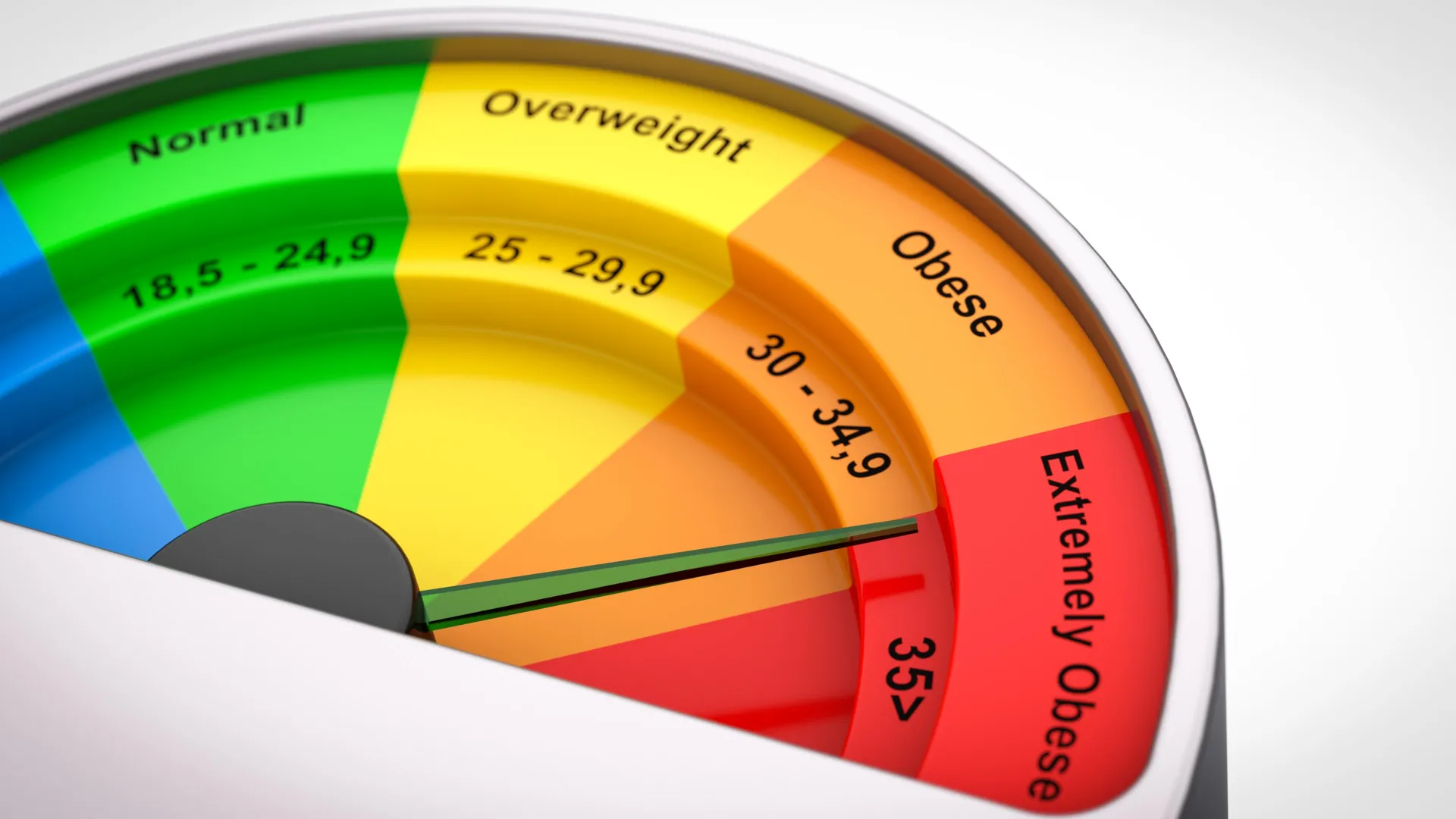
For over a century, the Body Mass Index (BMI)—a simple calculation derived from an individual’s weight and height—has served as the cornerstone of clinical obesity assessment. From the general practitioner’s office to national health policy and insurance underwriting, the formula is ubiquitous. However, a landmark study originating from Italy is now challenging this reliance, suggesting that BMI may be fundamentally misclassifying millions of individuals and failing to capture the true physiological reality of human body composition.
The findings, set to be unveiled at the European Congress on Obesity (ECO 2026) in Istanbul, Turkey, and published in the journal Nutrients, utilize Dual-Energy X-ray Absorptiometry (DXA)—the industry’s "gold standard" for measuring body fat—to expose significant flaws in the traditional BMI framework. The research suggests that by ignoring the distribution and total percentage of body fat, the BMI system is not merely an imperfect tool, but one that leads to widespread diagnostic errors.
The Core Problem: Why BMI Often Misses the Mark
The fundamental critique of BMI is rooted in its simplicity. It is a proxy measure: it calculates mass relative to height without distinguishing between lean muscle mass, bone density, and adipose (fat) tissue.
Professor Marwan El Ghoch, from the Department of Biomedical, Metabolic and Neural Sciences at the University of Modena and Reggio Emilia, notes that BMI’s inability to differentiate between these components makes it a blunt instrument. "BMI does not directly measure body fat, nor does it account for the nuanced ways in which fat is distributed throughout the body," he explains.
While health professionals have long acknowledged that BMI can misclassify athletes (who may have high muscle mass and thus a high BMI) or the elderly (who may have low muscle mass and hidden fat deposits), the new study demonstrates that these inaccuracies are not limited to outliers—they are systemic within the general population.
Chronology: A Rigorous Re-evaluation
To test the efficacy of BMI against more precise metrics, a collaborative team of researchers from the University of Verona and Beirut University initiated a study involving 1,351 adults, aged 18 to 98. The study was conducted at the Department of Neurosciences, Biomedicine and Movement Sciences at the University of Verona.
The Methodology
The research team selected a cohort consisting of 60% female participants, all of whom were White Caucasian. By focusing on a specific ethnic group, the researchers aimed to control for known variations in BMI thresholds across different populations. Every participant underwent a DXA scan, which provides a highly accurate assessment of body fat percentage (BF%).
The Initial Classification
Using standard World Health Organization (WHO) BMI categories, the researchers established a baseline:
- Underweight (BMI <18.5): 19 participants (1.4%)
- Normal Weight (BMI 18.5–25): 787 participants (58.3%)
- Overweight (BMI 25–30): 354 participants (26.2%)
- Obese (BMI >30): 191 participants (14.1%)
Combined, these initial figures suggested that 41% of the cohort was either overweight or obese—a figure perfectly consistent with established health data for the Veneto region of Italy. However, once the researchers swapped the BMI calculation for the DXA-derived body fat percentages, the landscape of the group’s health status shifted dramatically.
Supporting Data: The Magnitude of Misclassification
The study’s findings reveal a disconcerting degree of dissonance between BMI categories and actual physiological health.
The "Obesity" Discrepancy
When participants labeled "obese" by BMI were measured via DXA, more than one-third (34%) were actually reclassified as merely "overweight." This suggests that a substantial portion of the population is being stigmatized or over-treated based on a faulty calculation of their adiposity.
The "Overweight" Inaccuracy
The most striking error occurred within the "overweight" category. Over half (53%) of those labeled overweight by BMI were placed in a different category by the DXA scan. Of this specific sub-group, three-quarters were revealed to be in the "normal weight" range, while the remaining quarter were, in fact, in the "obese" category. This reveals a dangerous dual-threat: many people are unnecessarily worried about their weight, while others may be lulled into a false sense of security, unaware that their body fat levels are actually higher than their BMI suggests.
The "Normal" and "Underweight" Categories
Agreement between the two methods was highest among the "normal weight" group, where 78% of individuals were correctly identified by both systems. However, even here, 22% were found to be misclassified when analyzed with DXA.
Perhaps most alarming was the discrepancy in the "underweight" category. Nearly 70% of those labeled underweight by BMI were found to be of normal weight according to the DXA scan. This suggests that the current BMI cut-off points may be creating a perception of nutritional deficiency where none exists.
Official Expert Responses
The researchers involved in the study are calling for a fundamental shift in how public health institutions view weight assessment.
Professor El Ghoch emphasized the gravity of these findings: "Our main finding highlights that a large proportion of individuals—exceeding one-third of the Italian general population—is misclassified and placed in an incorrect weight status category when relying on the traditional WHO BMI classification." He argues that the overestimation of obesity and overweight prevalence, when compared to the gold standard of DXA, necessitates a move toward more sophisticated diagnostic tools.
Co-author Professor Chiara Milanese, also of the University of Verona, added an important layer of nuance to the discussion: "Even though both systems identify a similar overall prevalence of overweight and obesity, we are talking in some cases about different people. The individuals identified by DXA are not all the same as those from BMI classification. This is due to the inherent disagreement between WHO BMI and DXA-derived BF% classification systems."
Implications for Public Health and Clinical Practice
The implications of this study are profound, potentially forcing a rethink of global health guidelines.
1. Beyond the BMI
The research suggests that public health guidelines should move toward a "multi-metric" approach. While DXA is the gold standard for accuracy, it is expensive and not easily accessible for routine check-ups. However, the study points to simpler, more effective alternatives, such as skinfold measurements or waist-to-height ratio indicators, which better capture the distribution of visceral fat—a key predictor of metabolic health.
2. The Danger of Misdiagnosis
For the individual, a misclassification is not just a statistical error; it can have real-world impacts. Being labeled "obese" can lead to increased insurance premiums, unnecessary clinical interventions, and the psychological burden of weight-related stigma. Conversely, being labeled "normal weight" when one actually possesses a high percentage of visceral fat can result in missed opportunities for early lifestyle interventions that could prevent cardiovascular disease or type 2 diabetes.
3. The Need for Broader Research
While this study focused on White Caucasian populations, the authors acknowledge that similar misclassification patterns are highly likely in other regions and ethnic groups. Future research will need to establish how BMI performs across diverse demographics, as body composition and fat distribution vary significantly across different genetic backgrounds.
Conclusion: A Call for Precision
As we approach 2026, the medical community is at a crossroads. The convenience of BMI made it the standard for the 20th century, but the 21st century demands greater precision. The Italian study provides compelling evidence that the time has come to treat BMI as a screening tool rather than a diagnostic one. By incorporating direct measurements of body composition into clinical workflows, healthcare providers can offer more accurate, personalized, and effective care—ultimately moving us away from a "one-size-fits-all" approach to human health.