







As the National Health Service (NHS) accelerates its digital transformation, a quiet revolution is taking place in consulting rooms across England. Artificial Intelligence (AI) scribes—tools designed to listen to clinical consultations and automatically generate medical notes—are being hailed as a potential panacea for the chronic administrative burden facing clinicians. However, a new landmark report has sounded a note of caution: the technology’s success depends less on the sophistication of its algorithms and more on the strength of public trust.
The recently published public dialogue report, commissioned by the healthcare AI firm Newton’s Tree, reveals that while patients are cautiously optimistic about the potential for AI to free up their doctors, there is a clear demand for rigorous national oversight, transparency, and an absolute right to opt out.
The Core Mandate: Balancing Innovation with Patient Safety
At the heart of the debate is a simple but profound tension: how does the NHS integrate cutting-edge efficiency tools without eroding the sanctity of the doctor-patient relationship?
AI scribes represent a significant leap forward in health-tech. By transcribing and summarizing complex conversations in real-time, these tools promise to reduce the "screen time" that has plagued modern medicine, allowing clinicians to focus on the patient rather than their keyboards. Yet, as the March 2026 dialogue participants highlighted, the implementation of such technology is not a neutral act. It requires a robust governance framework that protects data privacy, ensures clinical accuracy, and respects patient autonomy.
The report emphasizes that national bodies must act as the primary guarantors of safety. Participants were unequivocal: the responsibility for clinical record quality must remain with the NHS and its clinicians, rather than being outsourced to technology vendors.
Chronology of the Dialogue: How the Research Unfolded
The insights gathered in the report were the result of a multi-stage engagement process designed to move beyond superficial sentiment.
- Initial Engagement (Early 2026): Recognizing the rapid, somewhat fragmented rollout of ambient AI in various NHS trusts, Newton’s Tree commissioned a deep-dive study to gauge public reaction.
- The "Recollective" Phase: Researchers utilized an online platform called Recollective. Over several weeks, a cohort of 41 participants—representative of the broader UK public—were introduced to the mechanics of AI scribing. They were provided with educational materials and invited to critique the technology through a series of structured discussions.
- The Face-to-Face Workshop: This digital engagement culminated in an intensive one-day, in-person workshop. Here, participants debated the nuances of data security, the potential for algorithmic bias, and the circumstances under which AI might be inappropriate.
- Reporting (May 2026): The synthesis of these sessions was compiled into a comprehensive findings report, serving as a roadmap for policymakers looking to scale AI adoption safely.
Supporting Data and Key Findings
The findings of the report are both illuminating and challenging for NHS leaders.
The Awareness Deficit
Perhaps the most striking discovery was the low level of public awareness. Despite the growing presence of AI scribes in some settings, many participants were unaware of their existence. Upon learning that these tools were already in use, there was a palpable sense of frustration. This "transparency gap" is a significant hurdle; patients feel that they should be partners in their care, not passive recipients of experimental technology.
The Right to Opt Out
Aligning with current NHS England guidance, the participants were clear: consent is not optional. Every patient must be informed when an AI scribe is present and must be given a clear, non-punitive path to decline the service.
Contextual Discretion
The participants recognized that one size does not fit all. There was strong consensus that clinicians should retain the ultimate discretion to disable AI tools during sensitive consultations. Discussions involving domestic abuse, mental health crises, or highly personal trauma were cited as scenarios where the presence of an AI, regardless of its security credentials, might inhibit honest communication.
Accountability and Quality
While respondents acknowledged that no AI is flawless, they were adamant that the "human in the loop" remains the ultimate authority. The NHS cannot rely on automated systems to verify their own output. The report calls for:
- Regular Audits: Periodic reviews of AI performance to identify patterns of error.
- Spot Checks: Random, human-led verification of AI-generated clinical summaries.
- Institutional Responsibility: The NHS must retain accountability for the quality of documentation, ensuring that errors are identified and corrected by clinicians before they become part of a patient’s permanent medical record.
Official Responses: A Call for Patient-Centered Care
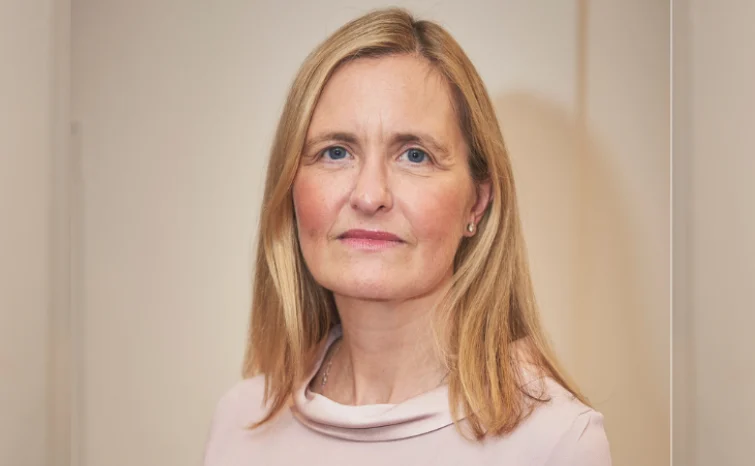
The report has drawn significant attention from high-level stakeholders, including England’s Patient Safety Commissioner, Dr. Henrietta Hughes OBE.
"These findings reinforce a simple truth: in the ever-evolving AI landscape, healthcare must continue to work for patients first," Dr. Hughes stated. Her office, which has been instrumental in advocating for safer, more transparent medical practices, emphasizes that the goal of technology must be to support rather than disrupt the clinical encounter.
"Transparency, meaningful choice, and responsible handling of data are key to protecting patient safety, reducing inequalities, and building confidence in the future of care," she added. Her stance highlights that the success of AI is not merely a technical challenge, but a social contract between the state and the citizen.
Professor Lord Darzi, a global authority on health innovation, echoed these sentiments. Reflecting on the report, he noted that the "patient voice" has been the missing piece in the implementation puzzle. "This work helps to fill this gap," he said. "I hope that this report will help to provide a roadmap to ensure transparency, equality, and safety within this space."
Implications: The Road Ahead for the NHS
As the NHS moves from pilot programs to widespread adoption of AI scribes, the implications of this report are significant.
1. The Need for National Standards
The report suggests that the current, somewhat decentralized approach to AI adoption across different NHS trusts is unsustainable. To maintain public trust, there is a pressing need for a unified national framework that dictates how these tools are vetted, deployed, and monitored. This includes standardized training for clinicians on how to interact with and verify AI-generated notes.
2. Redefining the Administrative Workflow
If successful, AI scribes could solve the recruitment and retention crisis by reducing the administrative burnout that drives many clinicians out of the profession. However, the report warns against "efficiency at any cost." If the drive for productivity leads to a reduction in the quality of the patient-doctor bond, the net effect on healthcare quality could be negative.
3. Ethical Infrastructure
Beyond the software itself, the NHS must invest in an "ethical infrastructure." This involves not just cybersecurity, but a commitment to algorithmic transparency. Patients need to know how their data is being processed, who owns the resulting information, and how the system learns and evolves over time.
4. Addressing Inequalities
There is a latent fear that AI could exacerbate existing health inequalities. If AI scribes perform less accurately for patients with non-standard dialects, complex medical histories, or communication disabilities, the technology could inadvertently disadvantage the most vulnerable. The report’s call for rigorous monitoring and auditing is therefore not just a matter of quality control, but of clinical equity.
Conclusion: A Delicate Balance
The integration of AI scribes into the NHS is an inevitable step in the modernization of medicine. The benefits—reduced clinician burnout, more accurate records, and more focused consultations—are too significant to ignore. Yet, the findings of the 2026 dialogue serve as a critical reminder that technology is a tool, not a solution.
For AI to truly succeed within the NHS, it must be implemented with a level of transparency that invites the patient to be a collaborator in the process. As Dr. Henrietta Hughes and Professor Lord Darzi have pointed out, the technology must earn its place in the consulting room. By prioritizing patient choice, maintaining robust human oversight, and ensuring that the clinician remains the primary steward of the medical record, the NHS can navigate the complexities of this digital transition.
The message from the public is clear: we welcome the efficiency of the machine, but we demand the accountability of the human. As the NHS continues its digital journey, this delicate balance will remain the defining measure of its success.