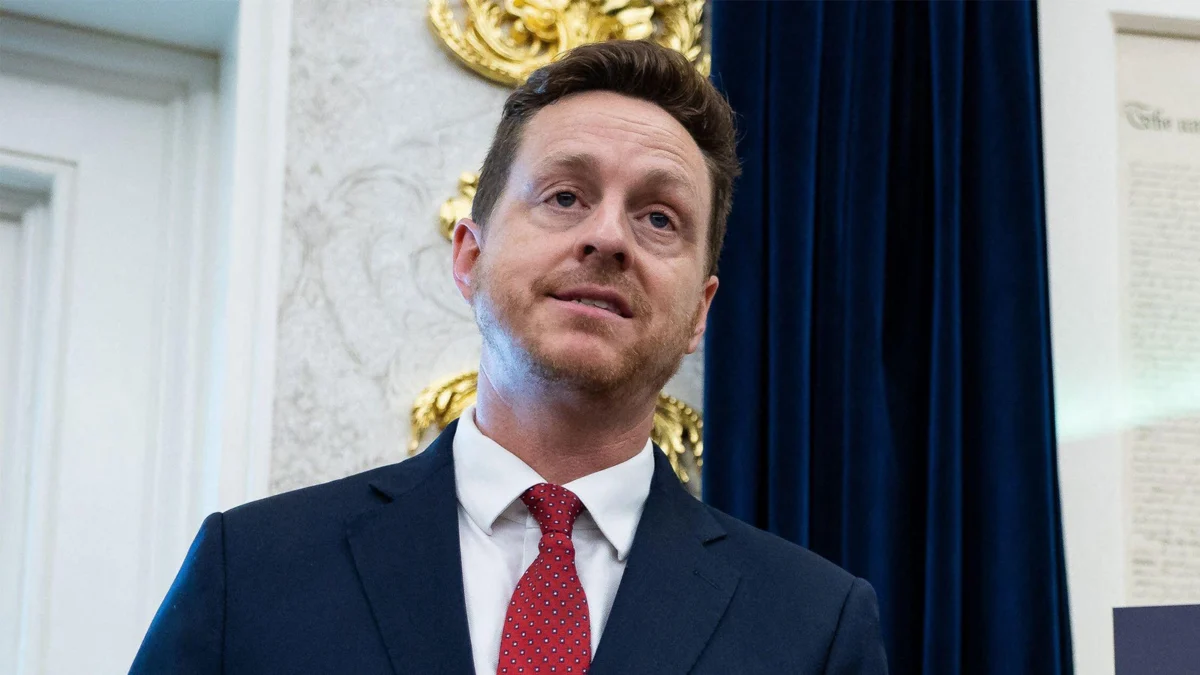
The confirmation hearing for Chris Klomp, President Donald Trump’s nominee for deputy secretary of the Department of Health and Human Services (HHS), devolved into a high-stakes partisan confrontation on Tuesday. While Klomp attempted to navigate the complexities of federal health policy and his personal alignment with the administration’s controversial vaccine stances, his testimony left Senate Democrats deeply dissatisfied, casting significant doubt on his path to confirmation.
The hearing, held by the Senate Finance Committee, served as a microcosm of the broader national debate surrounding public health, vaccine skepticism, and the role of the executive branch in overriding traditional medical consensus.
The Vaccine Stance: A Study in Ambiguity
The primary point of contention throughout the hearing was the administration’s shifting rhetoric on childhood vaccinations. Klomp, who currently serves as HHS chief counselor, began his testimony by attempting to ground himself in clinical reality. He explicitly endorsed the measles, mumps, and rubella (MMR) vaccine, describing it as the “single most effective public health tool” available against measles.
“It’s 97% effective after two doses in preventing transmission, and this is the single best thing that we can do to eradicate the disease,” Klomp stated under questioning.
However, the tone shifted when the conversation turned to the discredited link between the MMR vaccine and autism. While Klomp stated he did not believe the vaccine caused autism based on the “preponderance of evidence,” he qualified his statement by adding, “We also don’t know what causes autism, and as a country, that should concern us greatly.”
This nuance, intended to bridge the gap between scientific consensus and the administration’s populist base, was immediately flagged by Sen. Ron Wyden (D-Ore.), the committee’s ranking member. Wyden accused Klomp of offering a “word salad” that ultimately deepened public confusion during a time when the nation is battling its highest measles rates in decades.
Chronology of the Confrontation
The hearing unfolded as a series of thematic exchanges that highlighted the divide between the executive branch’s recent policy pivots and the traditional expectations of public health officials.
- Opening Defense: Klomp opened by emphasizing his commitment to scientific research and the eradication of preventable diseases.
- The Autism Debate: When pressed on vaccine safety, Klomp’s refusal to dismiss concerns about autism origins led to immediate pushback from the dais.
- The Executive Order Challenge: Sen. Maggie Hassan (D-N.H.) grilled Klomp on the administration’s August executive order, which recommends that parents seek separate vaccines for measles, mumps, and rubella rather than the standard combined MMR shot.
- Policy Implications: Following the vaccine debate, the committee transitioned into technical discussions regarding Medicare reimbursement, Pharmacy Benefit Managers (PBMs), and the ongoing regulatory review of mifepristone.
- The "Veto" Announcement: As the hearing drew to a close, Sen. Wyden formally announced his intention to oppose Klomp’s nomination, citing the nominee’s inability to provide a “clear statement” on fundamental public health policy.
Supporting Data and Medical Consensus
The tension in the room was fueled by a stark disconnect between the executive branch’s policy recommendations and the established guidelines of major medical associations. The American Academy of Pediatrics (AAP) and the Centers for Disease Control and Prevention (CDC) have long maintained that the combined MMR vaccine is safe, effective, and the gold standard for pediatric care.
The administration’s proposal to “unbundle” these vaccines into three separate injections lacks clinical data to support improved safety or efficacy. Critics argue that increasing the number of physician visits required to complete the vaccination series will result in lower overall vaccination coverage, as parents are more likely to miss appointments or abandon the process as the burden of "jabs" increases.
Klomp, when pressed by Sen. Hassan on why the administration would advocate for more injections when the goal is to reduce the burden on children, offered a non-answer. He suggested his primary responsibility was to “ensure that we conduct the appropriate research,” effectively punting on the scientific validity of the administration’s executive directive.
Official Responses and Partisan Divide
The committee’s reaction to Klomp’s testimony revealed a deep fracture along party lines.
Sen. Mike Crapo (R-Idaho), the committee chairman, offered a staunch defense of the nominee. "You have met all of the requirements and standards of this committee in vetting a nominee, and you are completely and well qualified to be deputy secretary at the Department of Health and Human Services," Crapo asserted, signaling that the Republican majority remains largely aligned with the administration’s broader agenda.
Conversely, the Democratic opposition was both vocal and unified in their skepticism. Sen. Hassan’s line of questioning highlighted the practical absurdity of the administration’s position. "It is very difficult for me to understand how a president and a secretary of HHS, who said they wanted kids to get fewer jabs, are now recommending that they get more jabs," she noted.
Broader Policy Implications: Beyond Vaccines
While the vaccine debate dominated the headlines, the hearing also touched upon significant issues in healthcare economics and regulation that will fall under the purview of the deputy HHS secretary.
Pharmacy Benefit Managers (PBMs) and Transparency
Sen. James Lankford (R-Okla.) questioned Klomp on the role of PBMs in the pharmaceutical supply chain. Lankford raised concerns that PBMs often favor expensive, brand-name drugs over cheaper generics to maximize their rebate structures. Klomp defended the administration’s “TrumpRx” initiative, arguing that increased transparency is the key to forcing competition. He argued that if employers and consumers can clearly see the price discrepancies between PBM-negotiated costs and market rates, they will demand better accountability.
Prior Authorization and Value-Based Care
Sen. Sheldon Whitehouse (D-R.I.) pivoted to the complexities of Medicare physician payment rates and the issue of "prior authorization." Whitehouse proposed a radical shift in how insurers interact with providers who participate in value-based care arrangements. He argued that once a provider has entered into a model that rewards quality over volume, the standard administrative hurdles—such as prior authorization—become redundant and inefficient. He suggested that CMS should flip the current script, requiring insurers to obtain federal clearance before subjecting these providers to authorization requirements.
The Mifepristone Review
In a tense exchange regarding reproductive health, Sen. Steve Daines (R-Mont.) challenged the current FDA safety review process for the medication abortion drug mifepristone. Daines criticized the relaxation of in-person dispensing requirements during the pandemic. Klomp, maintaining a bureaucratic distance, insisted that the FDA must remain an objective arbiter of safety data. He confirmed that a status report on the ongoing safety review is expected by October 7, with a comprehensive final report slated for the end of the year.
Conclusion: A Precarious Path Forward
Chris Klomp’s confirmation hearing did little to quell the political firestorm surrounding the administration’s health policies. By attempting to serve as a bridge between scientific medical practice and the administration’s vaccine-skeptic rhetoric, Klomp succeeded only in alienating his opposition without fully satisfying the skeptics.
As the Senate Finance Committee moves toward a final vote, the implications of this hearing extend far beyond a single nomination. It marks a deepening rift in the federal oversight of public health. With prominent Democrats like Sen. Wyden promising "vigorous" opposition, the path to the deputy secretary’s office for Klomp appears increasingly narrow. The question remains whether the administration will continue to prioritize ideological alignment over traditional scientific consensus in its senior health appointments, and what the long-term impact of that strategy will be on the public’s trust in the Department of Health and Human Services.