










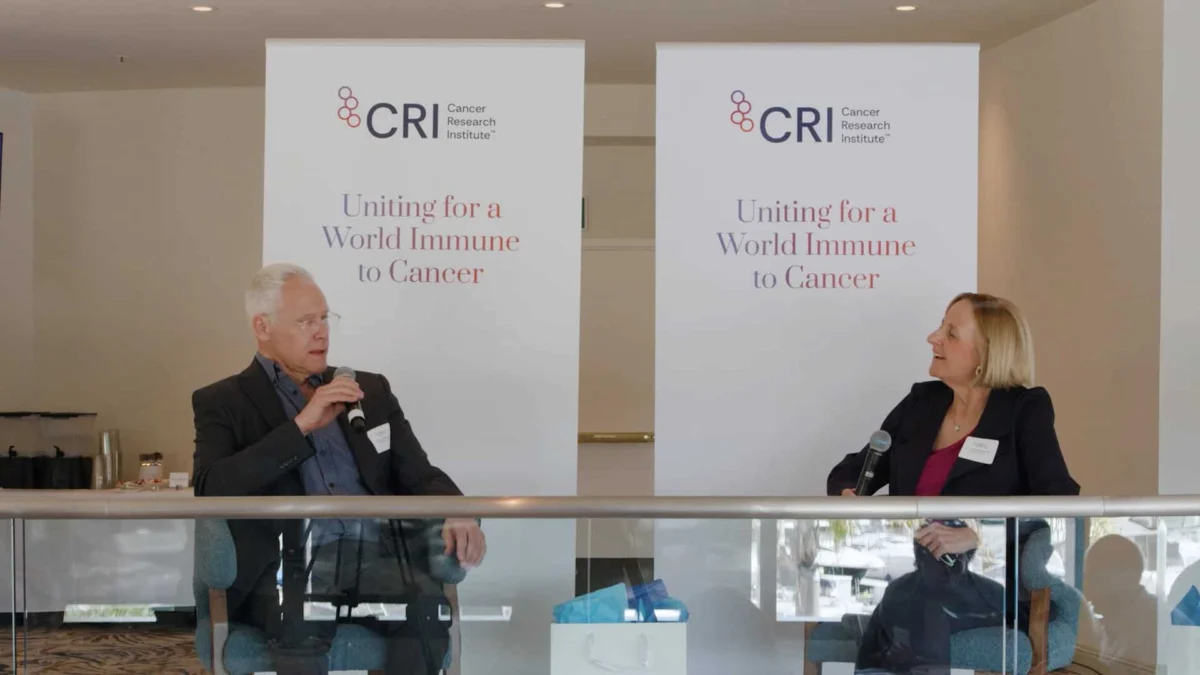
At the 2026 American Association for Cancer Research (AACR) Annual Meeting, the scientific community paused to recognize a career defined by relentless curiosity and foundational brilliance. The Cancer Research Institute (CRI) and the AACR jointly presented the prestigious AACR-CRI Lloyd J. Old Award in Cancer Immunology to Kenneth M. Murphy, MD, PhD.
The award serves as a testament to Dr. Murphy’s transformative work in defining the role of dendritic cells (DCs) in orchestrating immune responses—a contribution that has fundamentally reshaped our understanding of how the body recognizes and fights malignancy. In a departure from the traditional lecture format, this year’s ceremony featured a fireside conversation between Dr. Murphy and the 2025 laureate, Crystal L. Mackall, MD, providing a rare, candid look into the philosophy, challenges, and future trajectory of cancer immunology.
The Architecture of Discovery: Main Facts and Scientific Impact
The core of Dr. Murphy’s scientific legacy lies in his ability to deconstruct the complex, often chaotic, world of the immune system into actionable biological insights. For decades, the field of immunology struggled to understand how the immune system "decides" which threats to ignore and which to engage.
Dr. Murphy’s research identified the specific subsets of dendritic cells—particularly the cDC1 subset—as the essential "generals" of the immune army. These cells are uniquely capable of priming CD8+ T cells, the "serial killers" of the immune system responsible for destroying tumor cells.
Key Contributions
- Defining the DC Hierarchy: Murphy’s lab delineated the development and function of DC lineages, moving the field past simplistic models.
- The CD8+ T Cell Connection: His research proved that without the specific priming provided by cDC1s, T cell responses against tumors are often sluggish or nonexistent, explaining why some patients fail to respond to checkpoint inhibitors.
- Vaccine Efficacy: His recent work suggests that the success of mRNA and cDNA cancer vaccine platforms relies entirely on their ability to engage the correct dendritic cell populations to trigger a durable, high-quality T cell response.
A Chronology of Curiosity: From Basic Biology to Clinical Reality
Dr. Murphy’s career serves as a masterclass in the nonlinear trajectory of scientific advancement. During his conversation with Dr. Mackall, he emphasized that his most significant breakthroughs were not the result of rigid, five-year strategic plans, but rather the outcome of "following the biology."
The Early Years: Asking the Fundamental Question
Dr. Murphy reflected on his beginnings, noting that he is still asking the same fundamental question he started with: How does the immune system differentiate between different types of biological insults to coordinate the appropriate response? This focus on the "how" rather than the "what" allowed his lab to avoid the pitfalls of chasing temporary trends.
The Middle Years: Building the Framework
During the 1990s and 2000s, while many researchers were focused on the final effector stages of T cell activity, Murphy turned his attention to the "initiation" phase. By identifying the transcription factors and lineage pathways of dendritic cells, he provided a map for other researchers to follow. This era saw the emergence of the understanding that the immune system is not a monolith, but a highly organized, hierarchical network.
The Modern Era: Applying the Lessons
Today, the clinical implications of this work are being tested in real-time. As immunotherapies shift toward more precise, personalized approaches, the foundational data provided by the Murphy lab acts as a diagnostic tool. We now know that the density of cDC1s in the tumor microenvironment is a primary predictor of whether a patient will benefit from immunotherapy—a realization that is changing how clinical trials are designed.
Supporting Data and Technical Nuance
The discussion between Murphy and Mackall underscored a critical realization: the "on/off" switch of the immune system is a myth. Instead, the immune response is a calibrated, highly regulated process.
The Complexity of T Cell States
One of the most compelling segments of their dialogue involved the transition between stem-like T cells and short-lived effector cells. Current data suggests that the durability of an anti-tumor response is dictated by the ability of the immune system to maintain a reservoir of these stem-like cells. Dr. Murphy highlighted that if we can identify the specific dendritic cell-derived signals that sustain this population, we can theoretically "engineer" long-term cancer immunity.
The Failure of Conventional Vaccines
Addressing the "cycles of optimism and disappointment" that have plagued the cancer vaccine field, Dr. Murphy offered a technical critique: the failure of many past vaccines was not necessarily the antigen choice, but the delivery mechanism. If a vaccine fails to engage the cDC1 pathway, the immune system treats the cancer antigen as a "tolerated" self-protein rather than a threat. His lab’s recent findings confirm that optimizing the interaction between the vaccine vehicle and the dendritic cell is the "missing link" for the next generation of therapeutic vaccines.
Official Responses and Perspectives on the Future
The fireside chat served as a forum for the two leaders to discuss not just the science, but the environment in which science is performed.
The Role of Artificial Intelligence
When asked about the role of AI in modern research, Dr. Murphy expressed a cautious optimism. He noted that AI is an "extraordinary tool" for pattern recognition in massive datasets, such as single-cell RNA sequencing. However, he warned against the "black box" mentality. "AI can tell you what is happening," Murphy remarked, "but it cannot tell you why." He emphasized that the human element—the ability to synthesize, contextualize, and ask the ‘why’—remains the true driver of scientific revolution.
The Burden of Information
Dr. Mackall, in turn, addressed the challenges facing young investigators. In an era where the volume of scientific literature doubles every few years, the risk of "analysis paralysis" is high.
- Mentorship: Both scientists agreed that the role of the mentor has shifted from being the "source of knowledge" to the "curator of insight."
- The Funding Climate: Both expressed concerns regarding the high-stakes, grant-driven culture that often penalizes long-term, high-risk research. They argued for a shift back to supporting "the scientist, not just the project."
Implications: A New Era of Cancer Immunology
The implications of Dr. Murphy’s work are profound. By shifting the focus from the T cell to the "upstream" orchestrators—the dendritic cells—the field is entering a new chapter of precision immunotherapy.
- Patient Stratification: We are moving toward an era where patients will be screened for their "DC profile" before beginning immunotherapy.
- Rational Drug Design: Future checkpoint inhibitors will likely be paired with "DC-activators" or adjuvants that ensure the immune system is properly primed before the "brakes" are removed.
- Vaccine Renaissance: The success of mRNA technology, combined with our new understanding of DC biology, has breathed new life into the possibility of truly curative cancer vaccines.
Conclusion: Following the Biology
The takeaway from the 2026 AACR-CRI Lloyd J. Old Award ceremony is a message of humility and hope. Dr. Murphy’s journey demonstrates that while our technological capabilities have expanded exponentially, the core of medical progress remains anchored in basic science.
The next wave of breakthrough treatments will not emerge from a single "silver bullet" discovery. Instead, it will come from the quiet, persistent, and methodical work of laboratories that refuse to simplify the complexity of the immune system. By following the biology—asking the right questions, interpreting the data with human insight, and staying curious—the next generation of researchers is poised to finish the work that Dr. Murphy and his peers have so masterfully begun.
As the fireside conversation closed, both scientists offered a final piece of advice to the audience: Don’t just look for the answer. Look for the question that changes the map. In the field of cancer immunology, that map is still being drawn, and the path forward is as bright as it is complex.